


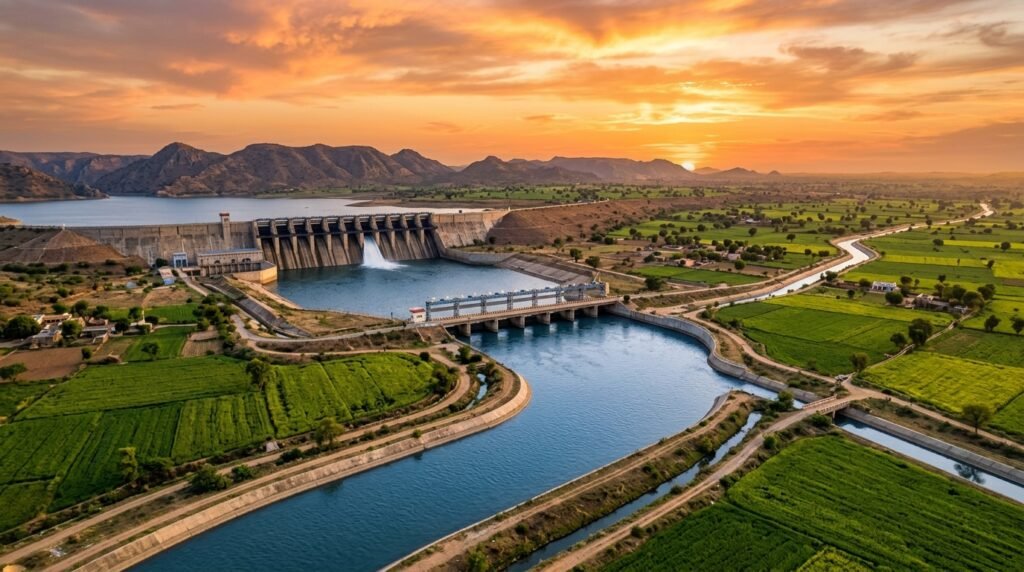
In a major leap forward for regional water security and rural empowerment, the Rajasthan state government led by Chief Minister Bhajanlal Sharma has formally initiated civil construction on the Neemrana Dam under the ambitious ERCP project Rajasthan 2026 roadmap. Integrated within the modified Parbati-Kalisindh-Chambal (PKC-ERCP) link initiative, the project addresses chronic water scarcity across 13 drought-vulnerable eastern and northern districts, bringing decisive momentum to agricultural irrigation and household tap connections.
Transforming Water Security Across 13 Eastern Districts
The Eastern Rajasthan Canal Project represents one of northwestern India’s largest coordinated water infrastructure investments. Originally conceived to transfer surplus monsoon waters from the southern Chambal river basin into rain-deficient sub-basins, the ERCP project Rajasthan 2026 execution framework combines modern barrage design, pressurized underground pipeline corridors, and automated canal regulator networks.
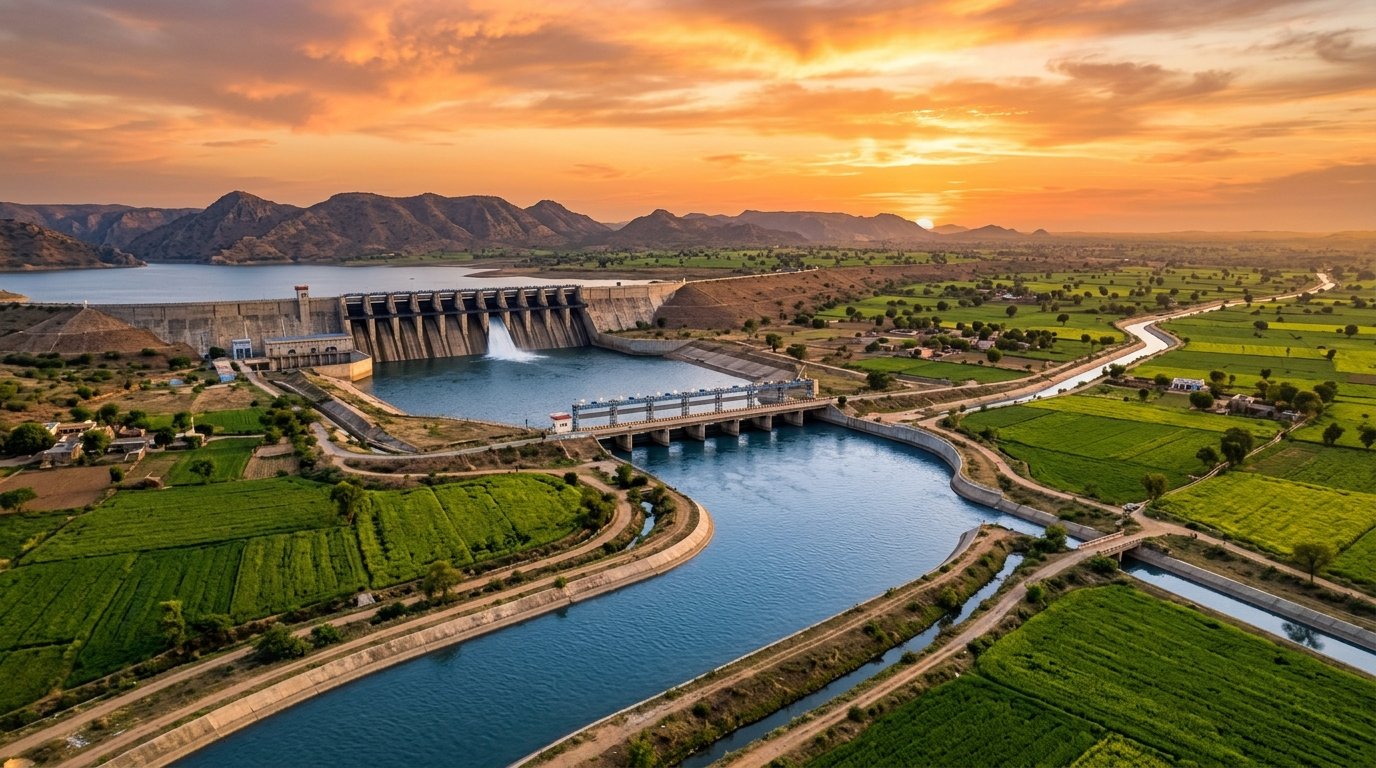
With civil works now progressing at the Neemrana Dam site in Kotputli-Behror, regional agricultural clusters that formerly faced severe groundwater depletion will receive dedicated gravity-fed surface water. State water resources engineers confirm that the barrage will stabilize underground aquifers, recharge thousands of traditional stepwells, and supply assured perennial flow for local multi-cropping seasons.

Key Milestones and Engineering Highlights of the ERCP
The revised engineering framework for the canal link incorporates several advanced features designed to maximize hydraulic efficiency and minimize evaporative losses:
- 70,500 Hectares of Assured Irrigation: Phase 1 feeder channels will provide micro-irrigation and drip infrastructure coverage across eastern agricultural zones.
- Potable Water Supply for 2.8 Crore Citizens: The project guarantees surface drinking water allocations for rural habitations and expanding tier-2 urban centers across 13 districts.
- Inter-State Chambal Basin Coordination: Joint tripartite consensus between Rajasthan, Madhya Pradesh, and the Central Ministry of Jal Shakti has eliminated historical riparian disputes.
- Automated SCADA Flow Monitoring: Real-time telemetric water metering will govern barrages, preventing seepage and ensuring balanced inter-district discharges.
Synergy with Statewide Infrastructure Modernization
The accelerated delivery of the ERCP project reflects Rajasthan’s broader strategy of simultaneous rural revitalization and urban development. Just as southern Rajasthan is modernizing transit and civic corridors through the Ayad River rejuvenation Udaipur project and the Udaipur airport expansion, eastern districts are gaining resilient lifeline water infrastructure.
Furthermore, following the state cabinet’s landmark governance shift covered in our analysis of the Rajasthan two-child norm reform, grassroots panchayat leaders across Kotputli-Behror, Alwar, Dausa, Bharatpur, and Karauli are actively coordinating land surveys and water-user cooperative societies to facilitate canal construction.
Project Timelines and Environmental Safeguards
Official timelines published by the Rajasthan Water Resources Department target the completion of main masonry works and canal spillway headworks by early 2027. Comprehensive environmental management plans include compensatory catchment afforestation, aquatic sanctuary flow preservation in the Chambal wildlife zone, and siltation management sluices.
As work continues round-the-clock, the ERCP project Rajasthan 2026 stands as a benchmark of state-center infrastructure cooperation, turning long-standing regional water promises into tangible realities for millions of farming families.