Office Address
14, Residency Road, Udaipur, Rajasthan 313001
Office Address
14, Residency Road, Udaipur, Rajasthan 313001

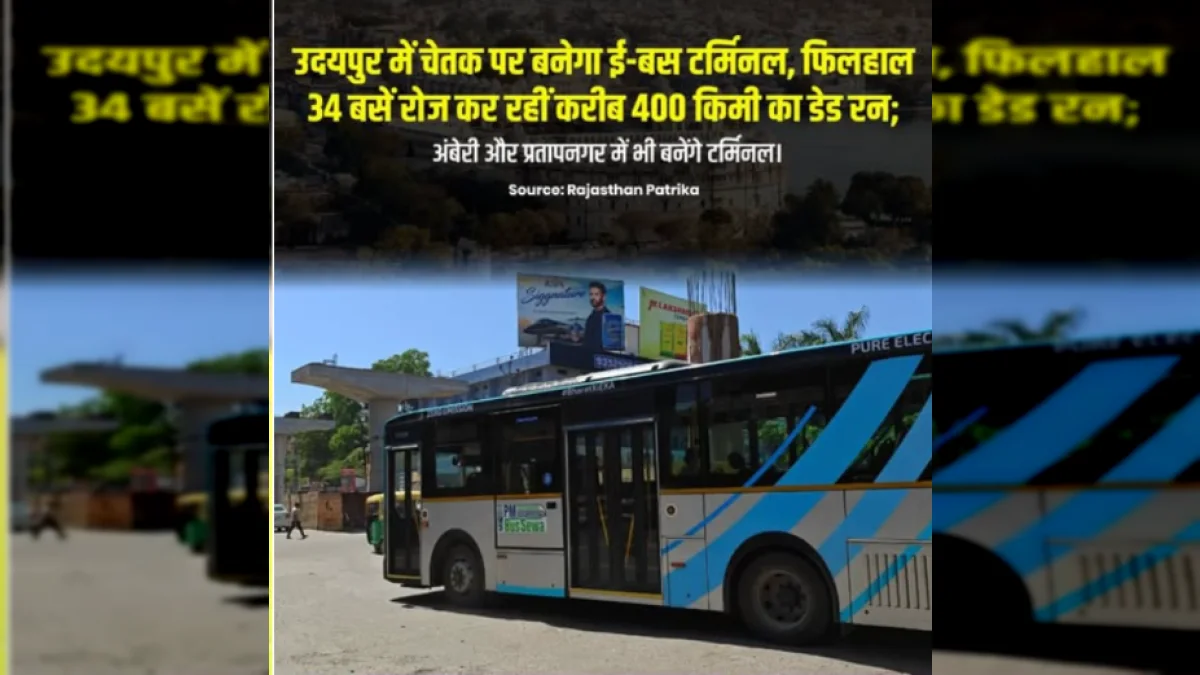
UDAIPUR: In a decisive measure to eliminate substantial battery drain, logistical inefficiencies, and high operating costs in the Lake City’s electric public transit network, civic authorities and the Udaipur City Transport Services Limited (UCTSL) have finalized plans to construct a major central E-Bus Terminal at Chetak Circle. The infrastructure intervention comes as transit audits revealed that 34 operational electric buses are forced to clock nearly 400 kilometers of “dead run” every day without carrying passengers simply to reach distant maintenance depots. Concurrently, two auxiliary charging stations will be built at Amberi and Pratapnagar, creating an integrated tri-nodal transit grid across Udaipur.
In public transit planning, a “Dead Run” refers to any trip that a scheduled bus operates completely empty—generating zero passenger revenue and providing zero commuter utility—solely to reposition between a garage, maintenance facility, or charging station.
Under the national PM e-Bus Sewa initiative, Udaipur deployed an eco-friendly fleet of 34 modern electric buses to connect dense residential colonies with hospitals, markets, and railway hubs. However, the system had a major logistical bottleneck: all charging and heavy maintenance infrastructure was centralized at a single peripheral depot in Dhol Ki Pati / Balicha on the southern edge of the municipal boundary.
Whenever buses operating routes in the northern or western sectors needed midday battery top-ups or shift rotations, drivers had to traverse 12 to 18 kilometers through city traffic without picking up commuters. Cumulative data compiled by transit observers indicated that the 34 buses were logging nearly 400 kilometers of empty running daily, causing unnecessary wear and tear, congesting arterial corridors, and depleting lithium-ion batteries during peak operating hours.
Situated at the vital crossroads between the walled city, civil administration quarters, and modern commercial avenues, Chetak Circle functions as the natural epicenter of Udaipur’s urban mobility:
By establishing high-speed DC charging bays and passenger staging platforms directly at Chetak Circle, buses can execute 15-minute opportunity top-up charges during scheduled driver handovers without ever leaving their active service corridors.
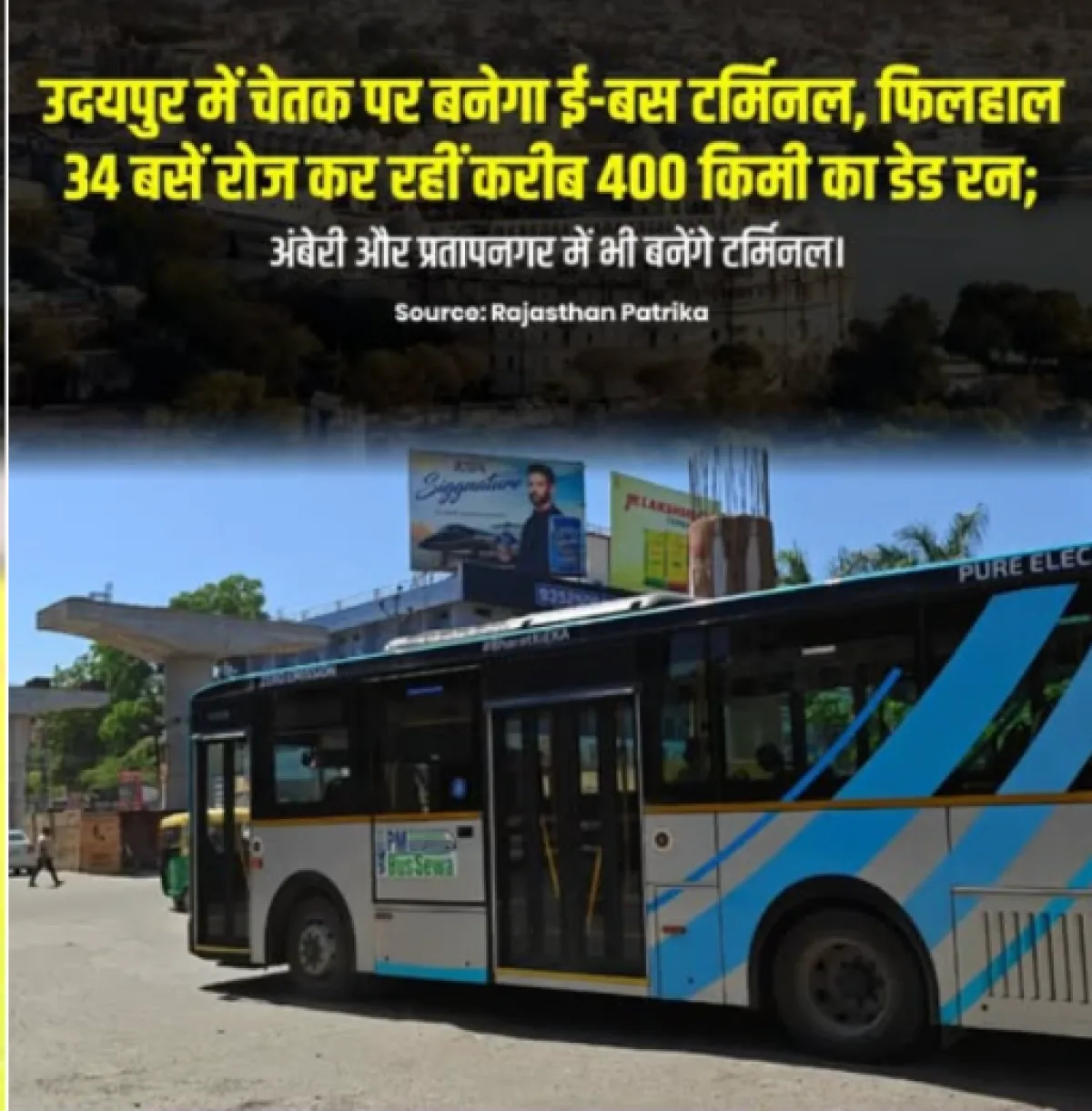
To avoid over-concentrating vehicular movement at Chetak Circle alone, municipal town planners have authorized two strategic peripheral hubs:
With this tri-nodal infrastructure in place, UCTSL will transition its operational model from rigid linear routes to highly dynamic circular and cross-town feeder circuits, virtually eliminating dead runs altogether.
For more on municipal infrastructure budgets, water security, and recent urban board deliberations, see our comprehensive analysis of the Udaipur Municipal Corporation Board Meeting & City Master Plan.
As an internationally renowned heritage destination surrounded by ecologically sensitive lakes and hills, reducing vehicular carbon emissions is vital for Udaipur’s environmental sustainability. Replacing diesel fumes with zero-emission electric buses charging at decentralized solar-ready stations directly aligns with Rajasthan’s clean energy priorities.
To explore complementary urban development and tourism decongestion projects approved this week, explore our coverage of the Udaipur Modern Night Food Court & UDA Infrastructure Review.
| Operational Parameter | Current Setup | Post-Terminal Implementation |
|---|---|---|
| Operational Electric Buses | 34 Active Vehicles | Expanded to full 50-bus fleet |
| Charging Facilities | Single depot at Dhol Ki Pati / Balicha | 3 new fast-charging hubs (Chetak, Amberi, Pratapnagar) |
| Daily Dead Run | ~400 km empty running daily | Reduced to near zero (terminal opportunity charging) |
| Minimum Fare | Affordable rates starting at ₹10 | Maintained at ₹10 with integrated digital transit passes |
| Route Model | Depot-dependent radial lines | High-frequency circular and cross-city interchange grid |
The primary central E-Bus Terminal will be constructed at Chetak Circle, with two additional auxiliary charging terminals planned at Amberi and Pratapnagar.
A dead run refers to distance traveled by buses without any passengers on board. Currently, 34 e-buses clock roughly 400 km daily running empty between their service routes and the distant Balicha depot for battery charging.
Commuters will enjoy higher bus frequencies, shorter wait times, reduced mid-route cancellations, and centralized interchange connectivity right outside MB Hospital and the Collectorate.
The minimum passenger fare for Udaipur’s electric city buses starts at just ₹10, making it an affordable and eco-friendly transit choice for residents and tourists alike.
Add Udaipur Mirror as a preferred source on Google to see more of our travel guides in your AI overviews.