Office Address
14, Residency Road, Udaipur, Rajasthan 313001
Office Address
14, Residency Road, Udaipur, Rajasthan 313001

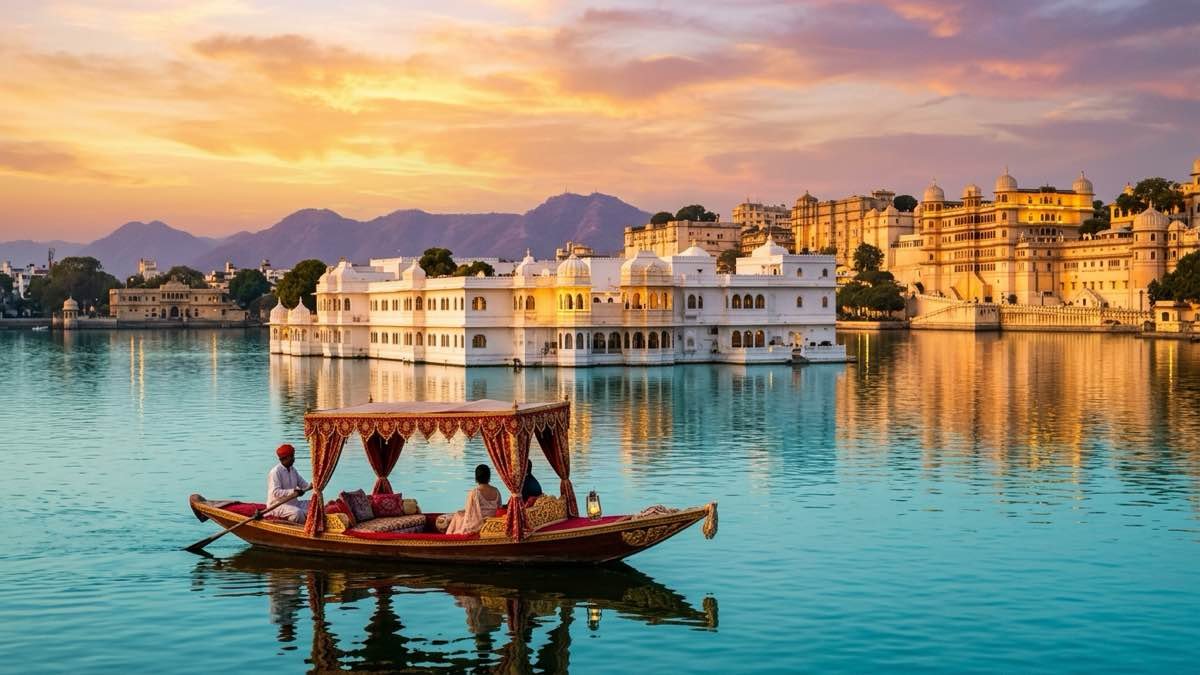
To truly grasp the regal romance of Udaipur, one must view it from the water. Framed by the rugged, undulating peaks of the ancient Aravalli Range, the historic capital of Mewar is an architectural masterpiece anchored by its interconnected waterways. At the very center of this aquatic realm lies Lake Pichola—a shimmering 4-kilometer mirror of turquoise and gold that has captivated royal dynasties, poets, and discerning world travelers for over six centuries.
From the world-renowned white marble floating silhouette of the Taj Lake Palace to the storied ramparts of Jag Mandir and the serene, open expanses of Fateh Sagar and Badi Lake, boating in Udaipur is far more than a leisure pastime—it is a journey through living Mewari history. Here is your definitive luxury guide to navigating Udaipur’s tranquil royal waters.
👑 Heritage Snapshot: The Genesis of Lake Pichola
Originally constructed in 1362 AD during the reign of Maharana Lakha by a grain-transporting Banjara tribesman (Bichhu Banjara) to facilitate ox-cart crossings, Lake Pichola was later dramatically expanded by Maharana Udai Singh II in the mid-16th century following the establishment of Udaipur. By constructing stone masonry dams across the Kotra riverbed, the Maharanas created a hydraulic marvel that fostered an oasis of palaces, gardens, and pleasure pavilions in the heart of the desert state.
Embarking on a boat ride across Lake Pichola offers an unparalleled panoramic perspective of Udaipur’s historic waterfront that simply cannot be replicated from land.
As your vessel glides away from the quay, the colossal eastern facade of the City Palace rises majestically from the water’s edge. Spanning more than 244 meters in length and built incrementally over four centuries by 22 successive Maharanas, its towering granite tiers, scalloped marble cupolas, and projecting jharokhas glow with warm honey tones under the afternoon sun.
Cruising along the shoreline reveals the timeless rhythm of Mewari daily life:
Lake Pichola is home to four distinct islands, each built for royal sanctuary, leisure, and celebration:
| Island Name | Historical Monument | Founding Era & Monarch | Significance & Experience |
|---|---|---|---|
| Jag Niwas | Taj Lake Palace | 1743–1746 AD (Maharana Jagat Singh II) | Iconic 4-acre floating white marble palace hotel; exclusive luxury boat transfer & royal dining. |
| Jag Mandir | The Lake Garden Palace | 1551–1652 AD (Maharanas Amar, Karan & Jagat Singh I) | Mughal Prince Khurram’s historic refuge; carved marble elephants, Gul Mahal & royal banquet courtyards. |
| Mohan Mandir | Royal Festival Pavilion | 1628–1652 AD (Maharana Jagat Singh I) | Uninhabited islet near the northeastern shore; used by Mewar royalty to witness the annual Gangaur boat procession. |
| Arsi Vilas | Royal Armory & Bird Sanctuary | 18th Century (Maharana Ari Singh II) | Southern islet housing an old armory, small palace, and a protected sanctuary for migratory waterfowl. |
Rising like a white marble lotus out of the sapphire water, Jag Niwas—now celebrated globally as the Taj Lake Palace—epitomizes the pinnacle of lakefront luxury. Commissioned as an opulent summer retreat where Mewar royalty escaped the summer heat, the palace occupies the entire four-acre surface of its natural island foundation.
For guests staying at this storied luxury landmark or dining at its fine-dining venues (such as Jharokha and Neel Kamal), the journey begins at the private Taj jetty. Boarding a private, sleek mahogany motor launch, guests are greeted with cold towels and fragrant rose-water refreshments as they cruise toward the palace. Upon docking at the royal slipway, a traditional Mewari greeting with silk parasols, rose petal showers, and soulful Shehnai notes marks an unforgettable arrival.
Taj also curates bespoke excursions aboard the Gangaur—the historic ceremonial royal barge of the Maharana of Udaipur—where couples can savor starlit champagne dinners accompanied by live sitar recitals as the boat drifts gracefully across the dark, illuminated lake.
Located further south, Jag Mandir Island Palace carries deep historical intrigue. In 1623, Mughal Prince Khurram (who would later become Emperor Shah Jahan) revolted against his father, Emperor Jahangir, and sought sanctuary under the protective code of Rajput chivalry offered by Maharana Karan Singh of Mewar.
Prince Khurram resided in the circular, yellow sandstone Gul Mahal on Jag Mandir with his wife Mumtaz Mahal. Historians widely note that the intricate stone inlay work (pietra dura), domed pavilions, and tranquil water channels of Jag Mandir left an indelible impression on the young prince, later serving as direct architectural inspirations when he commissioned the Taj Mahal in Agra.
Today, visitors on public and private heritage boat cruises can alight at Jag Mandir’s grand stone jetty—flanked by eight imposing, life-size carved marble elephants—to stroll through shaded palm courtyards, explore historical galleries, and enjoy waterfront refreshments at the Darikhana restaurant.
While Lake Pichola commands world fame, Udaipur’s interconnected lake system encompasses diverse aquatic landscapes that deserve a spot on any discerning traveler’s itinerary:
Constructed in 1687 by Maharana Jai Singh and later reconstructed following severe floods by Maharana Fateh Singh in 1889, Fateh Sagar is connected to Lake Pichola via the Swaroop Sagar canal. Surrounded on three sides by lush Aravali hills, Fateh Sagar has an open, breezy character that makes it a beloved gathering spot for locals and travelers alike.
Located approximately 12 kilometers west of the city center, Badi Lake was commissioned between 1652 and 1680 by Maharana Raj Singh I to mitigate the devastating effects of a severe famine. Free from commercial boat traffic and palace hotels, Badi Lake offers pure, unhurried tranquility. Its shoreline features stone cenotaphs (*chhatris*) and serves as the base for the popular sunrise hike up Bahubali Peak.
Located 50 kilometers southeast of Udaipur, Jaisamand Lake is Asia’s second-largest artificial freshwater lake, spanning over 87 square kilometers. Commissioned by Maharana Jai Singh in 1685, the lake features a colossal marble dam studded with intricate Hindu shrines and six carved marble cenotaphs guarded by elephant statues. Boat cruises here explore deep waters surrounding seven distinct islands, home to native Bhil tribes and migratory birds nesting in the adjacent Jaisamand Wildlife Sanctuary.
| Waterway / Service | Vessel Class | Duration | Primary Highlights | Best Travel Style |
|---|---|---|---|---|
| Taj Lake Palace Private Cruise | Mahogany launches & Royal Barge Gangaur | 45–90 Mins | Rose petal greetings, champagne dining, royal butler service | Ultra-luxury, honeymoons & romantic celebrations |
| Lake Pichola Heritage Cruise (HRH) | Solar-electric & motor launches | 60 Mins | Jagmandir Island stopover, City Palace quays, audio guide | Heritage sightseeing & family travel |
| Private Pichola Shikara Charter | Handcrafted decorated wooden shikaras | 60 Mins | Silk cushions, custom sunset route, intimate photography | Couples, portrait shoots & private groups |
| Fateh Sagar Speedboat & Ferry | High-speed Yamaha boats & motor ferries | 15–45 Mins | Nehru Garden island visit, mountain breezes, high-speed thrill | Adventure seekers & casual leisure travelers |
| Jaisamand Lake Island Cruise | Twin-deck passenger motorboats | 60–90 Mins | Marble dam architecture, tribal islands, wildlife sightings | Day-trippers, birdwatchers & eco-tourists |
To experience Udaipur’s lakes at their most sublime, schedule your voyage during the Golden Hour (late afternoon leading into dusk):
Udaipur takes the conservation of its sacred freshwater lakes seriously:
Boat transfers to the Taj Lake Palace are reserved exclusively for resident hotel guests and visitors with confirmed prior dining reservations at the palace restaurants. Public sightseeing boats are not permitted to dock at the hotel’s private quays, though they cruise gracefully around the palace exterior.
Lake Pichola was originally built in 1362 AD by a Banjara tribesman named Bichhu Banjara during the reign of Maharana Lakha. Maharana Udai Singh II later enlarged the lake in the 16th century by constructing stone masonry dams across the valley.
Only the boat rides departing from the City Palace Rameshwar Ghat Jetty (operated by the HRH Group) include authorized landing privileges and exploration time on Jagmandir Island Palace. Other standard public boats from Doodh Talai only circle the island from the outside.
The winter season from October to March is the prime time for boating in Udaipur, offering pleasant daytime temperatures (15°C to 28°C), crystal-clear visibility, and optimal water levels replenished by the monsoon rains.
Add Udaipur Mirror as a preferred source on Google to see more of our travel guides in your AI overviews.