Office Address
14, Residency Road, Udaipur, Rajasthan 313001
Office Address
14, Residency Road, Udaipur, Rajasthan 313001

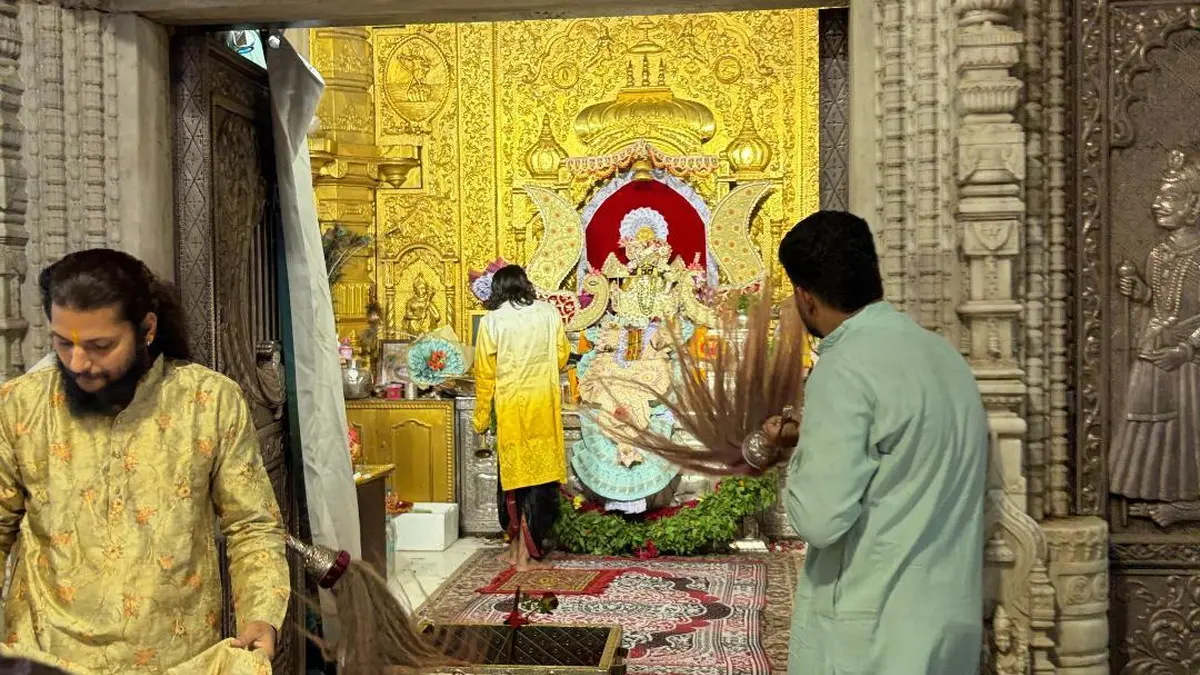
UDAIPUR: UDAIPUR — As the festive season reaches its spiritual peak across Mewar and the rest of the nation, households and temples are preparing for the grand festival of lights. The official diwali 2026 calendar outlines precise astronomical alignments, marking the convergence of sacred lunar days that dictate ritual schedules. From the cleaning of homes and lighting of earthen lamps to the intricate calculations of Amavasya tithi, understanding the exact timings ensures that spiritual ceremonies are performed during the most auspicious windows. For devotees planning their pilgrimage routines around this time, reviewing temple schedules such as the Mewar Pilgrim Guide 2026: Shreenathji 8-Jhanki Timings, Sanwaliya Seth & Darshan Rules provides essential timing clarity during festival days.
⚡ Quick Highlights: Diwali 2026 Calendar: Amavasya Tithi & Lakshmi Puja Timings
The foundational element of any accurate diwali 2026 calendar is the precise tracking of the Kartik Amavasya tithi. Astrologers emphasize that the lunar month’s dark moon phase dictates when rituals should be performed to maximize spiritual benefits. According to panchang calculations, Amavasya tithi governs the evening hours when darkness sets in, making it the ideal backdrop for invoking prosperity and dispelling ignorance.
For regional temple towns like Nathdwara and Udaipur, these calendar dates synchronize with major Pushtimarg traditions. Pilgrims visiting holy shrines often coordinate their travel with regional guides such as the Mewar Temple Pilgrim Guide 2026: Shreenathji 8-Jhanki Timings, Sanwaliya Seth Rules and Route Updates to ensure they experience both domestic festivities and divine temple darshans without missing auspicious muhurats.
“The alignment of Amavasya during Pradosh Kaal brings rare spiritual potency for households seeking divine grace and lasting prosperity.” — Acharya Vashistha, Vedic Astrologer
The multi-day festival of lights spans several sacred days, each dedicated to specific deities and traditional rituals. Below is the structured calendar breakdown for key observances in 2026.
| Festival Day | Hindu Tithi | Primary Deity / Focus | Significance & Rituals |
|---|---|---|---|
| Dhanteras | Kartik Trayodashi | Lord Dhanvantari & Kuber | Purchase of precious metals, utensils, and health prayers. |
| Choti Diwali | Kartik Chaturdashi | Kali Chaudas & Hanuman | Evening lamps lit at doorsteps, warding off negative energies. |
| Diwali / Lakshmi Pujan | Kartik Amavasya | Goddess Lakshmi & Ganesha | Main night worship, bursting crackers, and lighting diyas. |
| Govardhan Puja | Kartik Shukla Pratipada | Goverdhan Mountain & Krishna | Annakut preparation, cow worship, and mountain circumambulation. |
| Bhai Dooj | Kartik Shukla Dwitiya | Yamuna and Yama | Sisters apply auspicious tilak for brothers’ longevity. |
Performing Lakshmi Puja during the correct muhurat is believed to anchor wealth and harmony within the household for the entire year. The diwali 2026 calendar highlights Pradosh Kaal—the roughly two-hour window starting right after sunset—as the prime period for worship. During this time, the atmosphere is considered spiritually charged, tranquil, and receptive to divine invocations.
Furthermore, many business owners and traders look specifically for the Vrishabh Lagna (Taurus ascendant) during the evening hours. Because Taurus is a fixed earth sign, performing Chopda Pujan and ledger updates in this lagna is traditionally believed to bring stability and steady growth to commercial ventures.
“Pradosh Kaal combined with fixed ascendants creates an unrepeatable window of positive energy during Diwali night.” — Pandit Ramesh Sharma, Chief Priest
As the celebrations of Diwali night conclude, the festive momentum immediately transitions into Govardhan Puja and Annakut celebrations on the following day. Communities gather to construct small hillock replicas of Mount Govardhan using cow dung, offering food mountains comprising myriad vegetarian delicacies to Lord Krishna. This facet of the festival emphasizes ecological gratitude, reverence for nature, and community bonding.
In major Vaishnavite centers across Rajasthan, these days witness elaborate celebrations where thousands of devotees partake in sanctified food offerings. Planning one’s itinerary ahead of time ensures seamless participation in both home rituals and grand temple festivities. (Also read: Gujarati New Year 2026: Bestu Varas, Chopda Pujan Shubh Muhurat and Vikram Samvat 2083).
“Govardhan Puja teaches us the vital balance of living in harmony with nature and honoring the elements that sustain life.” — Swami Govinddas, Temple Administrator
The five-day festival cycle culminates with Bhai Dooj, celebrated on Kartik Shukla Dwitiya. On this day, sisters apply a protective and auspicious tilak on their brothers’ foreheads, praying for their long life, health, and success, while brothers present gifts as tokens of lifelong protection and affection. The rituals echo the mythological legend of Yamuna and her brother Yama, reinforcing the sacred bond of sibling love.
With precise muhurats designated for applying the tilak during morning and afternoon hours, families across the country gather to complete their festive observances before returning to routine schedules.
“Bhai Dooj solidifies the bonds of family affection, providing a peaceful and heartwarming closure to the vibrant Diwali week.” — Dr. Sunita Joshi, Cultural Historian
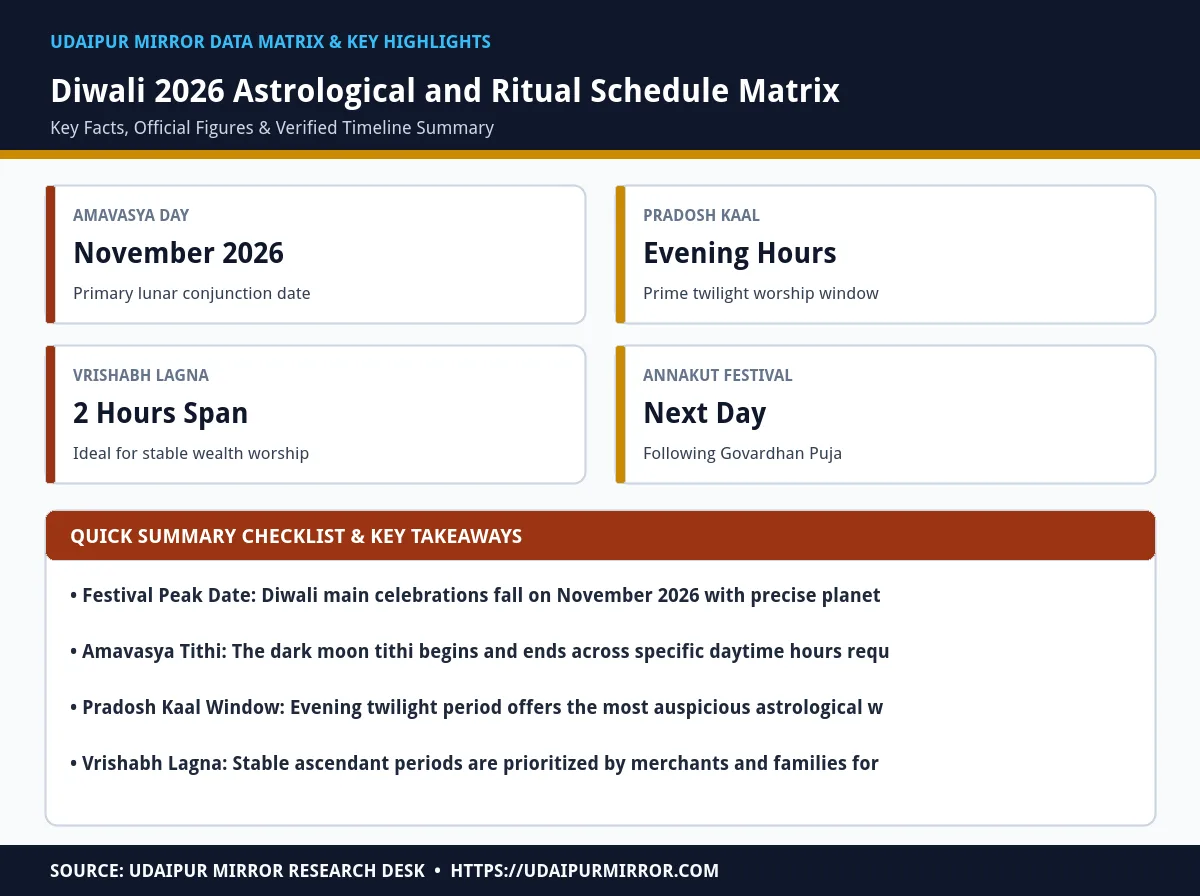
Diwali in 2026 falls in the month of November, coinciding with the Kartik Amavasya tithi when evening Pradosh Kaal alignments are most favorable for Lakshmi Puja.
Pradosh Kaal is the twilight period immediately following sunset. It is considered the most spiritually potent time to worship Goddess Lakshmi for wealth, health, and prosperity.
Vrishabh Lagna (Taurus ascendant) is a fixed sign, making it the preferred astrological window for business owners and families to perform Chopda Pujan for financial stability.
The days immediately following Diwali include Govardhan Puja, Annakut celebrations, and Bhai Dooj, completing the five-day festival of lights.
Add Udaipur Mirror as a preferred source on Google to see more of our travel guides in your AI overviews.