Office Address
14, Residency Road, Udaipur, Rajasthan 313001
Office Address
14, Residency Road, Udaipur, Rajasthan 313001

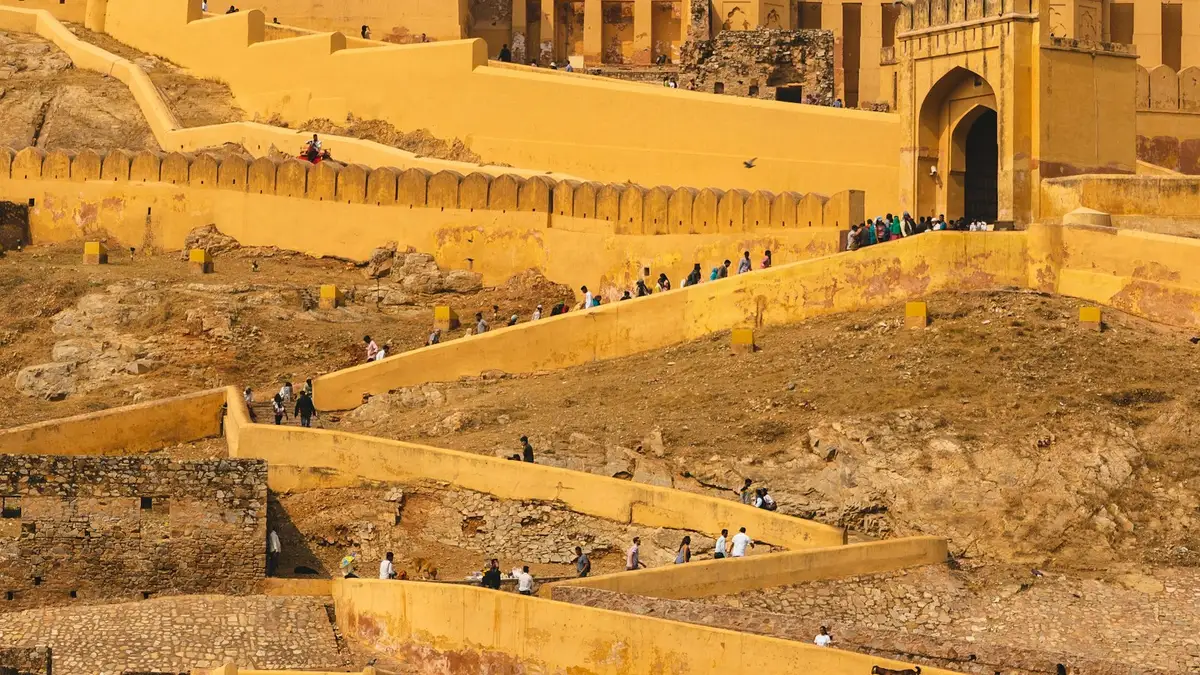
UDAIPUR: Nestled just 3 kilometers east of the bustling city center, the historic enclave of Ahar offers travelers a serene yet deeply profound look into the royal lineage of Mewar. Far from the crowded commercial tourist spots, this sprawling royal cremation ground features over 250 magnificent domed marble and sandstone structures dedicated to the Maharanas and members of the royal family. For heritage enthusiasts planning a trip, understanding the Ahar Cenotaphs Udaipur royal chhatris and museum timings is essential for crafting a seamless itinerary that balances architectural appreciation with historical exploration.
⚡ Quick Highlights: Ahar Cenotaphs Udaipur 2026: Royal Chhatris, Timings & Fees
The Ahar site serves as the final resting place for the rulers of Mewar, featuring majestic chhatris that reflect the architectural evolution from the Maharanas of yore. Each elevated domed pavilion is intricately carved with pillars, floral motifs, and sculptural depictions that echo the valor, aesthetics, and spiritual beliefs of the Mewar dynasty. The largest and most prominent among them is the cenotaph of Maharana Amar Singh I, which sets a high standard for traditional Rajput funerary architecture. For those fascinated by grand historical monuments, the region’s rich royal legacy continues to inspire monumental tributes, paralleled by modern infrastructure initiatives such as the project detailed in reports on how NBCC to construct world’s largest Maharana Pratap statue at Haldighati.
Walking through the silent courtyards of Ahar offers an intimate glimpse into dynastic power dynamics and memorial traditions. Unlike the tourist-heavy City Palace, Ahar provides a contemplative sanctuary where visitors can examine the subtle nuances of Rajput stonemasonry, cupolas, and plinths without interruption. (Also read: NBCC to Construct World's Largest Maharana Pratap Statue at Haldighati).
“The carved pillars and soaring domes of Ahar stand as silent sentinels to the unbreakable spirit and architectural brilliance of the Mewar Maharanas.” — Dr. R. K. Sharma, Architectural Historian
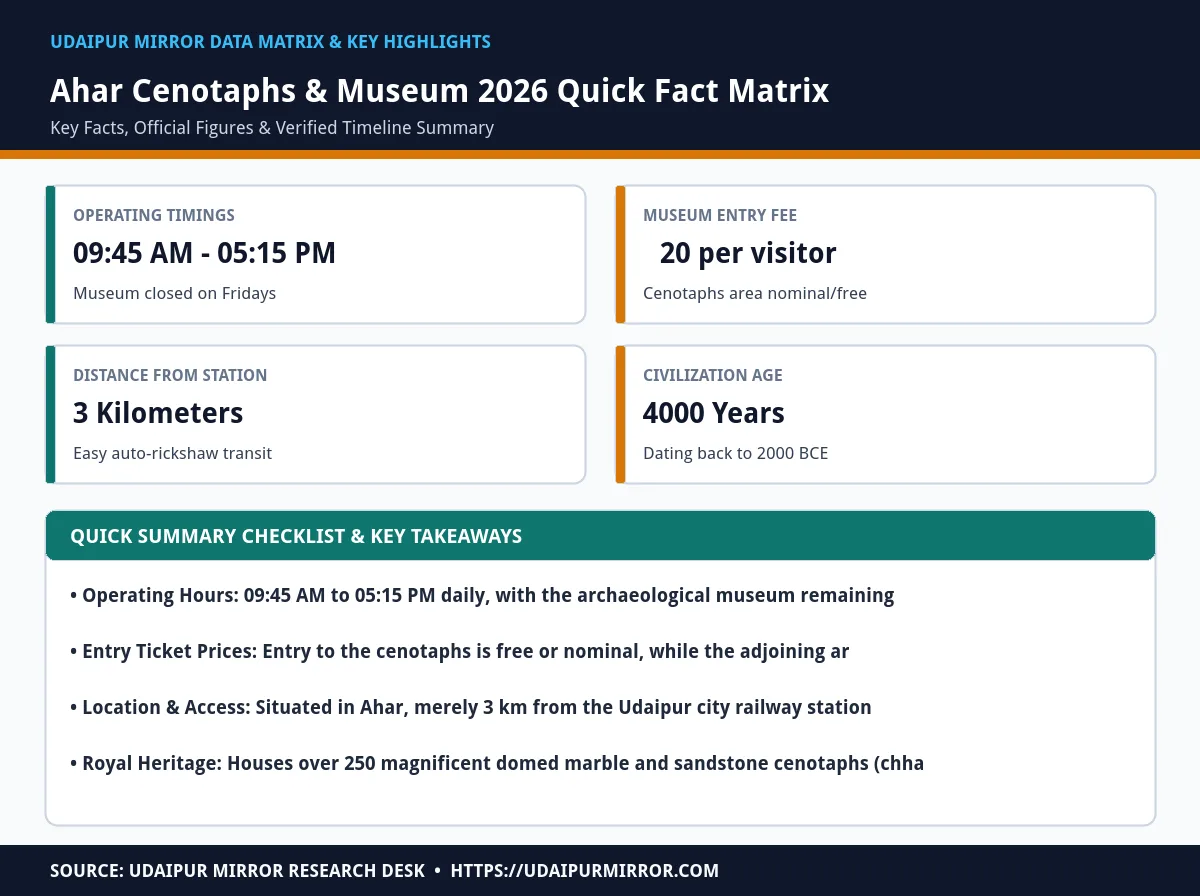
Review the comprehensive fee structure and operational schedule for the Ahar Cenotaphs and Archaeological Museum to plan your 2026 heritage tour efficiently. Please note that while the outdoor cenotaph grounds remain accessible daily, the indoor archaeological galleries observe a weekly holiday on Fridays.
| Facility / Zone | Operating Timings | Standard Entry Fee | Camera & Special Charges |
|---|---|---|---|
| Ahar Royal Cenotaphs (Chhatris) | 09:45 AM – 05:15 PM | Free / Nominal Access | Allowed (No extra flash fee) |
| Ahar Archaeological Museum | 09:45 AM – 05:15 PM (Closed Fridays) | ₹20 per person | Restricted inside galleries |
| Audio Guide Services | Available on-site | Nominal rental rates | Included in equipment rental |
| Auto-Rickshaw Fare (from Station) | As per meter / negotiated | ₹80 – ₹150 one-way | N/A |
Adjacent to the royal cenotaphs stands the Ahar Archaeological Museum, a treasure trove managed by the Rajasthan state department of archaeology and museums. The museum safeguards an exceptional collection of antiquities unearthed from the local mounds that represent the Proto-Historic Ahar-Banas civilization. Dating back over 4,000 years to approximately 2000 BCE, these artifacts shed light on one of ancient India’s prominent copper-age farming cultures.
Exhibits inside the galleries feature black-and-red pottery painted with white geometric designs, terracotta figurines, ancient copper implements, and stone beads. Scholars and students frequently visit the museum to study early agrarian settlement patterns in the Mewar region, making it an invaluable educational stop.
“The black-and-red pottery shards preserved in Ahar provide a direct window into the daily domestic life of copper-age inhabitants from two millennia before Christ.” — Curator, Ahar Archaeological Museum
Capturing the majestic interplay of sunlight and shadow across the marble and sandstone chhatris requires careful timing. Professional photographers and hobbyists recommend visiting either during the early morning hours right after opening at 09:45 AM or during the golden hour shortly before closing at 05:15 PM. The low-angle sunlight highlights the intricate carvings on the pillars and domes, producing exceptional photographic compositions.
Visitors should wear comfortable footwear as walking across the uneven stone platforms is required. Additionally, carrying drinking water and respecting the sanctity of the memorial grounds ensures a pleasant and respectful experience for all heritage seekers. (Also read: Diwali Travel Rush: Extra Coach on Udaipur-Delhi Sarai Express to Ease Passenger Surge).
“Morning and late afternoon light transform the weathered sandstone of Ahar into a canvas of golden hues, perfect for heritage photography.” — Travel & Photography Council of Rajasthan
Reaching the Ahar Cenotaphs from major transit hubs in Udaipur is straightforward and economical. Located approximately 3 kilometers east of the Udaipur City Railway Station, the site can be reached within 10 to 15 minutes by booking an auto-rickshaw via Ayad Road, with fares typically ranging from ₹80 to ₹150 depending on your bargaining skills and starting point.
For travelers arriving directly via Maharana Pratap Airport (UDA), situated about 22 kilometers away, pre-paid airport taxis or app-based cab aggregators provide direct transit to Ahar. The drive takes roughly 35 to 45 minutes along the main highway corridors, making it an easy first or last stop on your Udaipur sightseeing itinerary.
“Ahar's proximity to the city center makes it one of the most accessible offbeat historical sites for travelers arriving by train or bus.” — Udaipur Transport Authority
Because of its strategic location on the eastern periphery of the city, Ahar pairs well with several nearby points of interest to form a balanced half-day itinerary. Visitors can easily combine their morning tour of the cenotaphs with a leisurely evening stroll around Sukhadia Circle, a popular recreational hub known for its vibrant street food stalls and central water fountain.
History enthusiasts can also take a short detour to examine the ancient Ayad River banks and nearby archaeological mounds that give the locality its name. For student travelers and researchers planning academic excursions or competitive pursuits in the region, keeping up with local academic updates—such as those monitored in guides covering upcoming engineering entrance exams 2027 for BTech – latest news updates—ensures a well-rounded perspective on Udaipur’s evolving educational landscape alongside its ancient roots.
“Pairing a morning heritage walk at Ahar with an evening at Sukhadia Circle offers tourists a seamless blend of ancient legacy and modern local life.” — Udaipur Tourism Promotion Board
The Ahar Cenotaphs and Archaeological Museum are open daily from 09:45 AM to 05:15 PM. However, please note that the indoor archaeological museum remains strictly closed on Fridays.
Entry to the outdoor Ahar Cenotaphs complex is free or nominal, while the adjoining Archaeological Museum charges a flat entry fee of ₹20 per person.
Ahar is located approximately 3 kilometers east of the Udaipur City Railway Station. You can easily reach the site in 10 to 15 minutes by hiring an auto-rickshaw via Ayad Road.
The museum houses rare antiquities and black-and-red pottery dating back 4,000 years to the Proto-Historic Ahar-Banas civilization (circa 2000 BCE), representing one of ancient India’s earliest copper-age agrarian cultures.
Add Udaipur Mirror as a preferred source on Google to see more of our travel guides in your AI overviews.



[…] Bijli Yojana Rajasthan: Online Apply, Subsidy Rates & Net Metering Rules 5 seconds ago ⚡ Articles Ahar Cenotaphs & Museum Udaipur Guide 2026: Royal Mewar Chhatris, 4000-Year Archaeolog… Apple iPhones Vivo X500 FE Receives IMDA Certification in Singapore Ahead of Launch 1 hour ago ⚡ […]