Office Address
14, Residency Road, Udaipur, Rajasthan 313001
Office Address
14, Residency Road, Udaipur, Rajasthan 313001

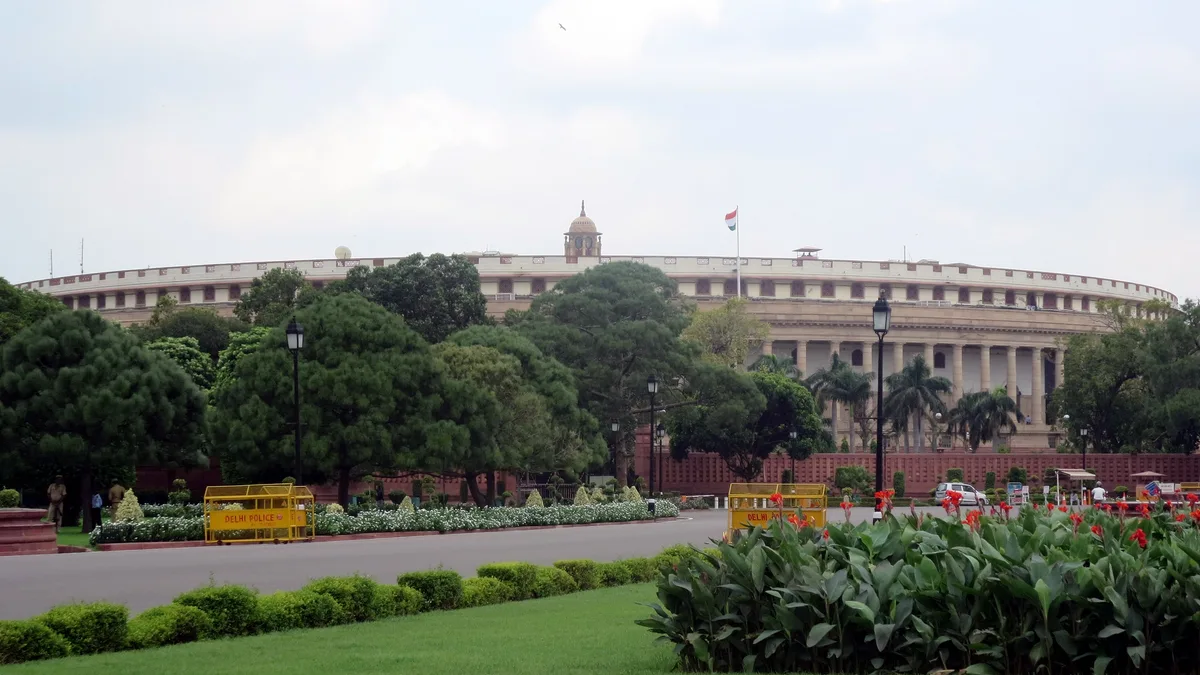
NEW DELHI: In the latest supreme court sc st constituency rotation, nEW DELHI — In a significant constitutional governance ruling delivered this week, the Supreme Court of India firmly dismissed a petition advocating for the periodic mandatory rotation of Lok Sabha and State Legislative Assembly seats reserved for Scheduled Castes (SC) and Scheduled Tribes (ST). The apex bench underscored that the mechanics of boundary delimitation and seat reservation parameters are entirely statutory domains governed by the legislature. Legal experts note that this judgment preserves institutional stability across electoral landscapes, preventing judicial overreach into policy frameworks handled by statutory bodies. As political analysts weigh in on this definitive verdict, citizens and regional administrators continue monitoring administrative developments closely, much like how local authorities in Rajasthan recently utilized the Rajasthan Infrastructure Tracker Launched to Monitor Project Delays and Accelerate State Development to streamline state growth metrics without disrupting established institutional frameworks.
⚡ Quick Highlights: Supreme Court Rejects Plea on SC/ST Constituency Rotation
The Supreme Court bench, while reviewing the public interest litigation, made it explicitly clear that altering the current framework of reserved constituencies requires explicit legislative amendment rather than judicial intervention. The bench emphasized that the distribution and rotation of reserved seats involve complex socio-political factors, demographic surveys, and legislative consensus which fall outside the purview of judicial rulemaking.
Legal counsels for the respondents argued that freezing constituency boundaries and reservation statuses until the completion of future census exercises is vital for administrative certainty. This ruling reinforces the foundational doctrine of separation of powers, ensuring that elected representatives in Parliament retain the sole prerogative to amend electoral laws. Meanwhile, administrative vigilance continues across other sectors, mirroring how civic bodies recently acted during the Udaipur Food Safety Crackdown: Sweets Outlets Fined Rs 25,500 and Expired Goods Destroyed to maintain statutory compliance.
“The restructuring of constituencies and reservation rotation are matters of legislative policy governed by statutory enactments. The judiciary cannot step into the shoes of Parliament.” — Supreme Court Bench
A detailed breakdown of key legislative milestones, constitutional provisions, and judicial rulings governing seat reservations for marginalized communities in India.
| Milestone / Act | Governing Body | Core Objective | Constitutional Ref |
|---|---|---|---|
| Delimitation Act 2002 | Parliament of India | Readjustment of constituencies based on 2001 census data. | Article 82 & 170 |
| SC/ST Reservation Mandate | Election Commission | Proportional representation in Lok Sabha and state assemblies. | Article 330 & 332 |
| Supreme Court Verdict 2026 | Supreme Court Bench | Rejects mandatory rotation plea, deferring power to Parliament. | Article 141 |
| Electoral Reform Debates | Parliamentary Committees | Ongoing discussions on representation equity and administrative feasibility. | Statutory Rules |
The petitioners had contended before the apex court that the lack of periodic rotation in certain reserved constituencies for Scheduled Castes and Scheduled Tribes deprives other regions and communities of adequate representation. They argued that continuous reservation of specific seats creates stagnation and prevents a broader distribution of developmental focus across different districts.
On the other hand, the Union government and defending legal teams countered that arbitrary rotation without a comprehensive, nationwide census update could lead to administrative chaos and legal challenges. They maintained that the existing statutory framework under the Delimitation Act ensures stability and transparent representation in accordance with constitutional guidelines.
“Systemic adjustments in electoral boundaries demand comprehensive census data and parliamentary consensus, not piecemeal judicial directives.” — Senior Government Counsel
With the Supreme Court closing the door on judicial intervention in constituency rotation, all eyes now turn toward Parliament and upcoming legislative sessions. Lawmakers face mounting pressure from various social groups seeking equitable legislative access, setting the stage for intense parliamentary debates on future delimitation roadmaps.
Political observers note that any prospective changes to the reservation matrix will likely be deferred until national census operations and subsequent delimitation exercises are formally initiated by the Union government. Until then, political parties across the spectrum must navigate the existing electoral map while addressing grassroots demands for inclusive governance. (Also read: Rajasthan Infrastructure Tracker Launched to Monitor Project Delays and Accelerate State Development).
“Parliament remains the supreme forum for debating structural electoral reforms and addressing the aspirations of all marginalized communities.” — Constitutional Expert
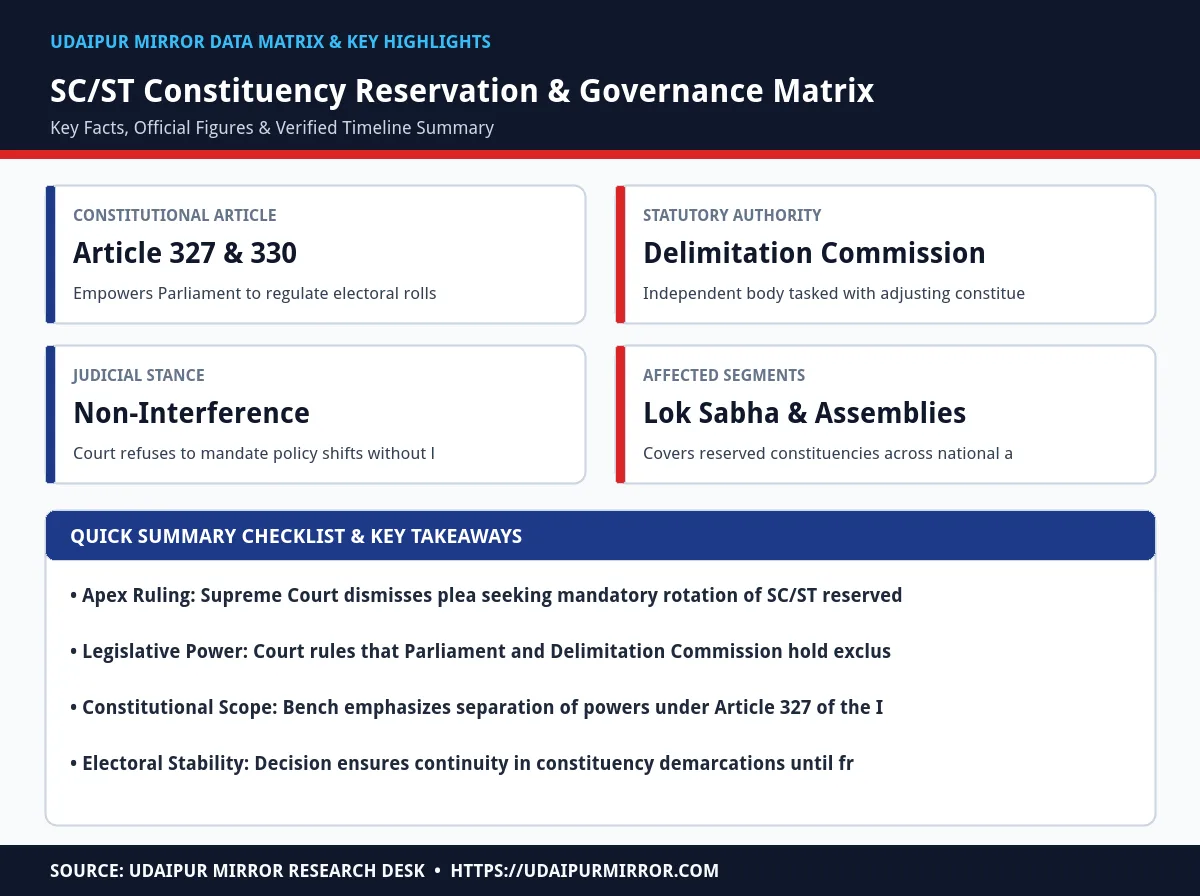
The Supreme Court rejected the plea seeking mandatory rotation of SC/ST reserved constituencies, ruling that Parliament and the Delimitation Commission hold exclusive jurisdiction over such matters.
The apex court cited the separation of powers, stating that restructuring electoral boundaries and reservation rotation involve complex legislative policy and statutory enactment rather than judicial rulemaking.
Constituency boundaries and reservation statuses are governed by Parliament through statutory enactments executed by the independent Delimitation Commission.
The ruling maintains the status quo, ensuring that existing SC and State Legislative Assembly reserved constituencies remain unchanged until Parliament enacts new delimitation laws based on census data.
Add Udaipur Mirror as a preferred source on Google to see more of our travel guides in your AI overviews.