Office Address
14, Residency Road, Udaipur, Rajasthan 313001
Office Address
14, Residency Road, Udaipur, Rajasthan 313001

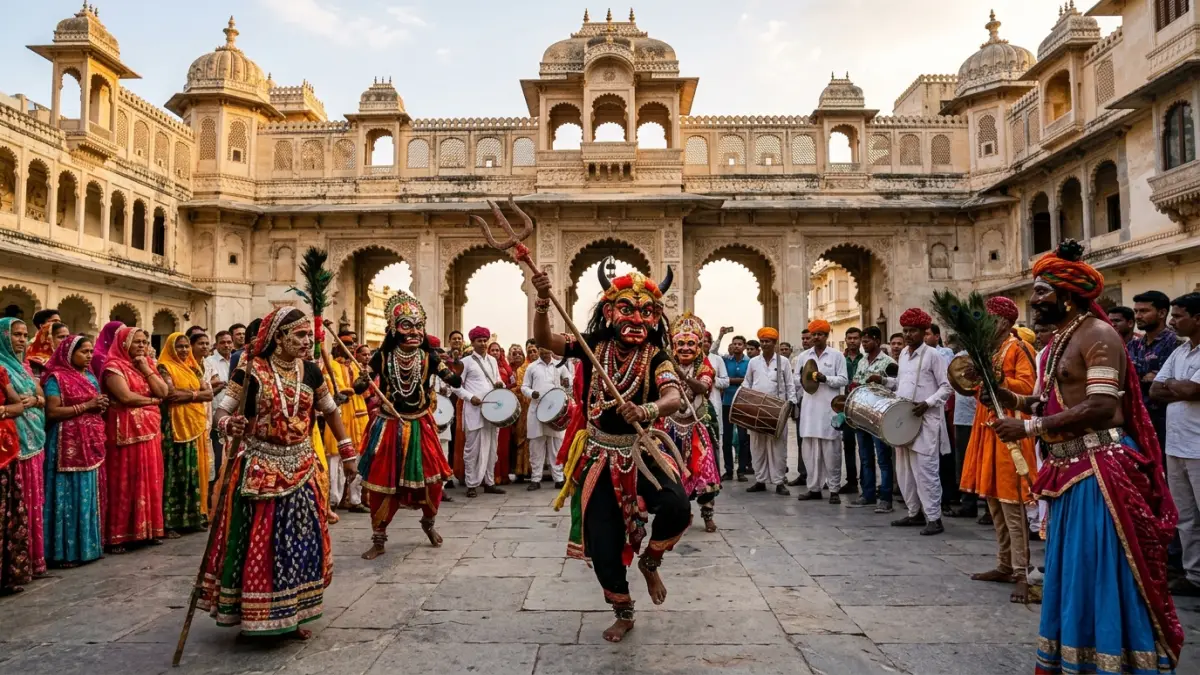
UDAIPUR: In a historic civic and cultural milestone designed to propel southern Rajasthan’s centuries-old living heritage onto the world stage, the Udaipur Municipal Corporation (UMC) has initiated formal proceedings to nominate the Lake City to the prestigious UNESCO Creative Cities Network (UCCN). Under the directives of Mayor Paras Singhvi and Municipal Commissioner Abhishek Khanna (IAS), the civic body has floated a competitive tender to enlist an expert consultancy firm that will curate an exhaustive documentation dossier covering over 100 indigenous folk arts, tribal performances, handicrafts, sacred rituals, and traditional culinary heritage of Mewar.
The global push comes at an auspicious juncture as the Lake City celebrates its living performing arts during Shardiya Navratri. From hilltop devotional congregations featured in our Best Garba & Dandiya Raas Venues Across Udaipur Guide to rural craft hubs at Shilpgram, the UNESCO dossier aims to weave these decentralized traditions into a globally recognized cultural framework.
A primary catalyst behind the municipal corporation’s urgent push was the need for authentic, state-endorsed cultural documentation. Recently, ill-informed and sensationalized commentary surfaced on social media platforms misinterpreting the sanctity of Gavri (गवरी)—the 40-day devotional dance-drama performed exclusively by the indigenous Bhil and Gameti tribal communities of Mewar in reverence of Goddess Gorja (Gauri/Parvati).
The UNESCO proposal will construct an authoritative academic and ethnographic record of Gavri, chronicling:
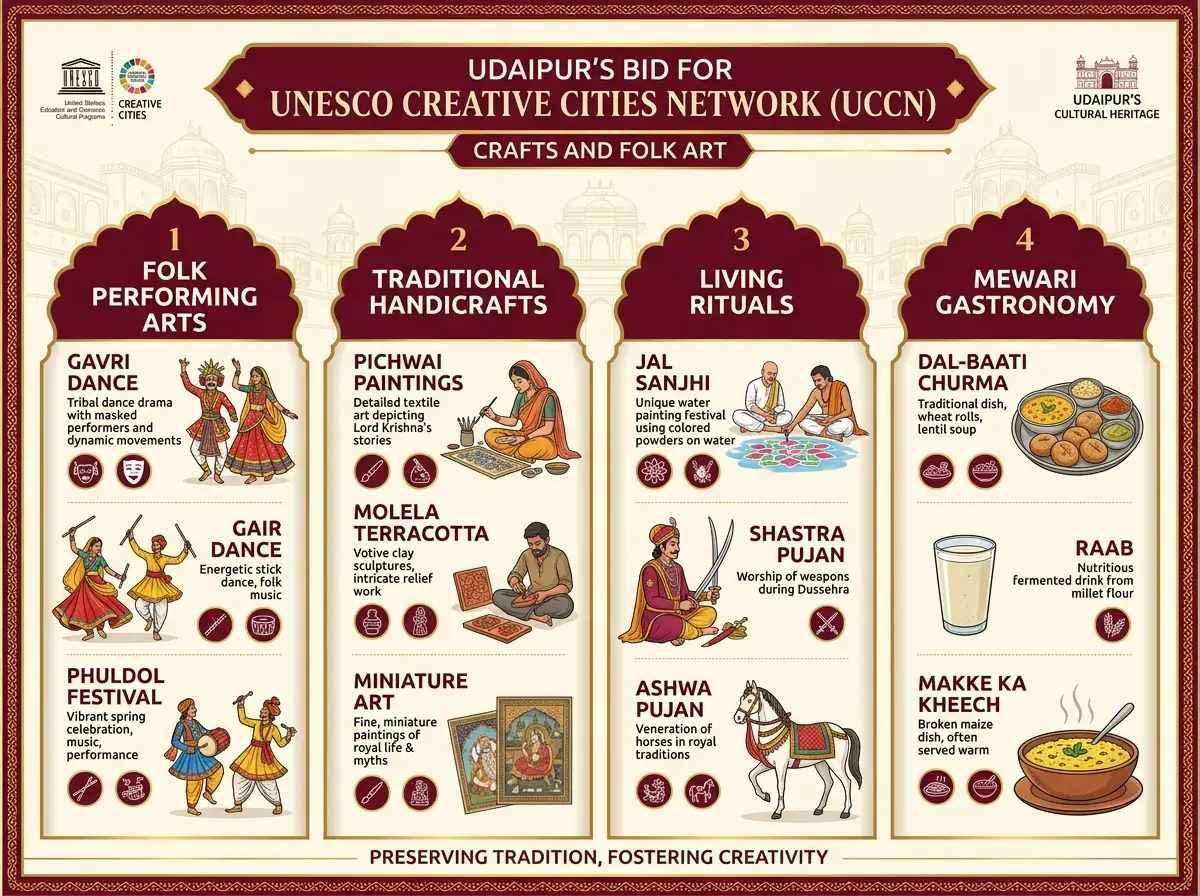
Beyond dance, the nomination dossier spotlights Mewar’s generational artisanal guilds whose mastercraft continues to thrive in surrounding clusters and royal atelier quarters:
The dossier uniquely highlights intangible ritual art forms that survive solely in Udaipur’s living culture:
Foremost among these is Jal Sanjhi (जल सांझी)—an extraordinary ephemeral ritual practiced at ancient lakeside shrines like the Radhakant Temple, where priests float intricate spiritual portraits of Radha-Krishna directly atop water using insoluble colored vegetable powders. Additionally, royal martial traditions such as Shastra Pujan (weapon worship) and Ashwa Pujan (veneration of the indigenous Marwari horses) during Dussehra will be meticulously archived to showcase Mewar’s civilizational reverence for tools, ecology, and animals.
Food heritage forms an indispensable pillar of modern creative cities. The municipal corporation is partnering with regional culinary historians to document the authentic preparation methods and nutritional science behind native Mewari dishes:
| Traditional Dish | Indigenous Ingredients | Cultural Significance |
|---|---|---|
| Dal-Baati-Churma | Whole wheat dumplings, mixed lentils, pure desi ghee, jaggery. | Mewar’s iconic celebratory meal, originally designed for desert military campaigns. |
| Makke Ki Raab & Roti | Stone-ground maize flour, spiced churned buttermilk, ajwain. | Nutritious monsoon and winter staple supporting gut health and farming stamina. |
| Makke Ka Kheech | Broken corn grains, cumin, alkaline papad khar, ghee. | Sacred offering prepared during post-harvest religious fasts. |
| Gatte & Dhokle | Gram flour (besan), whole spices, steamed corn meal dumplings. | Signature zero-water-waste culinary techniques adapted to arid geography. |
| Lapsi | Broken wheat (dalia), jaggery, cardamom, ghee. | Sacred sweet dish cooked during Griha Pravesh and Vedic sacrificial rituals. |
Municipal Commissioner Abhishek Khanna (IAS) affirmed that the project goes far beyond a ceremonial title. Once the consultant is finalized, a comprehensive five-year implementation roadmap will be drafted to unlock substantial socio-economic dividends for regional artists:
Created in 2004, the UNESCO Creative Cities Network promotes international cooperation among cities that have identified creativity as a strategic driver for sustainable urban development across fields including Crafts & Folk Art, Design, Film, Gastronomy, Literature, Media Arts, and Music.
Gavri is an ancient, 40-day tribal ritual dance-drama indigenous to the Bhil community of Mewar. Rigorous institutional documentation is being established to protect its sacred cultural identity against social media misinformation and present its spiritual depth to global cultural bodies.
Jal Sanjhi is an endangered, rare visual art form preserved in Udaipur’s Krishna temples where elaborate paintings depicting deities and nature are created directly floating on the surface of calm water using specialized water-repellent natural color powders.
Inclusion in UCCN will unlock international funding, foster global cultural exchanges, protect artisan intellectual property, create direct artisan-to-consumer digital markets, and establish Udaipur as a global epicenter for experiential cultural tourism.
Add Udaipur Mirror as a preferred source on Google to see more of our travel guides in your AI overviews.