Office Address
14, Residency Road, Udaipur, Rajasthan 313001
Office Address
14, Residency Road, Udaipur, Rajasthan 313001

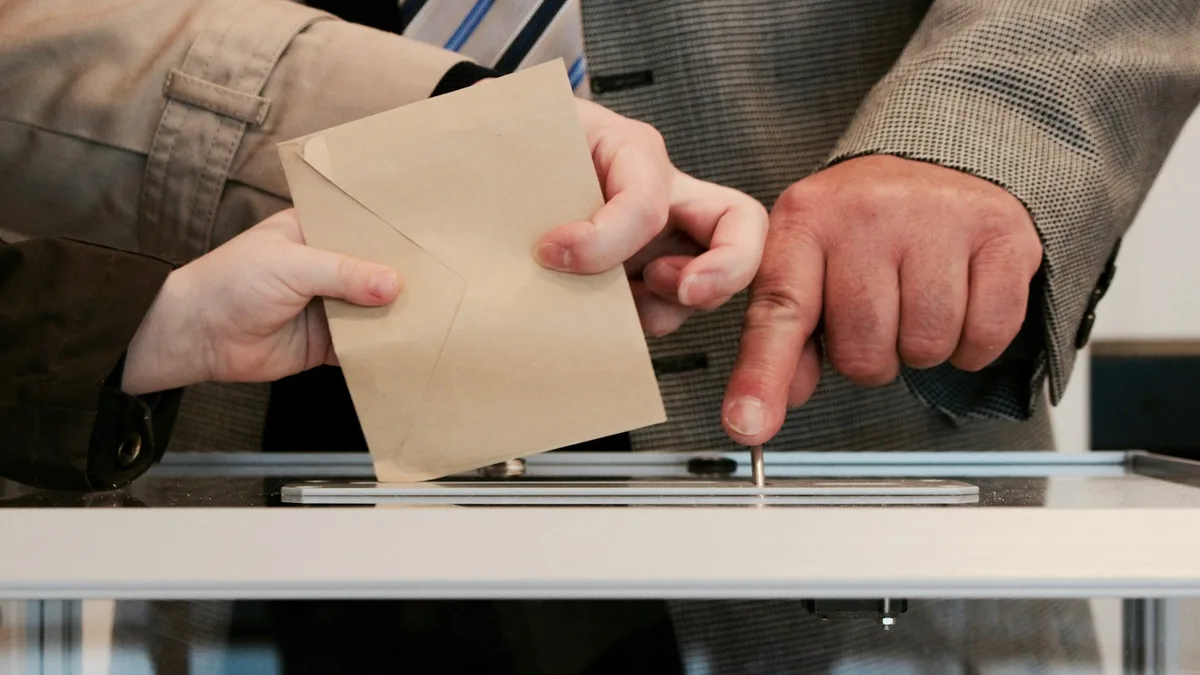
NEW DELHI: NEW DELHI — In a significant development concerning national governance and democratic integrity, former Supreme Court judge justice gopala gowda criticises eci over widespread controversies surrounding voter list deletions. Speaking at a public legal forum in the national capital, Justice Gowda underscored that institutional transparency forms the bedrock of a functioning parliamentary democracy, warning that unchecked administrative omissions risk eroding citizen trust in independent electoral bodies. This critique arrives amid heightened scrutiny from opposition leaders and civil society groups demanding rigorous accountability measures from poll officials.
⚡ Quick Highlights: Justice Gopala Gowda Criticises ECI Over Voter List Deletions
The debate surrounding the independence and functional transparency of India’s poll panel intensified significantly following the sharp remarks delivered by former Supreme Court judge Justice Gopala Gowda. Addressing legal scholars and constitutional experts, Gowda noted that administrative lapses in maintaining error-free electoral rolls directly infringe upon the fundamental voting rights guaranteed to citizens. While public welfare measures such as the Mukhyamantri Ayushman Arogya Yojana cater to socio-economic security, the basic political right to cast a ballot remains paramount.
Legal analysts point out that discrepancies in voter databases, particularly in fast-growing urban centers, have historically disenfranchised migrant workers, marginalized communities, and low-income households. The latest commentary brings these systemic gaps back to the forefront of national legal discourse. (Also read: Cricket Photos – NZ vs IND, 1st Test Pictures Showcase Action from Wellington).
“An independent electoral commission must not only be fair in practice but transparent in every procedural detail to maintain public faith.” — Justice Gopala Gowda, Former Supreme Court Judge
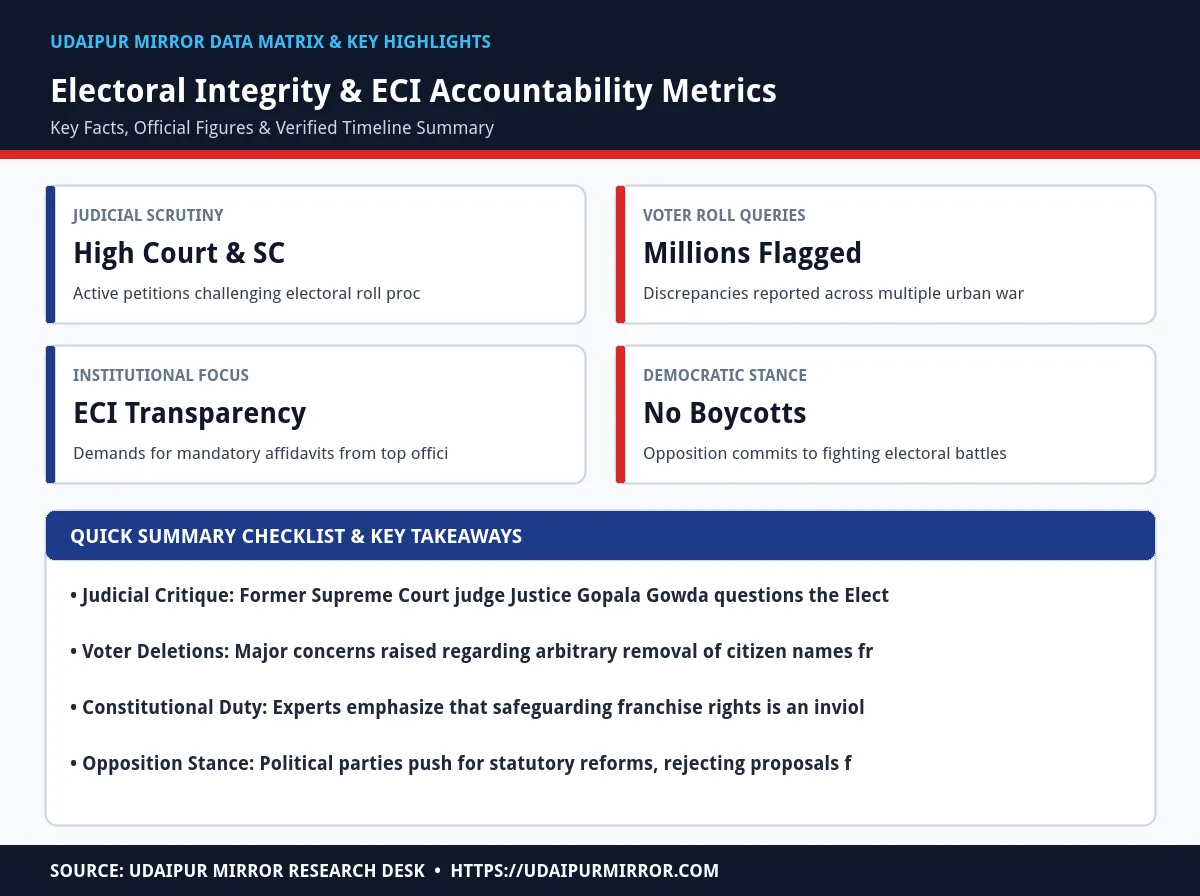
The following structured timeline highlights the key events, judicial interventions, and prominent leadership statements concerning election administration and voter list controversies leading up to November 2026.
| Date | Authority / Stakeholder | Key Development | Primary Focus Area |
|---|---|---|---|
| Nov 19, 2026 | Justice Gopala Gowda | Criticises ECI over systematic voter list deletions | Electoral Transparency |
| Nov 19, 2026 | Rahul Gandhi (US Visit) | Clarifies opposition strategy will avoid election boycotts | Democratic Participation |
| Nov 18, 2026 | Karnataka & SEC | Requests Supreme Court to allow civic polls on old rolls | Local Body Elections |
| Nov 18, 2026 | Supreme Court Bench | Increases regulatory pressure on Election Commission | Statutory Oversight |
| Early Nov 2026 | Opposition Parties | Seeks formal affidavits from top electoral officials | Accountability Measures |
| Oct 2026 | Civil Society Groups | Files PILs regarding missing names in urban electoral rolls | Voter Rights Protection |
Parallel to judicial interventions, national political players have recalibrated their approach to electoral administration. During a recent interaction abroad, senior opposition figures categorically ruled out any possibility of boycotting upcoming electoral contests, emphasizing that withdrawing from the democratic arena would spell disaster for constitutional governance. Meanwhile, sports enthusiasts and citizens tracking national updates continue to follow diverse stories, ranging from political debates to updates like NZ vs IND cricket action.
Political strategists argue that fighting administrative challenges from within the system is the only viable path to pressuring regulatory bodies into adopting bulletproof data-handling practices.
“Indian democracy would end that very instant if the opposition ever chose to boycott elections and walk away from the people.” — Senior Political Leadership
The apex court has simultaneously stepped up its oversight, putting the Election Commission and state election authorities under severe pressure. In recent hearings, state machinery—such as the Karnataka State Election Commission—has petitioned the Supreme Court for permissions to conduct civic elections utilizing legacy voter lists to prevent administrative delays.
Constitutional experts observe that the friction between using updated rolls and maintaining election timelines highlights an urgent need for technological upgrades within India’s electoral machinery. (Also read: Udaipur Municipal Corporation Allots 18,000 Sq Ft Land for Khadi Mela, Generates ₹54.90 Lakh Revenue | खादी मेला 20 से).
“Judicial oversight is essential when administrative convenience threatens to override citizen franchise rights.” — Constitutional Law Expert
As India heads toward future electoral cycles across multiple states, restoring absolute faith in the Election Commission’s processes is imperative. Legal experts have urged the introduction of mandatory digital tracking systems that notify citizens instantly whenever their registration status undergoes any modification.
Ultimately, the convergence of judicial criticism, political vigilance, and public activism is expected to push the ECI toward greater transparency, ensuring that no eligible citizen is left behind.
Justice Gopala Gowda expressed deep concern over widespread, arbitrary voter list deletions that threaten citizen franchise rights and undermine institutional transparency.
Major opposition leaders have categorically rejected the idea of boycotting elections, stating that doing so would severely damage Indian democracy and that challenges must be fought from within.
The Supreme Court is actively scrutinizing ECI procedures, reviewing petitions regarding missing names, and handling appeals from state election commissions regarding voter roll criteria for civic polls.
Experts recommend real-time digital notification systems for status updates, independent third-party audits of electoral databases, and expedited grievance redressal mechanisms.
Add Udaipur Mirror as a preferred source on Google to see more of our travel guides in your AI overviews.