Office Address
14, Residency Road, Udaipur, Rajasthan 313001
Office Address
14, Residency Road, Udaipur, Rajasthan 313001

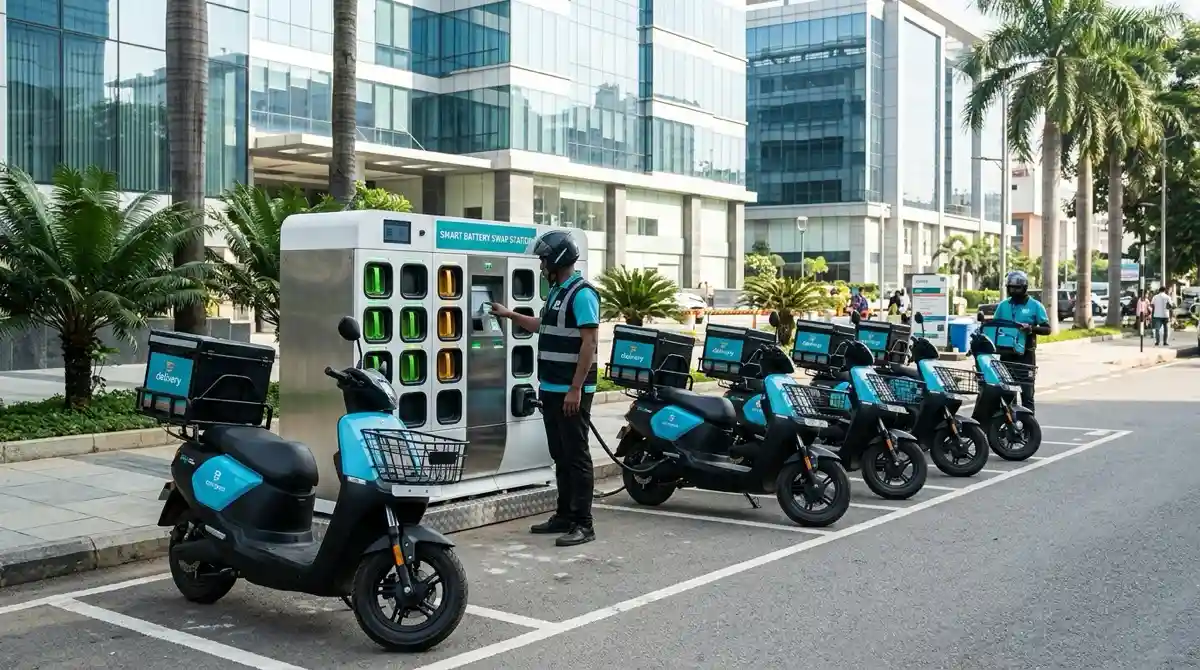
What began in 2017 as a modest urban bike-sharing experiment in Bengaluru has transformed into India’s most ubiquitous micro-mobility backbone. Today, Yulu AWS of Mobility powers over 750,000 daily deliveries across India’s booming quick-commerce, e-commerce, and food delivery ecosystems, fueled by a purpose-built fleet of nearly 50,000 electric vehicles (EVs).
When the COVID-19 pandemic disrupted everyday office commutes and triggered an explosive surge in online grocery and food delivery, Yulu made a decisive strategic pivot. By shifting its focus from everyday city commuters to delivery gig workers, the startup unlocked a resilient, compounding business model that is redefining urban logistics across Indian metros.
In its initial avatar, Yulu deployed small pedal bicycles and light low-speed scooters primarily to solve first-and-last-mile connectivity for office-goers and metro rail commuters. However, casual commuter rentals suffered from sporadic usage, weather dependency, and unpredictable unit economics.
The pandemic forced a rethink. As millions of urban households turned to on-demand doorstep deliveries, thousands of delivery executives joined platforms like Amazon, Flipkart, Blinkit, Zepto, Swiggy, and Zomato. These gig workers needed reliable, fuel-free, and cost-effective transport without the burden of down payments, financing interest, or vehicle maintenance. Yulu found its ideal second customer.
Yulu Co-Founder and CEO Amit Gupta frequently describes the company as the “AWS of mobility.” Just as Amazon Web Services (AWS) provides scalable digital cloud infrastructure that businesses rent rather than build from scratch, Yulu provides a shared physical and energy infrastructure that powers hyper-local logistics.
| Operational Metric | Current Benchmark | Strategic Roadmap & Targets |
|---|---|---|
| Active Fleet Size | ~50,000 Electric Two-Wheelers | Targeting 200,000 EVs in 2 Years |
| Daily Deliveries Powered | 750,000+ Completed Shipments | Projected to Exceed 2 Million/Day |
| Geographic Footprint | 12 Tier-1 and Tier-2 Cities | Expanding to 20+ Metros in 12 Months |
| Revenue Composition | 95% Gig Delivery Rentals | 5% Commuter & Public Rentals |
| Recent Funding Milestone | $93 Million (Series C Round) | Dedicated to Fleet Scaling & Infra |
Behind Yulu’s visible operational milestone of 750,000 daily deliveries lies a remarkably steady recurring revenue flywheel. Gig delivery riders rent Yulu EVs on weekly rental subscriptions rather than per-kilometer fares.
Consequently, each electric vehicle earns predictable, recurring rental revenue week after week. Furthermore, by pairing its purpose-built electric bikes (such as the Yulu Wynn and DeX) with battery-as-a-service (BaaS) swapping networks developed in partnership with Magna (Yuma Energy), downtime is reduced to under two minutes. Riders swap depleted battery packs for fully charged ones seamlessly, eliminating charging anxiety and maximizing on-road earning hours.
Yulu has established deep integration partnerships with India’s leading delivery platforms, including Amazon, Flipkart, Blinkit, Zepto, Swiggy, and Zomato. By embedding its fleet directly into dark-store supply chains, delivery partners can onboard instantly without owning a personal vehicle or having a driving license for low-speed models.
This operational model not only democratizes employment opportunities for migrant gig workers but also slashes operational fuel costs by up to 40% compared to traditional internal combustion engine (ICE) petrol scooters.
Yulu’s journey offers an instructive blueprint for modern technology founders. An asset that begins with one consumer demographic can unlock exponential scale when repurposed to solve enterprise infrastructure bottlenecks.
As India targets complete electrification of two-wheeler commercial fleets by 2030, Yulu’s evolution from humble pedal bikes to an enterprise EV utility proves that building resilient infrastructure assets generates compounding value. Explore more in-depth market analyses in our Business section, follow groundbreaking developments in the EV Sector, and browse the latest Tech updates.
Yulu is an Indian micro-mobility startup founded in 2017 in Bengaluru. It started as a dockless bike-sharing service for city commuters before pivoting to electric vehicle fleets for quick-commerce delivery riders.
Yulu is termed the ‘AWS of Mobility’ because it offers shared, on-demand physical electric vehicle fleets and battery swapping infrastructure that delivery platforms and riders can rent as a service instead of owning assets.
Yulu currently operates a fleet of approximately 50,000 electric vehicles across 12 cities, powering over 750,000 deliveries every day.
Approximately 95% of Yulu’s revenue comes from renting electric two-wheelers to gig delivery partners on weekly rental plans, with the remaining 5% derived from station-based commuter rentals.
Following a $93 million Series C funding round, Yulu plans to expand its operational footprint from 12 to 20 cities and scale its electric vehicle fleet to 200,000 units within two years.
Add Udaipur Mirror as a preferred source on Google to see more of our travel guides in your AI overviews.

