Office Address
14, Residency Road, Udaipur, Rajasthan 313001
Office Address
14, Residency Road, Udaipur, Rajasthan 313001

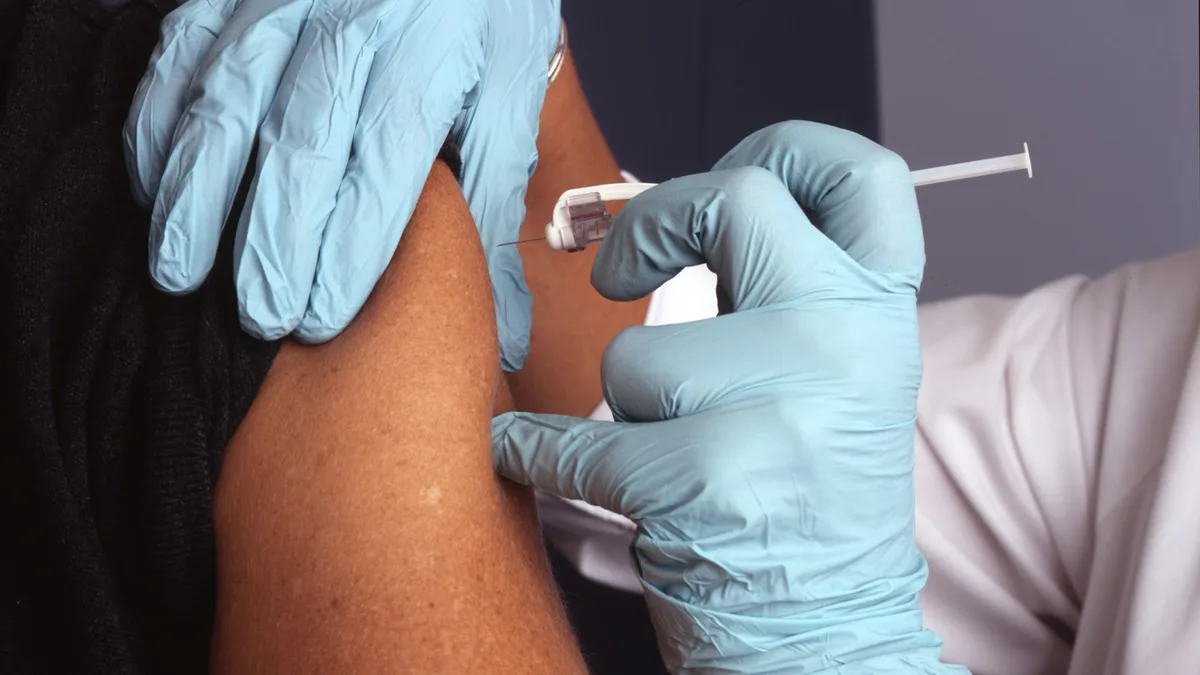
HARRISBURG, PA: Public health authorities across the United States are closely monitoring a notable measles surge in pennsylvania, which has alarmed regional medical centers and epidemiology boards. As of Tuesday, November 3, 2026, state health departments have confirmed multiple exposure sites, prompting immediate containment protocols. Clinical experts attribute the sudden uptick to localized immunity gaps and declining MMR vaccine uptake among school-aged children. Medical professionals are advising families to review immunization records immediately, watch for early flu-like symptoms, and isolate suspected cases to prevent broader transmission within community hubs, schools, and transit networks.
⚡ Quick Highlights: Measles Surge In Pennsylvania: Public Health Advisory 2026
The current public health response in Pennsylvania focuses heavily on contact tracing and identifying secondary transmission chains. Health officials have established temporary vaccination outposts in affected districts, mirroring rigorous regulatory enforcement seen in other sectors, such as Udaipur Health Department crackdown on adulteration, where swift administrative action curbed public health hazards. In the case of the Pennsylvania measles escalation, epidemiologists stress that containment requires immediate identification of non-immunized residents who may have crossed paths with index patients in retail complexes, transit terminals, or educational facilities.
State laboratories are processing diagnostic samples around the clock to confirm suspected cases within 24 hours. Healthcare providers have been instructed to report any presentation of febrile rash illness immediately to county health officers. While public health authorities manage the crisis, families are encouraged to remain calm, verify their vaccination histories through state medical registries, and avoid crowded indoor spaces if they exhibit early signs of respiratory illness. (Also read: Udaipur Real Estate 2026: UDA Plot Allotments, Revised DLC Rates & Property Trends).
“Measles is entirely preventable, but its extreme contagiousness means any slip in herd immunity can trigger rapid and widespread community outbreaks.” — Dr. Aris Thorne, Regional Epidemiology Consultant
Understanding the multi-stage progression of measles is critical for early detection and preventing community spread. Review the standard symptom phases, typical onset timelines, and clinical characteristics detailed in the reference matrix below.
| Infection Phase | Typical Onset | Core Clinical Symptoms | Contagious Status |
|---|---|---|---|
| Incubation Period | Days 1 to 7 | No symptoms present; virus replicates quietly within respiratory tract. | Not Contagious |
| Prodromal Stage | Days 10 to 12 | High fever, persistent cough, runny coryza, and red watery conjunctivitis. | Highly Contagious |
| Enanthem Phase | Days 11 to 13 | Appearance of Koplik spots (tiny white spots inside the inner cheeks). | Highly Contagious |
| Eruptive Rash | Days 14 onward | Maculopapular red rash starting at hairline and spreading downward. | Highly Contagious |
| Recovery Phase | Week 3 | Fever subsides, rash fades to brownish discoloration with light scaling. | Non-Contagious |
Recognizing the early manifestations of measles is vital for preventing accidental exposure in public places. Unlike ordinary seasonal influenza or common colds, measles begins with a classic triad of cough, coryza (runny nose), and conjunctivitis, accompanied by a soaring fever that can surpass 103 degrees Fahrenheit. Around the second or third day of symptoms, characteristic Koplik spots—small white lesions with bluish-white centers on a red base—frequently appear on the oral mucosa inside the cheeks.
As the respiratory illness progresses, a distinctive maculopapular rash develops, typically starting on the face and hairline before moving downward over the neck, trunk, arms, and legs. Local civic developments and regional infrastructure planning, much like updates discussed in reports on Udaipur real estate 2026 plot allotments, pale in comparison to the urgent imperative of safeguarding community biological health. Citizens noticing these symptoms should contact their physician by phone prior to visiting a clinic to ensure proper isolation upon arrival.
“If you or your child develop a high fever paired with a spreading red rash, call your healthcare provider before walking into a waiting room.” — Pennsylvania Department of Health Advisory
The cornerstone of measles prevention remains the two-dose Measles, Mumps, and Rubella (MMR) vaccine schedule. Pediatricians recommend that infants receive their first dose between 12 and 15 months of age, with a second booster administered before kindergarten entry between ages four and six. Adults born after 1957 who lack documented evidence of immunity or laboratory confirmation of previous infection should also seek a booster dose, particularly if they live or work in high-risk environments.
Maintaining high community vaccination coverage—ideally above 95 percent—creates a robust shield of herd immunity that protects infants too young to be vaccinated and individuals with compromised immune systems. Public health agencies are launching educational campaigns to dispel misinformation regarding vaccine safety and efficacy, emphasizing that extensive peer-reviewed medical data overwhelmingly supports the safety profile of the MMR immunization. (Also read: Ramayana advance booking: Ranbir Kapoor film clocks Rs 115 cr globally, trails Dhurandhar 2).
“Vaccination is not just a personal health choice; it is a collective responsibility that shields our most vulnerable neighbors from severe complications.” — National Immunization Coalition
While many individuals recover from measles without permanent ill effects, the virus can lead to severe and occasionally life-threatening complications. Common secondary issues include acute otitis media (ear infections) and bacterial pneumonia, which is a leading cause of measles-related mortality in young children. More severe neurological complications, such as acute encephalitis, can cause permanent brain damage, while subacute sclerosing panencephalitis (SSPE) represents a rare but fatal degenerative central nervous system disease appearing years after the initial infection.
Pregnant women, infants, malnourished individuals, and immunocompromised patients face the highest risk of severe outcomes if infected. Medical specialists urge anyone exhibiting potential symptoms to seek prompt evaluation to mitigate the risk of pulmonary or neurological involvement. Timely administration of vitamin A and supportive care under clinical supervision remains standard protocol for managing severe clinical manifestations.
“Measles is frequently dismissed as a simple childhood rash, but medical science recognizes it as a serious systemic infection with potential lifelong consequences.” — Chief Medical Officer, State Health Bureau
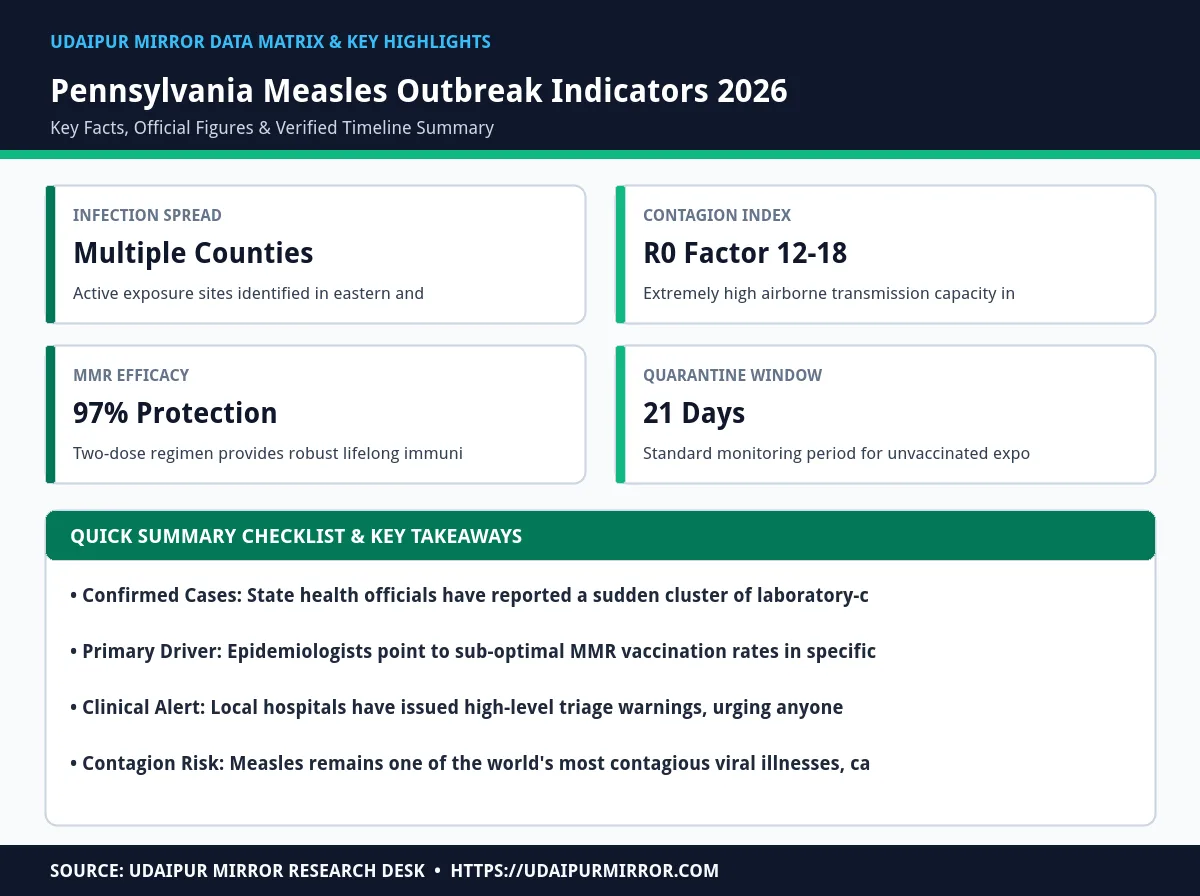
Public health epidemiologists attribute the outbreak to localized immunity gaps and sub-optimal MMR vaccination rates within specific community pockets, allowing the highly contagious virus to spread rapidly upon introduction.
Initial symptoms include a high fever, persistent cough, runny nose, red watery eyes, and the appearance of tiny white spots (Koplik spots) inside the mouth, followed days later by a characteristic maculopapular rash.
Two doses of the MMR vaccine are approximately 97 percent effective at preventing measles and provide long-lasting, robust immunity against infection and severe complications.
If you suspect exposure and develop symptoms, call your healthcare provider or clinic before visiting in person so medical staff can implement isolation protocols and prevent exposing other patients in the waiting area.
Add Udaipur Mirror as a preferred source on Google to see more of our travel guides in your AI overviews.






[…] Street Food & Mewar Cuisine Guide 2026: Iconic Flavors and Heritage Dining 31 minutes ago ⚡ Articles Measles Outbreak Surges Across Pennsylvania Public Health Zones in November 2026 1 hour ag… Articles Udaipur Real Estate 2026: UDA Plot Allotments, Revised DLC Rates & Property Trends 2 […]