Office Address
14, Residency Road, Udaipur, Rajasthan 313001
Office Address
14, Residency Road, Udaipur, Rajasthan 313001

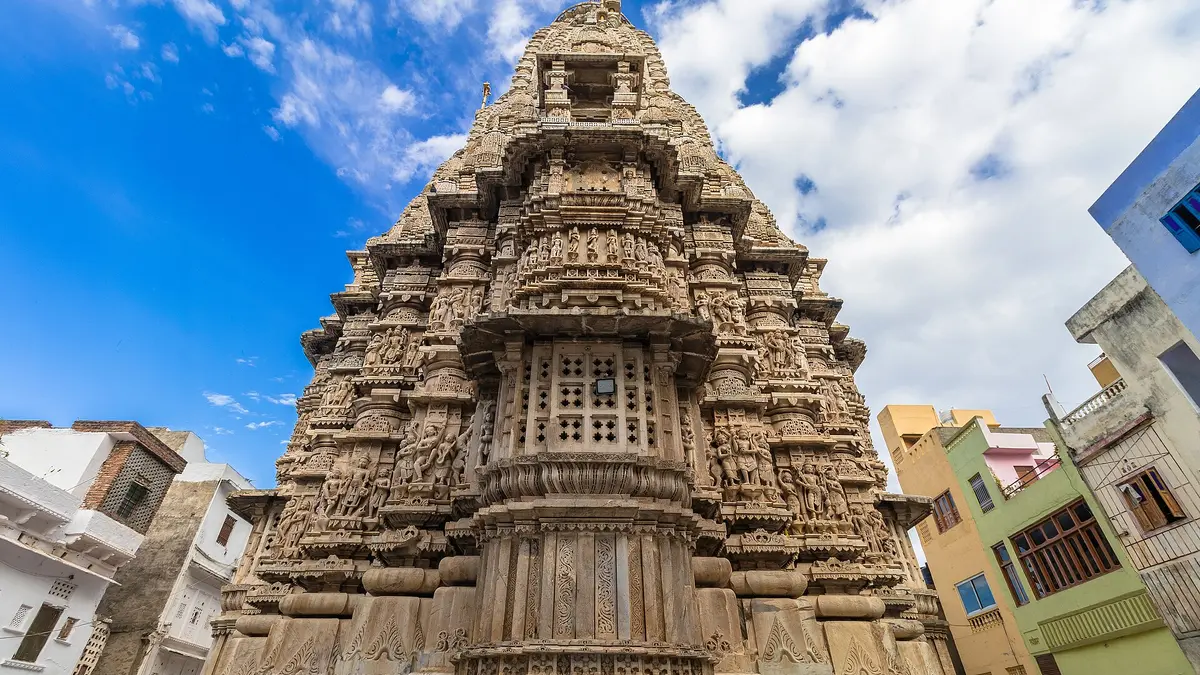
JAGAT, UDAIPUR: Nestled in the picturesque hills of Mewar, approximately 50 kilometers southeast of Udaipur, the ambika mata temple jagat stands as an architectural masterpiece from the 10th century. Often celebrated by art historians and travelers alike as the ‘Khajuraho of Rajasthan’, this historic shrine dedicated to Goddess Durga captivates visitors with its breathtaking stone carvings, pristine sculptural details, and a profound spiritual aura. Built during the reign of King Allata in 961 AD, the temple represents an exceptional pinnacle of the Gurjara-Pratihara architectural style. As heritage tourism surges across Mewar, modern travelers seeking offbeat historical landmarks frequently compare this hidden gem with other classical structures like the iconic Saheliyon Ki Bari Udaipur Ticket Price 2026: Entry Fees, Fountain Timings, Museum & Guide for structured heritage planning.
⚡ Quick Highlights: Ambika Mata Temple Jagat 2026: Architecture & Visiting Guide
The architectural grandeur of the ambika mata temple jagat lies in its exuberant exterior wall carvings, which rival the erotic and celestial friezes found in central India. Structured around a central sanctum (garbhagriha) enclosed by an ambulatory path and an open pillared mandapa, the temple showcases the classic Pancharatha architectural layout. Art historians praise the shrine for its remarkable state of preservation, noting that despite weathering a millennium of climatic changes, its exterior walls retain crisp details of divine iconography. When planning regional heritage trails, savvy investors and travelers balancing personal finances often also review financial management tools such as Planning to invest in debt funds this Diwali? Nilesh Shah and 4 others decode short-term vs long-duration strategies to secure their travel budgets.
The outer facade is divided into multiple horizontal bands depicting divine figures, celestial musicians, and floral motifs. The presiding deity inside the sanctum is an exquisite image of Goddess Ambika seated on her lion mount, carved from fine black schist stone. Flanking the main sanctum are subsidiary shrines dedicated to Lord Ganesha, Lord Shiva, and Vishnu, completing a classic Panchayatana complex that exemplifies medieval Hindu temple design principles. (Also read: Planning to invest in debt funds this Diwali? Nilesh Shah and 4 others decode short-term vs long-duration strategies).
“The sculptural exuberance and lyrical grace of the celestial damsels at Jagat place it safely among the crown jewels of medieval Indian temple architecture.” — Dr. R. C. Agrawala, Renowned Mewar Historian & Archaeologist
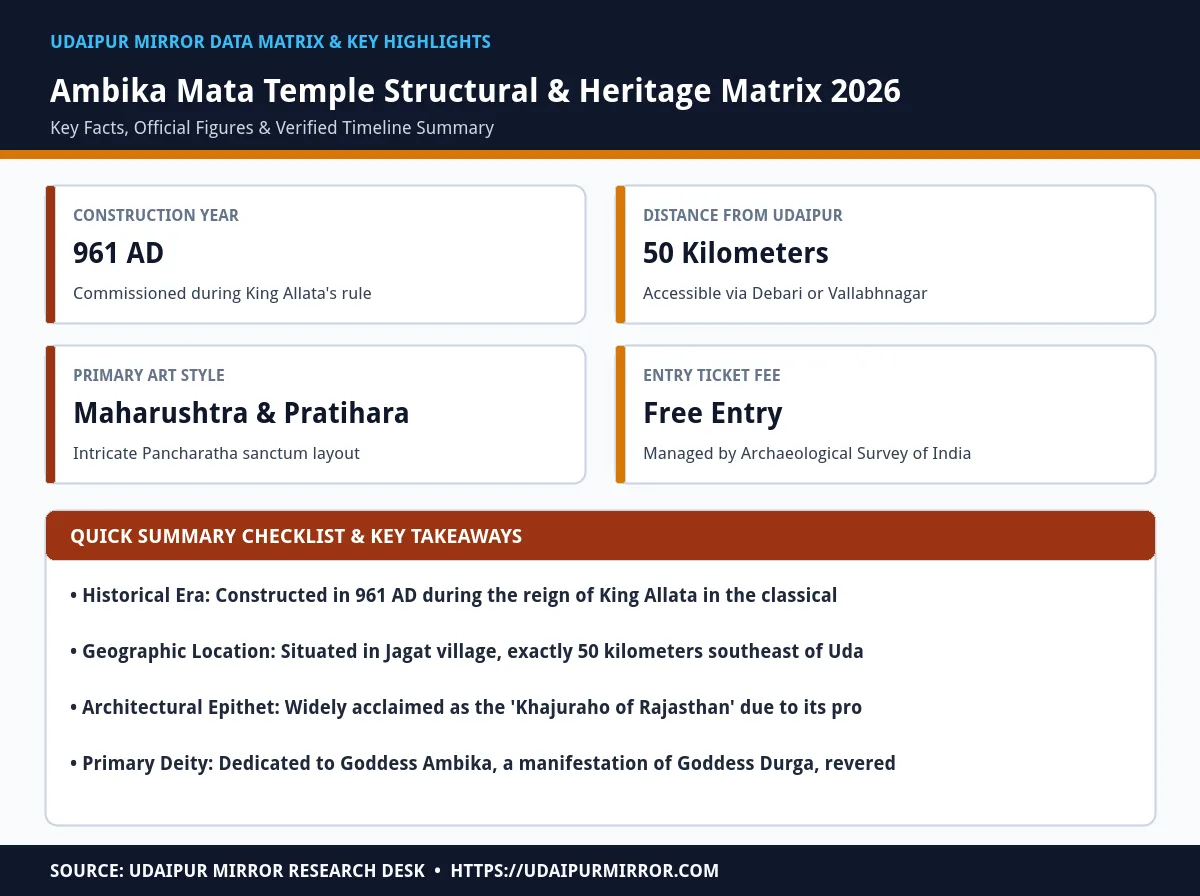
Plan your pilgrimage and architectural expedition to the ancient Jagat temple efficiently with this comprehensive logistical and historical data table curated for 2026 visitors.
| Parameter | Detail / Specification | Historical / Practical Significance |
|---|---|---|
| Temple Name | Ambika Mata Temple | Ancient Shakti Peeth style shrine dedicated to Goddess Durga |
| Year of Origin | 961 AD (10th Century) | Dug out from inscriptions dating back to Mewar’s Guhila dynasty |
| Distance from Udaipur | 50 km Southeast | Approx. 1.5 hours scenic drive through rural Mewar landscapes |
| Architectural Style | Maha-Maru / Pratihara | Comparable to Khajuraho temples in sculptural richness |
| Governing Authority | ASI (Archaeological Survey of India) | Protected national monument ensuring pristine preservation |
| Darshan Timings | 6:00 AM to 7:00 PM | Open throughout the week with no mandatory entry charges |
What truly sets the ambika mata temple jagat apart from other regional shrines is the sheer density and artistic quality of its exterior iconography. The outer walls function as an open-air stone gallery where master craftsmen of the 10th century immortalized Hindu mythology in high relief. Prominent among these carvings is the dramatic depiction of Goddess Durga in her fierce Mahishamardini avatar, slaying the buffalo demon Mahisha with ferocious grace.
Interspersed between martial motifs are delicate panels featuring Surasundaris (celestial damsels) in various captivating poses—applying makeup, wrangling hair, playing musical instruments like the flute and drum, or dancing in rhythmic ecstasy. Lord Ganesha is also prominently sculpted alongside his consort, displaying intricate jewelry and expressions of divine benevolence that showcase the advanced aesthetic standards of the Guhila era.
“Every square inch of stone at Jagat breathes life; the celestial dancers seem ready to step out of their panels and join the earthly realm.” — Mewar Heritage Conservation Board Field Report
Traveling to the temple from Udaipur is a straightforward and highly scenic journey. Located roughly 50 kilometers southeast of the City Palace, visitors can reach Jagat village within an hour and a half by car, taxi, or two-wheeler. The primary road route exits Udaipur via Debari on the Udaipur-Chittorgarh National Highway, branching off towards Kheroda and Jagat through rural Mewar countryside flanked by mustard fields and Aravalli foothills.
The Archaeological Survey of India (ASI) manages the monument, ensuring clean pathways, informative tourist placards, and secure vehicle parking areas. There are no entry fees or special camera permits required for general visitors. For an optimal experience, photography enthusiasts should visit during the morning hours when sunlight illuminates the eastern sculptural panels with golden clarity. Travelers requiring institutional approvals for educational or academic tours can also reference procedural standards similar to Bengal Govt Clears 393 Private BEd Colleges for Admissions in 2026-28 Session when filing paperwork with regional cultural authorities.
“A drive down the rural winding roads of Jagat transports modern seekers straight into the heart of 10th-century Mewar spirituality.” — Udaipur Tourism Directorate Travel Advisory
Built in 961 AD during the reign of King Allata of the Guhila dynasty, the Ambika Mata Temple is a premier 10th-century heritage monument celebrated for its exceptional Gurjara-Pratihara architecture and exquisite stone sculptures.
It earns this moniker due to the prolific and intricate carvings on its outer walls, featuring celestial damsels (Surasundaris), musicians, mythological deities, and dynamic battle scenes resembling the famed temples of Khajuraho.
The temple is maintained by the Archaeological Survey of India and is open daily from sunrise to sunset (approx. 6:00 AM to 7:00 PM). There are no entry fees or ticket charges to visit the complex.
The temple is located in Jagat village, 50 km southeast of Udaipur. Visitors can drive via Debari on the Udaipur-Chittorgarh highway or hire a private taxi, enjoying a scenic 1.5-hour journey through rural Mewar.
Add Udaipur Mirror as a preferred source on Google to see more of our travel guides in your AI overviews.