Office Address
14, Residency Road, Udaipur, Rajasthan 313001
Office Address
14, Residency Road, Udaipur, Rajasthan 313001

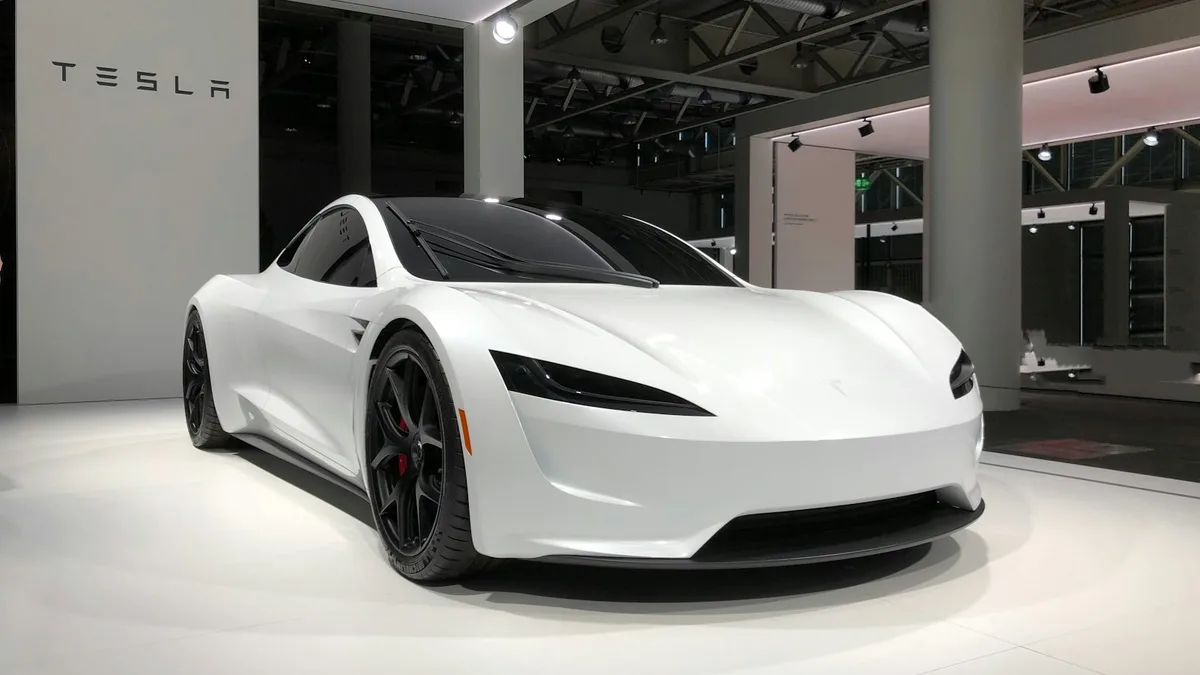
NEW DELHI / UDAIPUR: NEW DELHI / UDAIPUR — In the fiercely competitive landscape of the Indian automotive sector, tata motors ev sales lead continues to widen the gap against its primary domestic rival, Mahindra & Mahindra. Recent industry retail and dispatch data underline a structural shift in consumer preference toward eco-friendly electric mobility, cementing the homegrown giant’s leadership position at the top of the domestic passenger vehicle market race.
⚡ Quick Highlights: Tata Motors Keeps Mahindra in Rearview with EV Sales Lead
The Indian automotive landscape is undergoing a tectonic shift, with electric vehicles serving as the ultimate battleground for legacy manufacturers. By consistently expanding its green portfolio, Tata Motors has managed to outpace persistent challenges and maintain a comfortable lead over Mahindra & Mahindra. Industry experts note that early investments in localized EV architecture have given the brand an unassailable advantage in both volume and consumer trust.
Furthermore, market watchers often examine broader trends, noting how MG Tomahawk EV Sales Triple As Electric Vehicles Dominate Brand Portfolio In India, signaling a nationwide consumer pivot toward electrified options regardless of brand heritage.
“Electrification is no longer a niche segment; it is the core engine driving our domestic volume growth and defining our market leadership.” — Senior Automotive Industry Analyst
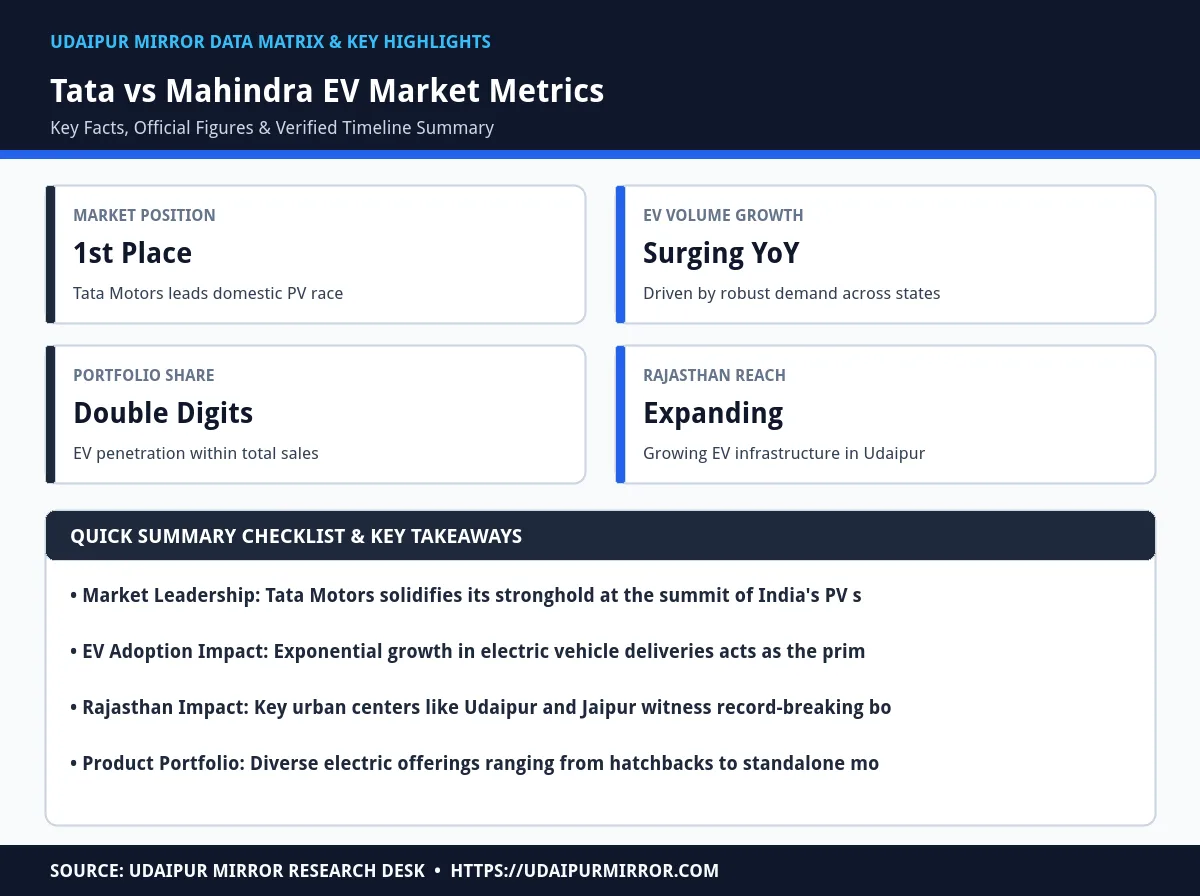
An analytical look at how leading electric vehicle models stack up against traditional internal combustion engine counterparts in terms of estimated battery range, ex-showroom pricing, and charging specifications for Indian buyers.
| Model & Variant | Battery Capacity / Range | Ex-Showroom Price (INR) | Charging Time (10-80%) |
|---|---|---|---|
| Tata Punch.ev Empowered+ | 35 kWh / 421 km | Rs. 13.49 Lakh | 56 mins (DC Fast Charger) |
| Tata Nexon.ev Long Range | 40.5 kWh / 465 km | Rs. 16.99 Lakh | 40 mins (DC Fast Charger) |
| Mahindra XUV400 EL Pro | 39.4 kWh / 456 km | Rs. 17.49 Lakh | 50 mins (DC Fast Charger) |
| MG ZS EV Excite Pro | 50.3 kWh / 461 km | Rs. 18.98 Lakh | 60 mins (DC Fast Charger) |
While Mahindra & Mahindra continues to put up a formidable fight with its rugged ICE and electric-ready SUV lineups, catching up to Tata’s established EV volume requires aggressive capacity scaling. Mahindra has heavily emphasized robust build quality and high-performance electric architectures, yet supply chain bottlenecks and localized component sourcing have occasionally limited its immediate delivery ceilings.
As automakers gear up for future lineups, many buyers are also looking ahead to what new models are coming down the pipeline, such as those detailed in our report on 10 New Electric Cars Launching in India Over Next Year: From Hyundai IONIQ P to BYD Seal 07.
“Competition between domestic titans accelerates innovation, benefiting Indian consumers with safer, smarter, and cleaner vehicles.” — Vahan Registration Expert
In states like Rajasthan, the transition toward electric mobility has received a major boost from expanding public charging networks in cities like Jaipur, Jodhpur, and Udaipur. Buyers in tier-2 and tier-3 markets are increasingly shedding range anxiety, thanks to government subsidies and lower per-kilometer running costs compared to petrol and diesel alternatives.
Local dealerships report that test-drive requests for electric SUVs and compact hatchbacks have doubled over the past two quarters, proving that the demand for sustainable transit extends far beyond metropolitan hubs. (Also read: 10 New Electric Cars Launching in India Over Next Year: From Hyundai IONIQ P to BYD Seal 07).
“Reducing vehicular pollution remains one of our biggest national challenges, and consumer adoption of electric cars is a vital step forward.” — Regional Transport Authority Official
As we look toward the remainder of the decade, maintaining leadership will require more than just early entry. Both Tata and Mahindra are investing heavily in next-generation battery chemistries, vehicle-to-load capabilities, and advanced driver assistance systems (ADAS) to capture the tech-savvy younger demographic.
The battle for PV market supremacy is set to intensify further as international brands also ramp up their local assembly plants, making India one of the most dynamic and competitive automotive markets in the world today.
“The next five years will determine whether early volume leaders can successfully defend their turf against aggressive global entrants.” — Automotive Strategy Consultant
Tata Motors established an early mover advantage by converting popular ICE platforms into electric variants and introducing dedicated electric vehicles like the Punch.ev and Nexon.ev, backed by a robust charging ecosystem.
Rajasthan has witnessed a steady surge in EV registrations, supported by state-level tax incentives, zero registration fees, and a rapidly expanding network of DC fast chargers across major cities like Udaipur and Jaipur.
Key advantages include substantially lower running costs (approx. Re. 1 per kilometer), zero tailpipe emissions, minimal maintenance requirements, and various government subsidies.
While high demand has caused waiting periods for certain popular variants, both Tata Motors and Mahindra are actively scaling up production capacities to meet consumer orders.
Add Udaipur Mirror as a preferred source on Google to see more of our travel guides in your AI overviews.