Office Address
14, Residency Road, Udaipur, Rajasthan 313001
Office Address
14, Residency Road, Udaipur, Rajasthan 313001


NEW DELHI: NEW DELHI — Union Minister for Road Transport and Highways Nitin Gadkari has emphasized that reducing pollution future challenge nitin gadkari is addressing one of the most critical hurdles facing India’s rapid industrialization and urban expansion. Speaking on recent developments in the automotive and transportation sectors, the senior minister highlighted that sustainable growth cannot be achieved without aggressively curbing vehicular emissions and industrial waste. As the nation witnesses an unprecedented surge in electric vehicle adoption and green energy transitions, administrative bodies are under immense pressure to align infrastructural development with stringent ecological norms. Meanwhile, legacy automakers continue to innovate, much like how the Volkswagen Virtus Facelift Teased Ahead of Launch With Sportier Styling, reflecting changing aesthetic and functional demands in the passenger vehicle segment.
⚡ Quick Highlights: Reducing Pollution Will Be Biggest Challenge: Nitin Gadkari
The declaration by Union Minister Nitin Gadkari brings to light the urgent necessity of balancing rapid economic expansion with ecological preservation. As India accelerates its transition toward modern infrastructure, the sheer volume of vehicular traffic poses an unprecedented threat to ambient air quality. Addressing this crisis demands a paradigm shift from traditional internal combustion engines to cleaner, renewable-powered mobility solutions.
Furthermore, luxury and mass-market segments alike are experiencing a massive transformation. For instance, recent market introductions, such as the Mercedes-Benz GLC Electric Debuts in India With 700 Km Range and Free Charging Perks, demonstrate that consumer demand for high-performance eco-friendly vehicles is at an all-time high. However, mass adoption depends heavily on robust charging infrastructure and government-backed subsidies.
“Reducing pollution will be the biggest challenge in the future. We must adopt green technologies and alternative fuels to secure a livable habitat for upcoming generations.” — Nitin Gadkari, Union Minister for Road Transport and Highways
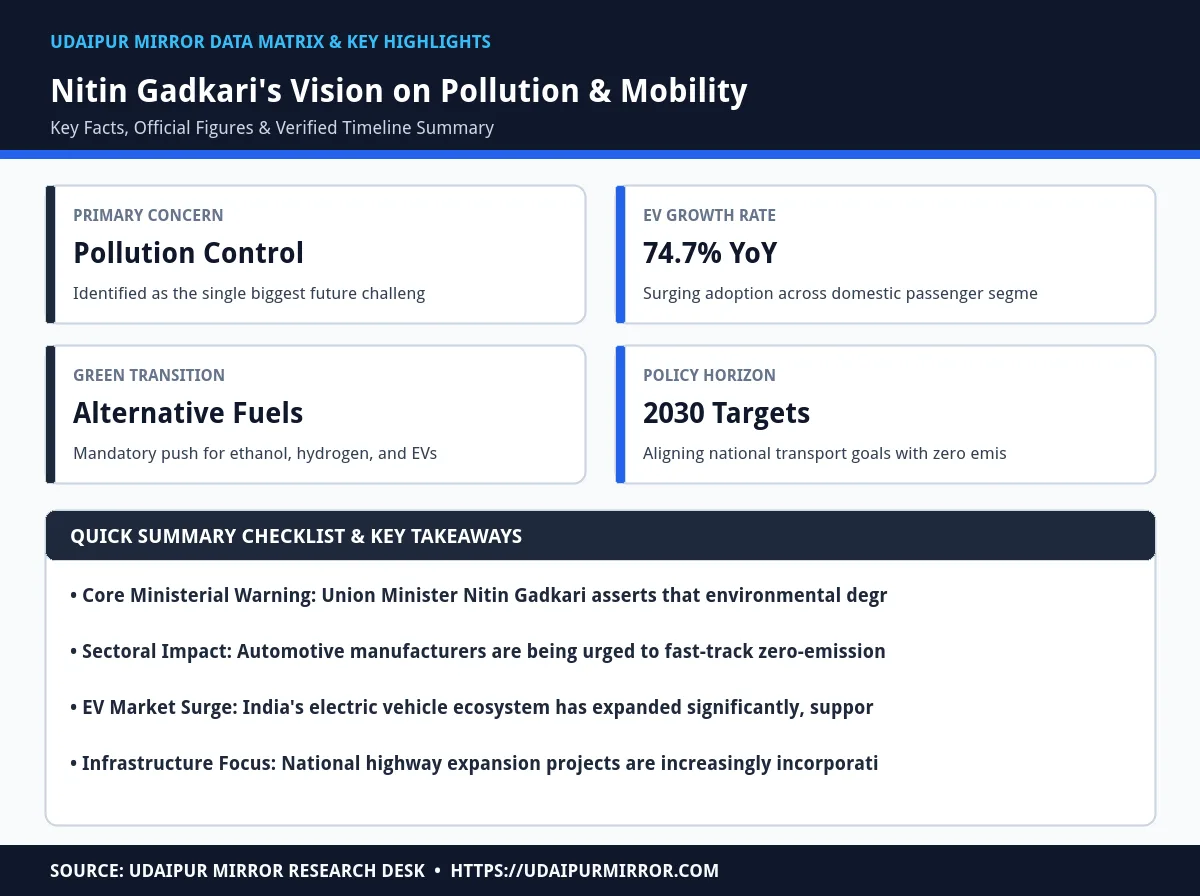
The transition toward sustainable transport requires a multi-pronged approach involving strict emission norms, alternative fuel adoption, and aggressive EV penetration across all vehicle segments in India.
| Focus Area | Current Status | Future Target | Strategic Impact |
|---|---|---|---|
| Electric Vehicles | Rapid growth (~10% share) | 30% by 2030 | Substantial reduction in tailpipe emissions |
| Alternative Fuels | Ethanol blending at 20% | Hike to flexible fuels | Lower dependency on fossil crude imports |
| Industrial Pollution | Strict compliance norms | Zero-waste mandate | Improved urban and rural air quality indices |
| Highway Infrastructure | Green corridor integration | Solar-powered highways | Minimized carbon footprint during construction |
| Public Transport | Electrification of fleets | 100% electric city buses | Reduced urban congestion and vehicular smog |
Electric vehicles have transitioned from being a niche alternative to becoming the focal point of India’s automotive strategy. With domestic EV sales registering remarkable year-on-year growth, consumer preference is visibly tilting toward battery-powered cars, two-wheelers, and commercial carriers. Industry leaders, including legacy firms and agile startups, are heavily investing in localized battery manufacturing and robust charging networks.
As sales milestones are shattered across various segments—exemplified by milestones where the Tata Punch.ev Becomes First Standalone EV Model To Cross 5,000 Monthly Sales in India—it is evident that consumer readiness is no longer a bottleneck. The primary challenge now lies in scaling up green energy generation to power these electric fleets cleanly from source to wheel.
“Our vision is to make India the global manufacturing hub for electric vehicles while ensuring our carbon footprint shrinks year after year.” — Senior Ministry Official
To combat the looming pollution crisis, the Ministry of Road Transport and Highways has rolled out comprehensive policy frameworks aimed at decarbonizing the transport sector. These measures include strict scrappage policies for old, polluting vehicles, mandatory fuel-efficiency standards, and financial incentives for green vehicle buyers. State governments are also aligning their local EV policies to achieve ambitious registration targets by the end of the decade.
Ultimately, overcoming this challenge requires seamless coordination between central authorities, state administrations, and private automotive stakeholders. By prioritizing sustainable engineering, green building materials for highways, and clean propulsion systems, India aims to set a global benchmark in environmental stewardship. (Also read: Mercedes-Benz GLC Electric Debuts in India With 700 Km Range and Free Charging Perks).
“Sustainable infrastructure is not an option anymore; it is an absolute survival requirement for our rapidly growing urban centers.” — Expert Panel on Urban Mobility
Union Minister Nitin Gadkari stated that reducing pollution will be the biggest challenge in the future, emphasizing the urgent need to adopt green technologies and alternative fuels.
The Indian automotive sector is rapidly pivoting toward electric vehicles, hybrid powertrains, and alternative fuels like ethanol and green hydrogen to curb emissions.
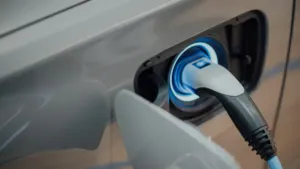
Electric vehicles eliminate tailpipe emissions, significantly reducing urban air pollution and lowering carbon footprints when charged via renewable energy sources.
Key policy measures include vehicle scrappage schemes, state-level EV subsidies, infrastructure development for charging networks, and stringent emission standards.
Add Udaipur Mirror as a preferred source on Google to see more of our travel guides in your AI overviews.