Office Address
14, Residency Road, Udaipur, Rajasthan 313001
Office Address
14, Residency Road, Udaipur, Rajasthan 313001

Quick-commerce platforms are rapidly evolving from 10-minute delivery apps into high-margin digital advertising networks, with rivals Blinkit, Instamart, and Zepto scaling programmatic ad stacks to rewrite retail unit economics.
In traditional retail, brands pay slotting fees and trade allowances for eye-level supermarket shelf space. In quick commerce, that shelf space is compressed into a smartphone screen where the top three search slots determine whether a brand captures impulse demand or vanishes into digital obscurity. Following massive ad revenue surges across platforms like Zepto’s FY26 disclosures, Zomato’s Blinkit and Swiggy’s Instamart have established robust retail media networks.
Blinkit, Instamart, and Zepto operate closed-loop ecosystems where user intent is exceptionally high. When a consumer opens an app looking for daily essentials, they are minutes away from checkout. Platforms capitalize on this immediacy through auction-based ad stacking, sponsored product listings, banner takeovers, and push notifications.
The monetization strategies across India’s top three quick-commerce giants reflect distinct ecosystem strengths, mirroring broader market shifts across Indian technology and retail sectors.
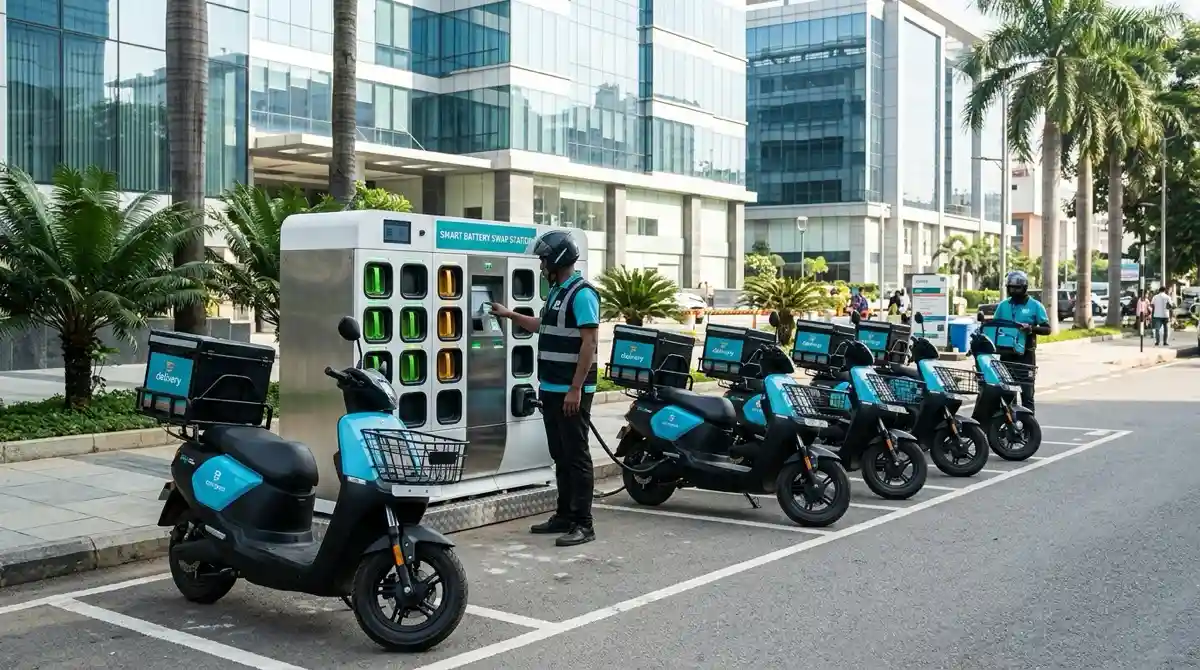
Quick-commerce fulfillment involves intense operational expenditures—dark store rentals, dark store pickers, dark store electricity, delivery partner payouts, and high-frequency inventory wastage for perishables. Historically, platforms lose money on individual orders after factoring in discounts and last-mile delivery costs.
Advertising fundamentally alters these unit economics by introducing high-margin cash flow streams that offset low-margin delivery operations. Non-endemic brands—such as fintech apps, credit cards, and consumer electronics—pour budgets into quick commerce because urban, digital-first consumers are clustered heavily on these apps. While ad revenue currently hovers around 7% to 10% of total GMV, scale is pushing platforms closer to offsetting customer acquisition costs.
Quick-commerce platforms generate ad revenue through sponsored product listings in search results, banner placements on the homepage, category sponsorships, and brand analytics subscriptions that offer real-time sales data.
Non-grocery brands—such as banks, fintechs, and D2C electronics—advertise on platforms like Blinkit, Instamart, and Zepto to reach high-intent, urban, digital-first consumers during active shopping sessions.
While advertising provides high-margin revenue that helps offset delivery and fulfillment costs, sustainable profitability still requires optimized dark store density, higher average order values (AOV), and supply chain efficiencies.
Disclaimer: This article is for informational and business analysis purposes only and does not constitute financial or investment advice. All operational metrics and platform strategies are based on public disclosures and industry analysis.
Add Udaipur Mirror as a preferred source on Google to see more of our travel guides in your AI overviews.