Office Address
14, Residency Road, Udaipur, Rajasthan 313001
Office Address
14, Residency Road, Udaipur, Rajasthan 313001

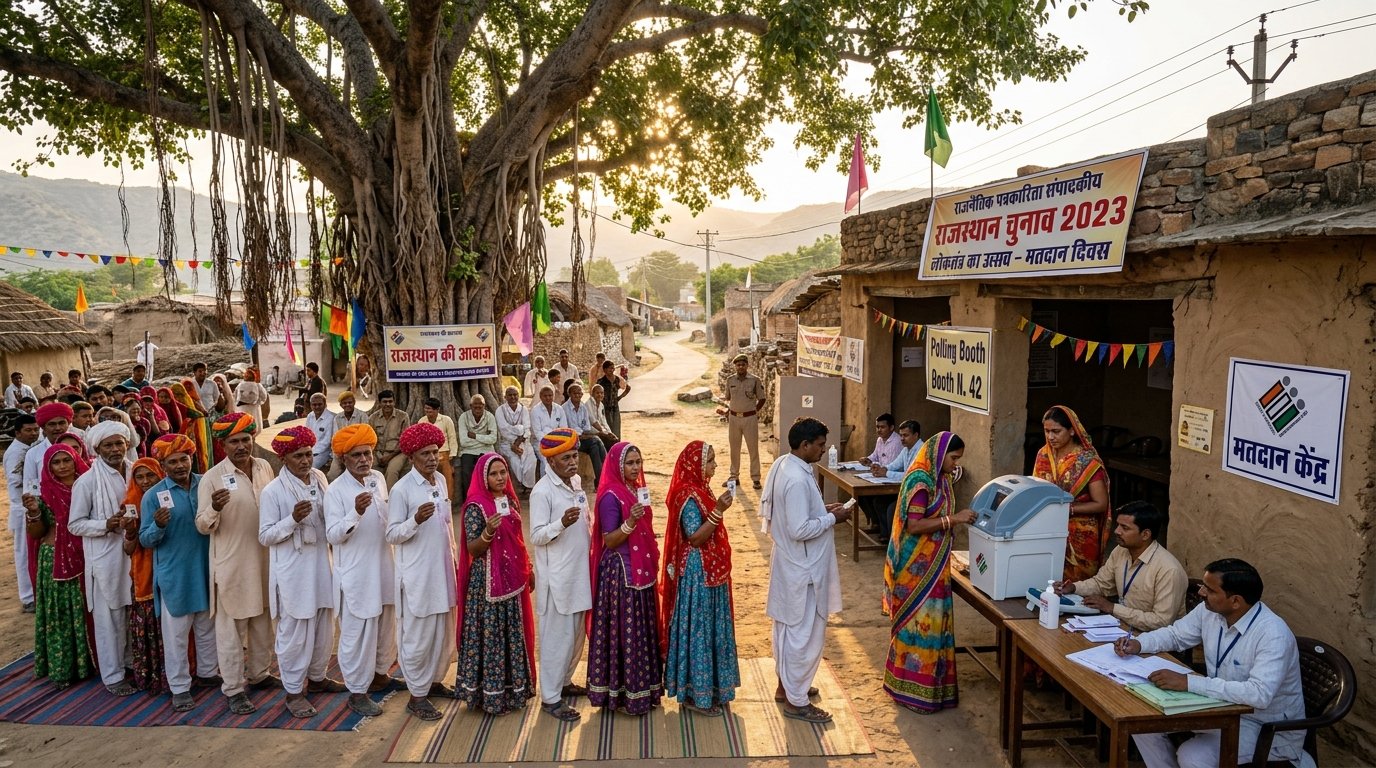
Following the successful conclusion of urban municipal polling, the State Election Commission of Rajasthan has formally initiated administrative procedures for the Rajasthan Panchayati Raj elections 2026. With the Model Code of Conduct lifted from urban civic bodies, election authorities have issued operational guidelines targeting the completion of rural grassroots polling across more than 11,000 gram panchayats by mid-November 2026.
The upcoming three-tier rural elections will decide thousands of Sarpanches, Ward Panchs, Panchayat Samiti members, and Zila Parishad representatives. Specifically, the State Election Commission has directed district collectors and returning officers to finalize electoral rolls and verify polling stations by early October.
Furthermore, the election machinery is deploying updated electronic voting machines (EVMs) equipped with verifiable paper trails. Meanwhile, law enforcement agencies are conducting comprehensive security audits across sensitive polling booths in rural Mewar, Vagad, and border districts. Consequently, administrative machinery across all thirty-three districts has entered an active state of operational readiness.
In preparation for the democratic exercise, district administrations have successfully concluded the mandatory reservation lotteries. Specifically, these transparent public draws determine the quota distribution for Scheduled Castes (SC), Scheduled Tribes (ST), Other Backward Classes (OBC), and women candidates across all rural wards.
| Panchayati Raj Tier | Total Rural Bodies | Key Roles Contested |
|---|---|---|
| Gram Panchayats | 11,100+ Panchayats | Sarpanch & Ward Panch |
| Panchayat Samitis | 355 Block Samitis | Block Development Members & Pradhans |
| Zila Parishads | 33 District Councils | Zila Parishad Members & Pramukhs |
| Statutory Timeline | By November 15, 2026 | Phased Voting Across Rural Blocks |
| Supervisory Body | State Election Commission | Constitutional Election Monitoring |
Politically, the rural elections carry immense strategic weight for both ruling and opposition alliances. Having recently consolidated its urban grip during the Udaipur Municipal Corporation elections and municipal victories across Jaipur and Kota, the ruling Bharatiya Janata Party (BJP) aims to expand its momentum deep into rural Rajasthan. Chief Minister Bhajanlal Sharma and state party leaders have already commenced regional worker sammelans to mobilize booth-level committees.
Conversely, the opposition Congress party views the rural polls as a vital opportunity to reclaim grassroots influence. Having secured majorities in the Bikaner Corporation and contested fiercely in the Rajsamand civic council contests, Congress strategists are highlighting agricultural concerns, rural employment, and local issues to appeal to village voters.
Beyond party politics, independent candidates and community representatives are expected to play decisive roles in rural panchyats. For instance, in the recently concluded municipal ward polls, independent councilors secured over twenty-two hundred seats, emerging as pivotal kingmakers. In rural chaupals, personal reputation, kinship ties, and local development promises often carry greater sway than state-level political rhetoric.
Ultimately, the impending Rajasthan Panchayati Raj elections 2026 will test the political temperature across rural Rajasthan. As official notifications and polling date schedules are finalized, democracy at the grassroots level prepares for a vibrant, high-stakes contest.
Add Udaipur Mirror as a preferred source on Google to see more of our travel guides in your AI overviews.

Comments are closed.

[…] historic amendment arrives at a crucial juncture as rural local bodies prepare for the high-stakes Rajasthan Panchayati Raj Elections 2026 scheduled for November. For over thirty years, the restrictive stipulation prevented thousands of […]
[…] Election Commission has initiated the final countdown. As highlighted in our earlier report on Rajasthan Panchayati Raj elections notification targets, the election machinery must navigate strict statutory deadlines. Below is the procedural timeline […]