Office Address
14, Residency Road, Udaipur, Rajasthan 313001
Office Address
14, Residency Road, Udaipur, Rajasthan 313001

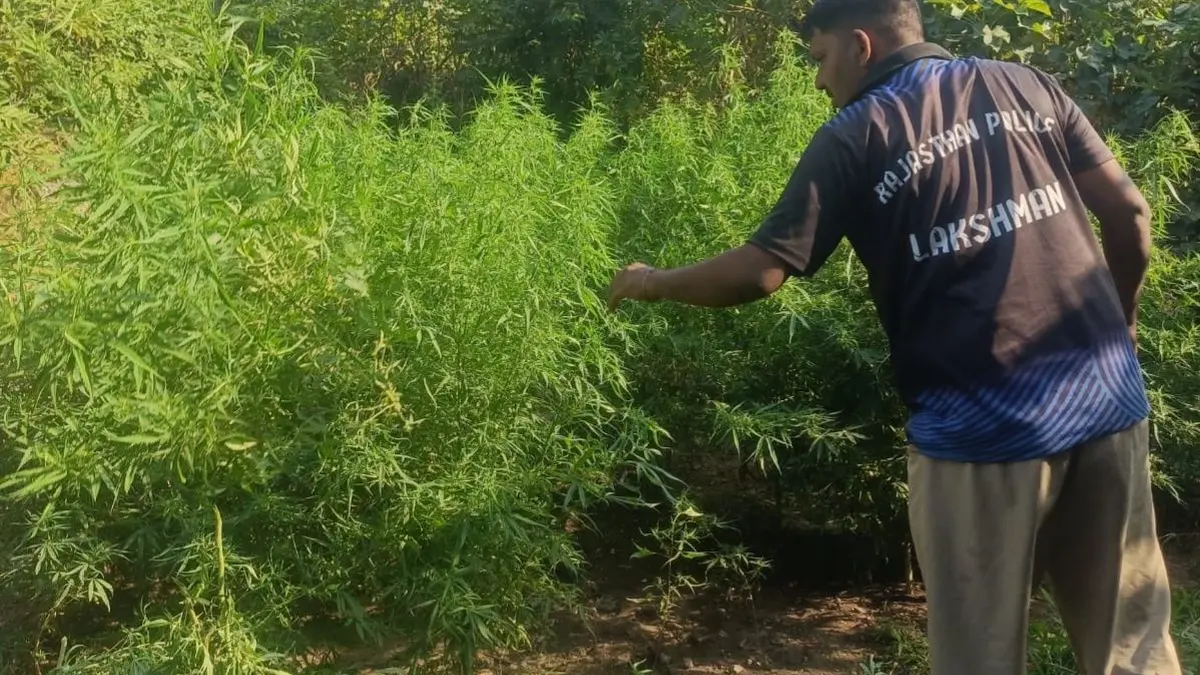
JAIPUR: JAIPUR — Political circles across Rajasthan were sent into a frenzy following former Chief Minister Ashok Gehlot’s formal demand for central agency intervention regarding rajasthan ias officer property deals. Raising serious questions about administrative transparency and bureaucratic integrity, the high-profile appeal has triggered intense debates across state political corridors. As public interest mounts over governance standards, this unfolding administrative controversy adds to recent state developments, which also saw the administration tackle infrastructure upgrades, such as supporting students with resources akin to initiatives seen when Udaipur government school infrastructure boost efforts were successfully rolled out locally.
⚡ Quick Highlights: Gehlot Seeks CBI, ED Probe Into Rajasthan IAS Officer Deals
The demand for a dual-agency investigation initiated by veteran leader Ashok Gehlot stems from mounting discrepancies observed in asset declarations and commercial property acquisitions. Over the past few weeks, investigative reports highlighted transactions involving prime real estate parcels allegedly tied to immediate family members of the senior bureaucrat. These revelations have cast a shadow over administrative protocols, prompting calls for strict oversight.
Observers note that while civil servants are mandated to declare their movable and immovable assets annually under the All India Services (Conduct) Rules, loopholes or delayed filings often obscure high-value commercial dealings. In a parallel display of civic engagement across the state, youth and professionals have similarly kept a keen eye on transparency, mirroring the diligence seen when Udaipur pharmacy students explore industrial drug manufacturing facilities to understand rigorous operational compliance standards.
“Transparent governance requires absolute accountability from those at the helm. Independent central probes are essential when questions of institutional integrity arise.” — Political Analyst & Administrative Expert
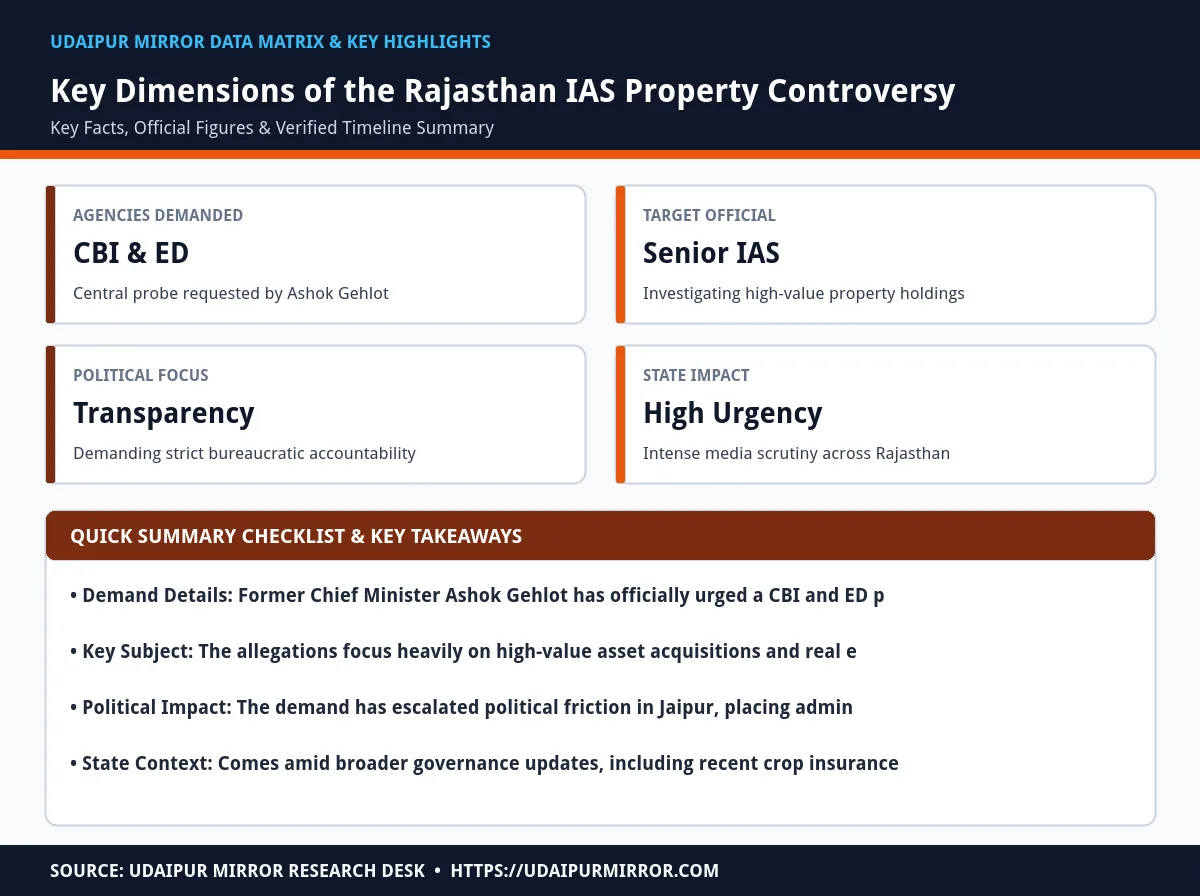
The table below outlines the chronological milestones and critical administrative checkpoints associated with the ongoing inquiry demands into bureaucratic real estate transactions across Rajasthan.
| Milestone Event | Date / Period | Key Stakeholders | Core Focus Area |
|---|---|---|---|
| Initial Property Reports | Late October 2026 | Investigative Media & Watchdogs | Unearthing high-value asset transfers |
| Gehlot’s Formal Appeal | October 30, 2026 | Ashok Gehlot & State Leadership | Demanding CBI and ED intervention |
| Administrative Review | Ongoing (Q4 2026) | State Personnel Department | Evaluating official conduct guidelines |
| Public & Political Debates | Current | Political Parties & Civil Society | Transparency in bureaucratic dealings |
| Anticipated Central Action | Pending | Central Investigating Agencies | Preliminary legal and financial assessment |
The political fallout has been swift, with opposition leaders echoing Gehlot’s sentiments while ruling party spokespersons maintain that due legal processes must be respected before rushing to conclusions. The demand for involvement by both the Central Bureau of Investigation (CBI) and the Enforcement Directorate (ED) signifies the gravity of the financial trails alleged in the dossier presented by political critics.
As discussions continue in Jaipur and regional districts, citizens and urban planners are also weighing in on the broader implications of corruption on state development. Urban governance, sustainable construction practices—such as those promoted under recent climate-resilient urban policies—and fair administration remain top priorities for the electorate heading into the final quarter of 2026.
“No individual, regardless of how high their administrative rank is, should be above rigorous legal scrutiny when public trust is compromised.” — Senior Opposition Representative
Under Indian law, members of the Indian Administrative Service (IAS) are strictly governed by the All India Services (Conduct) Rules, 1968. Rule 16 explicitly mandates that every member must submit an annual immovable property return (IPR) by January 31 of each year, detailing lands, houses, or commercial buildings owned, leased, or mortgaged.
Furthermore, acquiring or disposing of any immovable property valued above prescribed financial limits requires prior knowledge or formal sanction from the competent government authority. Failure to disclose these transactions can lead to disciplinary proceedings under the All India Services (Discipline and Appeal) Rules, alongside potential criminal investigations under anti-corruption statutes if disproportionate assets are uncovered. (Also read: Udaipur Housing Fair Begins: Over 100 Visitors Explore Modern Apartments on Day One | तीन दिवसीय आवास मेला शुरू).
“The legal framework is robust on paper; the true test lies in impartial enforcement and timely third-party audits.” — Constitutional Law Expert
This high-profile administrative controversy unfolds against a backdrop of significant economic and social initiatives across Rajasthan. Recently, the state government disbursed ₹345 crore in pending crop insurance claims to relief-seeking farmers, aiming to stabilize the agrarian economy. Simultaneously, renewable energy projects and industrial incentive certificates are being rolled out to bolster the state’s industrial footprint.
Urban development has also taken center stage, with urban planners advocating for green buildings and climate-resilient infrastructure. Ensuring that bureaucratic machinery operates cleanly is seen as a vital prerequisite for sustaining investor confidence and successful execution of large-scale welfare and commercial projects across the state.
“Economic growth and administrative integrity must walk hand in hand to ensure long-term prosperity for the citizens of Rajasthan.” — Chamber of Commerce Representative
The demand was raised by former Chief Minister Ashok Gehlot following investigative findings regarding questionable property deals, high-value asset acquisitions, and potential violations of All India Services conduct rules.
Veteran political leader and former Rajasthan Chief Minister Ashok Gehlot formally spearheaded the demand for a thorough inquiry by both the CBI and the Enforcement Directorate.
IAS officers are governed by the All India Services (Conduct) Rules, 1968, which require annual immovable property returns and prior government sanction for high-value real estate transactions.
Violations can result in departmental disciplinary proceedings, suspension, major penalties under AIS discipline rules, and criminal investigations under corruption prevention laws if disproportionate assets are found.
Add Udaipur Mirror as a preferred source on Google to see more of our travel guides in your AI overviews.



[…] बातचीत कार्यक्रम की शुरुआत 2 seconds ago ⚡ Articles Gehlot Seeks CBI, ED Probe Into Property Deals Involving Rajasthan IAS Officer 21 minutes … News Udaipur Pharmacy Students Explore Industrial Drug Manufacturing at Baddi Facilities in […]