Office Address
14, Residency Road, Udaipur, Rajasthan 313001
Office Address
14, Residency Road, Udaipur, Rajasthan 313001

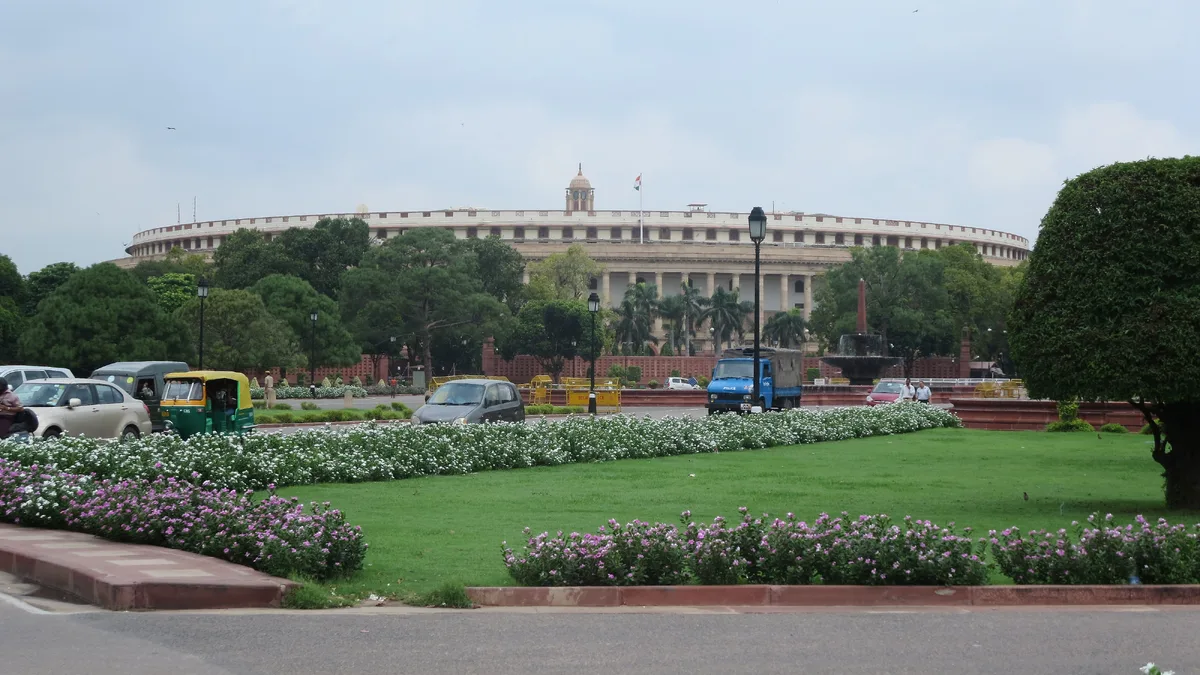
NEW DELHI: NEW DELHI — In a significant development concerning national governance and institutional accountability, the supreme court seeks eci reply today regarding an extensive opposition plea that demands sworn affidavits from top administrative officials. The legal tussle centers on contentious decisions surrounding the systematic integration and verification of voter rolls, drawing intense scrutiny from major political factions across the country. As democratic frameworks face rigorous judicial oversight, institutional transparency remains paramount to maintaining public trust in electoral mechanisms.
⚡ Quick Highlights: Supreme Court Seeks ECI Reply on Opposition Plea Over Affidavits
The Supreme Court’s decision to seek a formal response from the Election Commission marks a critical juncture in the ongoing friction between constitutional authorities and political alliances. The INDIA bloc’s petition specifically targets administrative procedures governing voter registration and data management. Critics argue that rigorous transparency is essential, while supporters of institutional autonomy caution against judicial overreach into routine electoral operations.
Amidst these high-stakes political developments, citizens across various sectors are also grappling with everyday administrative compliance, much like consumers monitoring food safety standards after recent local controversies such as the Udaipur Titarri supermarket fungus Kaju Katli complaint that alarmed local shoppers. However, at the national level, the focus remains firmly fixed on the apex court’s interpretation of electoral governance and administrative accountability.
“Institutional integrity depends entirely upon transparent communication between independent regulators and the democratic representatives of the public.” — Senior Constitutional Jurist
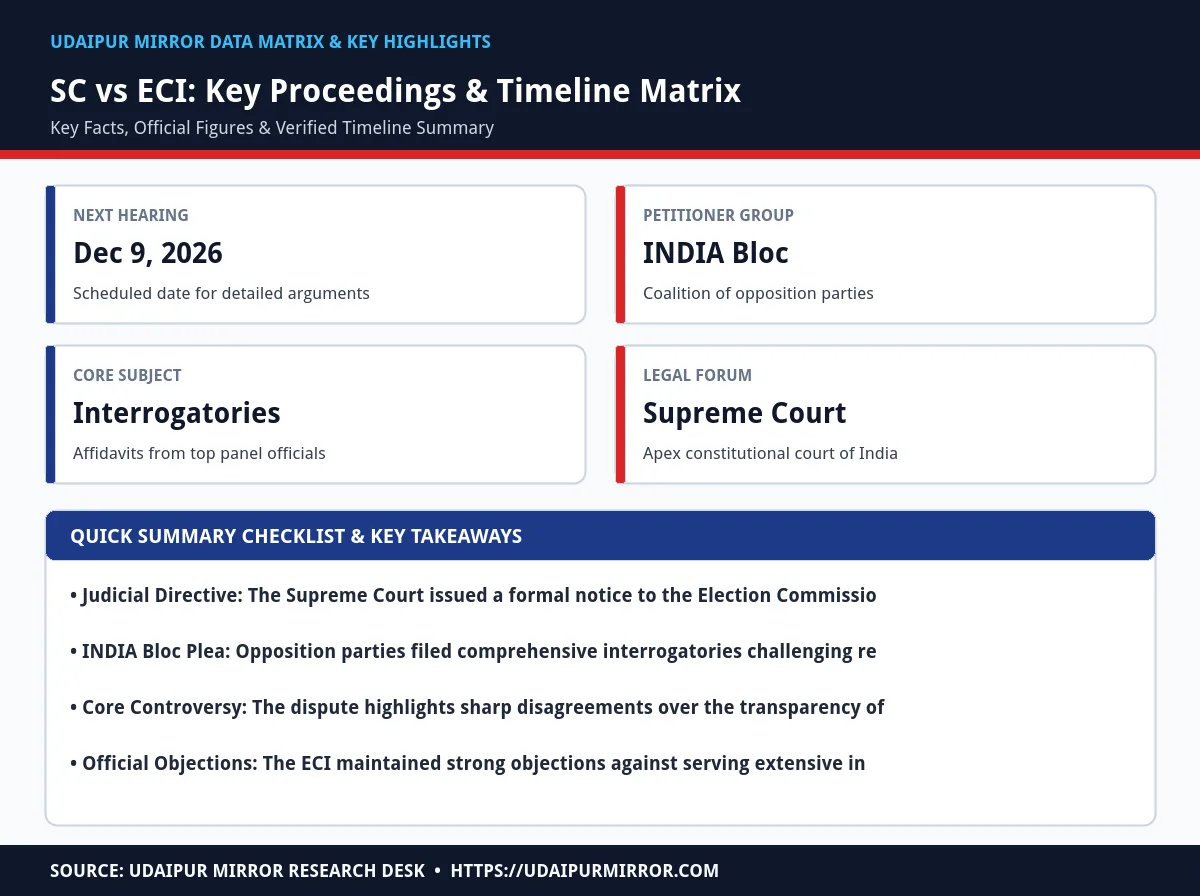
The following structured timeline outlines the key judicial hearings, submissions, and official responses exchanged between the apex court, the Election Commission of India, and opposition representatives.
| Date | Legal Stage | Key Developments | Action Required |
|---|---|---|---|
| Nov 17, 2026 | Notice Issued | Supreme Court seeks ECI reply on opposition interrogatories. | ECI to file formal counter-affidavit |
| Nov 17, 2026 | ECI Objections | Poll panel registers formal opposition to service of interrogatories. | Legal scrutiny of administrative rules |
| Nov 17, 2026 | Matter Adjourned | Main petitions by Rahul Gandhi and leaders deferred for hearing. | Preparation of detailed briefs |
| Dec 9, 2026 | Upcoming Hearing | Comprehensive oral arguments scheduled before the bench. | Final submissions by counsels |
During the proceedings, representatives for the Election Commission raised stringent objections against the admissibility of the interrogatories filed by opposition leaders. The poll body maintained that serving formal questionnaires to top bureaucrats sets a troubling precedent that could encumber routine administrative duties during non-election periods. Furthermore, detailed clarifications regarding Form 6 applications and nationwide verification protocols were presented to justify the commission’s operational integrity.
As administrative compliance takes center stage in governance, parallel verification drives are visible across multiple domains, resembling structured timelines seen in state-level academic evaluations such as the Rajasthan CET 12th level exam schedule 2026. Nevertheless, the federal constitutional debate carries far-reaching consequences for India’s democratic architecture and the oversight powers of the judiciary.
“Routine administrative decisions cannot be subjected to endless adversarial interrogatories without disrupting the constitutional mandate of the poll panel.” — Counsel for the Election Commission
The adjournment of petitions filed by prominent opposition figures, including senior leader Rahul Gandhi, until December 9 provides both sides ample time to structure their legal submissions. Political analysts note that the core dispute goes beyond procedural technicalities, touching upon the broader checks and balances enshrined in the Indian Constitution. As political parties mobilize public opinion, the legal battle in the Supreme Court is expected to establish crucial precedents for future electoral oversight.
Community engagement and public awareness regarding civil rights mirror local traditions of participation, echoing grand civic gatherings akin to when Udaipur devotees offer 501 traditional chunaris in a special grand ritual to honor local heritage. Ultimately, the resolution of this constitutional impasse will shape how administrative transparency and independent regulatory oversight are balanced in the world’s largest democracy. (Also read: Rajasthan CET 12th Level Exam Schedule 2026 Out: Check Exam Dates, Shift Timings and New OMR Rules).
“The upcoming December hearing will test the boundaries of judicial intervention in the operational mechanics of independent constitutional bodies.” — Constitutional Law Expert
The Supreme Court sought a formal reply from the Election Commission of India regarding an opposition plea that demands sworn affidavits from top officials.
The ECI registered strong objections against serving interrogatories over nationwide SIR decisions, citing institutional autonomy and administrative disruption.
The Supreme Court has adjourned the petitions filed by Rahul Gandhi and other opposition leaders for a comprehensive hearing on December 9, 2026.
The petition and interrogatories were filed collectively by leaders and representatives belonging to the INDIA bloc.
Add Udaipur Mirror as a preferred source on Google to see more of our travel guides in your AI overviews.