Office Address
14, Residency Road, Udaipur, Rajasthan 313001
Office Address
14, Residency Road, Udaipur, Rajasthan 313001

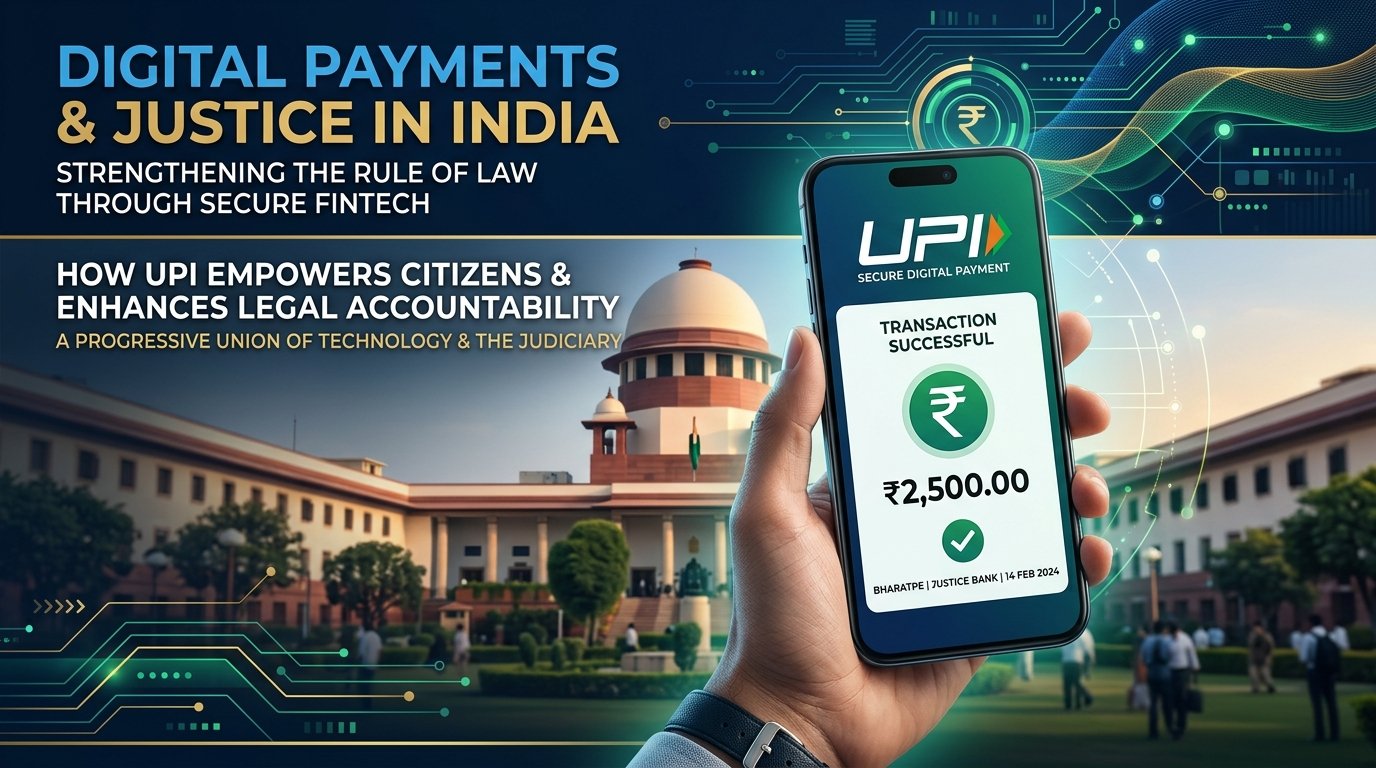
In a landmark judgment safeguarding digital public infrastructure, the Supreme Court of India has formally upheld the comprehensive UPI payment regulations 2026 formulated by the Union Ministry of Finance and the Reserve Bank of India (RBI). Dismissing a batch of petitions filed by banking associations that sought permission to levy convenience charges on retail digital transactions, the apex court affirmed that peer-to-peer (P2P) transfers and everyday consumer payments must remain completely free of cost across the country.
The decisive verdict delivers immense relief to hundreds of millions of everyday citizens, kirana store owners, and small businesses that rely on instant bank-to-bank settlement. Alongside major democratic reforms such as the Rajasthan two child norm scrapped for local elections, this judicial decision reflects a broader institutional commitment to protecting public access to basic civic and economic utilities.
A three-judge bench headed by the Chief Justice observed that Unified Payments Interface (UPI) represents a vital digital public good rather than a commercial monetization playground. Furthermore, the bench emphasized that financial inclusion initiatives would suffer severe setbacks if transaction costs were shifted onto ordinary consumers.
“Digital connectivity has empowered ordinary citizens and street vendors across rural and urban markets alike,” the bench observed in its ruling. “Under statutory provisions of the Payment and Settlement Systems Act, public interest takes precedence over speculative commercial margins. Therefore, statutory directives enforcing zero-charge retail transactions are fully constitutional.”
In addition, the apex court validated government subsidies allocated under the annual budget to reimburse acquisition costs and operational infrastructure expenses incurred by payment service providers.
The affirmed UPI payment regulations 2026 establish definitive boundaries between public retail payments and commercial enterprise settlements. Specifically, the framework guarantees that consumers will encounter zero convenience fees, platform surcharges, or account maintenance deductions when using applications like Google Pay, PhonePe, Paytm, or BHIM.
Similarly, small neighborhood merchants whose annual digital turnover remains under ₹20 Lakhs continue to enjoy total exemption from Merchant Discount Rate (MDR) levies. This protection preserves the digital momentum of micro-enterprises across tier-2 and tier-3 towns, supporting local commerce while administrative agencies pursue accountability initiatives like the ongoing Udaipur Municipal Corporation plot scam probe.
| Transaction Category | Retail User Charge | Merchant Discount Rate (MDR) | Settlement Speed |
|---|---|---|---|
| UPI P2P (Person to Person) | ₹0 (Zero Charge) | Not Applicable | Instant (Real-Time) |
| UPI P2M (< ₹2,000 Retail) | ₹0 (Zero Charge) | 0% (Fully Subsidized) | Instant (Real-Time) |
| Commercial Wallets (B2B) | ₹0 for Buyer | Up to 1.1% on Corporate PPI | T+0 / T+1 |
| Debit & Credit Cards | ₹0 to 2% Surcharge | 0.9% to 2.2% Interchange | T+1 / T+2 |
While banking entities had argued that operational costs necessitated transaction fees, the Ministry of Finance clarified that budgetary outlays will continue to support National Payments Corporation of India (NPCI) infrastructure. Consequently, fintech ecosystem providers will receive performance-linked incentives to maintain high server uptimes and deploy advanced fraud prevention algorithms.
Industry analysts project that UPI volume will exceed 18 billion monthly transactions by late 2026. Therefore, the clarity provided by the apex court removes persistent ambiguity, cementing India’s position as a global benchmark in friction-free digital financial infrastructure.
Finally, the verdict directs the Reserve Bank of India to enforce stringent grievance redressal timelines. If an unauthorized fee or erroneous deduction occurs during a transaction, banking entities must auto-reverse the amount within twenty-four hours, failing which penalty interest accrues directly to the affected account holder.
Through this ruling, India reinforces a clear policy consensus: foundational digital financial rails must remain universally accessible, secure, and free for every citizen.
Add Udaipur Mirror as a preferred source on Google to see more of our travel guides in your AI overviews.