Office Address
14, Residency Road, Udaipur, Rajasthan 313001
Office Address
14, Residency Road, Udaipur, Rajasthan 313001

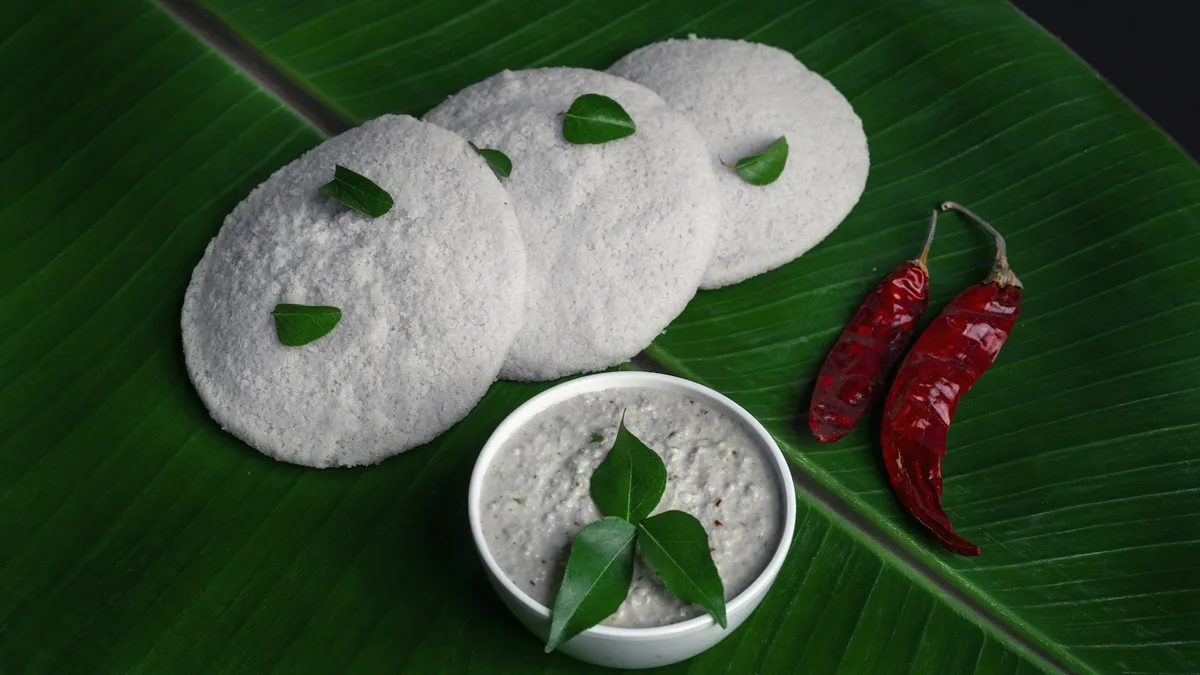
UDAIPUR: UDAIPUR — Nestled amidst the Aravalli hills, the Lake City is renowned globally not only for its majestic palaces and azure waters but also for its profoundly rich culinary heritage. As food lovers and travelers converge on the region this November 2026, exploring mewari cuisine and street food offers a sensory journey through centuries-old royal kitchens and vibrant local bazaars. From the fiery red notes of authentic Laal Maas to the comforting warmth of traditional Dal Baati Churma, Udaipur’s food culture blends royal extravagance with robust rural flavors.
⚡ Quick Highlights: Udaipur Food Guide 2026: Mewari Cuisine & Street Food
The culinary landscape of Mewar is deeply intertwined with the valor, lifestyle, and geography of the Rajput rulers. Unlike the mild subtleties found in other Indian royal cuisines, Mewari fare is characterized by robust spices, creative preservation techniques, and an abundance of clarified butter (ghee). Historically, because game meat and scarce water resources dictated camp life during military campaigns and hunting expeditions, royal khansamas engineered dishes that required minimal water and relied heavily on yogurt, milk, and dried berries. Today, preserving this heritage remains a point of immense pride for local master chefs.
As winter approaches and morning chills settle across the region, urban development and changing real estate dynamics are transforming traditional dining zones. For instance, commercial expansion in outer zones mirrors trends seen in the Udaipur Real Estate Market 2026: UDA Plot Schemes, Revised DLC Rates and Property Trends report, where modern commercial hubs are springing up alongside heritage quarters. Yet, despite rapid modernization, the core recipes passed down through generations remain fiercely authentic.
At the center of Mewari gastronomy is the meticulous balancing of flavors. The use of indigenous ingredients such as dried Sangri beans, Ker berries, and Mathania chillies ensures that every bite tells a story of survival and luxury coexisting in an arid landscape. (Also read: Bikaner and Bathinda AQI Crosses 1,000 as Severe Air Pollution Triggers Health Emergency Across North India).
“Mewari cooking is not merely about feeding the body; it is a celebration of our ancestors' resilience and artistic flair in the royal kitchen.” — Maharaj Bhawani Singh, Heritage Culinary Historian
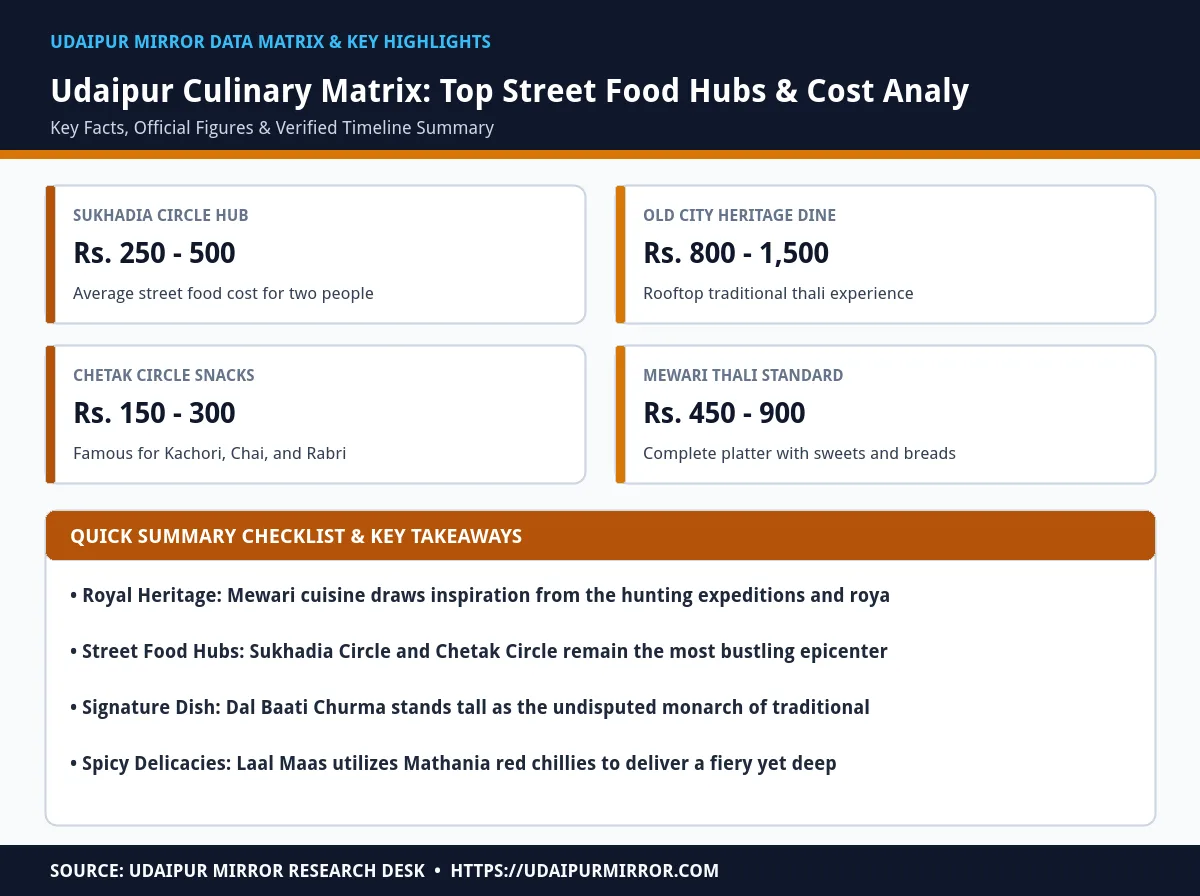
Whether you are navigating the labyrinthine alleys of the Old City or cruising along the vibrant avenues of Sukhadia Circle, Udaipur offers an eclectic mix of legendary eateries. The following curated directory outlines the top food spots, their operating hours, signature specialties, and average pricing for two diners during the current 2026 season.
| Location / Spot | Area / Hub | Must-Try Specialty | Operating Hours | Avg. Cost for Two |
|---|---|---|---|---|
| Pandit Ji Doodh Center | Chetak Circle | Kesaria Doodh & Rabri | 6:00 PM – 11:30 PM | Rs. 200 |
| Jagdish Misthan Bhandar | Bohra Ganeshji | Pyaz Kachori & Mirchi Bada | 7:00 AM – 8:00 PM | Rs. 150 |
| Ambrai Restaurant | Ahar River / Jagdish Chowk | Laal Maas & Safed Maas | 12:30 PM – 10:30 PM | Rs. 1,800 |
| Sukhadia Circle Chaat Stalls | Sukhadia Circle | Bhaji Pav & Dal Baati | 5:00 PM – 11:00 PM | Rs. 300 |
| Natraj Dining Hall | Station Road | Unlimited Rajasthani Thali | 11:30 AM – 3:30 PM | Rs. 700 |
No exploration of Udaipur’s food culture is complete without diving into its bustling nocturnal street food hubs. Sukhadia Circle, a sprawling recreational fountain hub, transforms every evening into a vibrant food carnival. Families, students, and tourists flock to dozens of illuminated carts offering everything from spicy Pav Bhaji and creamy Kulfis to inventive fusion chaats. The air is thick with the aroma of roasted cumin, tamarind chutney, and bubbling butter.
Moving toward Chetak Circle and Delhi Gate, the culinary focus shifts slightly toward legendary heritage snack vendors who have operated for over four decades. Morning walkers and evening snackers line up for crisp, flaky Pyaz Kachoris stuffed with spiced onion fillings, paired perfectly with steaming cups of cardamom-infused milk tea. It is worth noting that while food lovers enjoy these culinary outings, public health and civic departments continue monitoring environmental parameters, much like recent advisories issued regarding air quality concerns noted in reports like the Bikaner and Bathinda AQI Crosses 1,000 as Severe Air Pollution Triggers Health Emergency Across North India warning, ensuring outdoor dining environments remain vibrant and safe.
The charm of Udaipur street food lies in its democratic appeal. Whether you are seated on a plastic stool outside a modest cart or strolling around the illuminated water fountain at Sukhadia Circle, the culinary warmth remains uniformly exceptional.
“The soul of Udaipur lives in its street corners, where a simple Rs. 30 kachori carries decades of family secrets and unmatched flavor.” — Ramesh Lohar, Veteran Street Food Vendor at Chetak Circle
At the heart of every celebratory feast in Mewar is the iconic trio of Dal Baati Churma. Baatis are hard, wheat-flour dough balls baked over traditional cow-dung or modern gas ovens until golden-brown, then generously dunked in pure ghee. They are accompanied by Panchmel Dal—a protein-rich lentil soup crafted from five distinct lentils—and Churma, a coarsely ground sweet wheat crumble flavored with jaggery or sugar, cardamom, and dry fruits. Eating this dish is a ritual that involves crushing the warm baati, drenching it in dal, and savoring it with a side of pungent garlic chutney.
Another vegetarian masterpiece is Gatte ki Sabzi, which features cylindrical gram flour (besan) dumplings seasoned with carom seeds, turmeric, and curd, gently simmered in a tangy, spiced tomato-yogurt gravy. Similarly, Mangodi ki Sabzi utilizes sun-dried moong dal dumplings to create a comforting, earthy curry that pairs wonderfully with bajra (pearl millet) rotis, especially during the colder months.
For those seeking grain-based comfort, Mewari Khichdi—a hearty porridge made of broken wheat, lentils, and spices cooked together in ghee—provides ultimate nourishment and is often served with fresh buttermilk (chaas). (Also read: Udaipur Real Estate Market 2026: UDA Plot Schemes, Revised DLC Rates and Property Trends).
“You cannot truly understand Rajasthani culture until you have broken a ghee-drenched baati with your hands and mixed it with panchmel dal.” — Chef Hemant Sharma, Culinary Director
Sukhadia Circle, Chetak Circle, and the lanes surrounding Delhi Gate and Jagdish Chowk are the top-rated street food hubs in Udaipur, offering everything from spicy kachoris to rabri and chaats.
Dal Baati Churma is the undisputed flagship dish of Mewar and Rajasthan, traditionally served with five-lentil dal, wheat baatis baked in ghee, and sweet churma.
Yes, while Mewar has a rich vegetarian heritage, authentic non-vegetarian delicacies like Laal Maas (spicy mutton curry) and Safed Maas are widely served in heritage restaurants and specialty dining houses.
A standard traditional unlimited Rajasthani thali in Udaipur typically ranges between Rs. 450 and Rs. 900 per person at popular heritage dining halls.
Add Udaipur Mirror as a preferred source on Google to see more of our travel guides in your AI overviews.