Office Address
14, Residency Road, Udaipur, Rajasthan 313001
Office Address
14, Residency Road, Udaipur, Rajasthan 313001

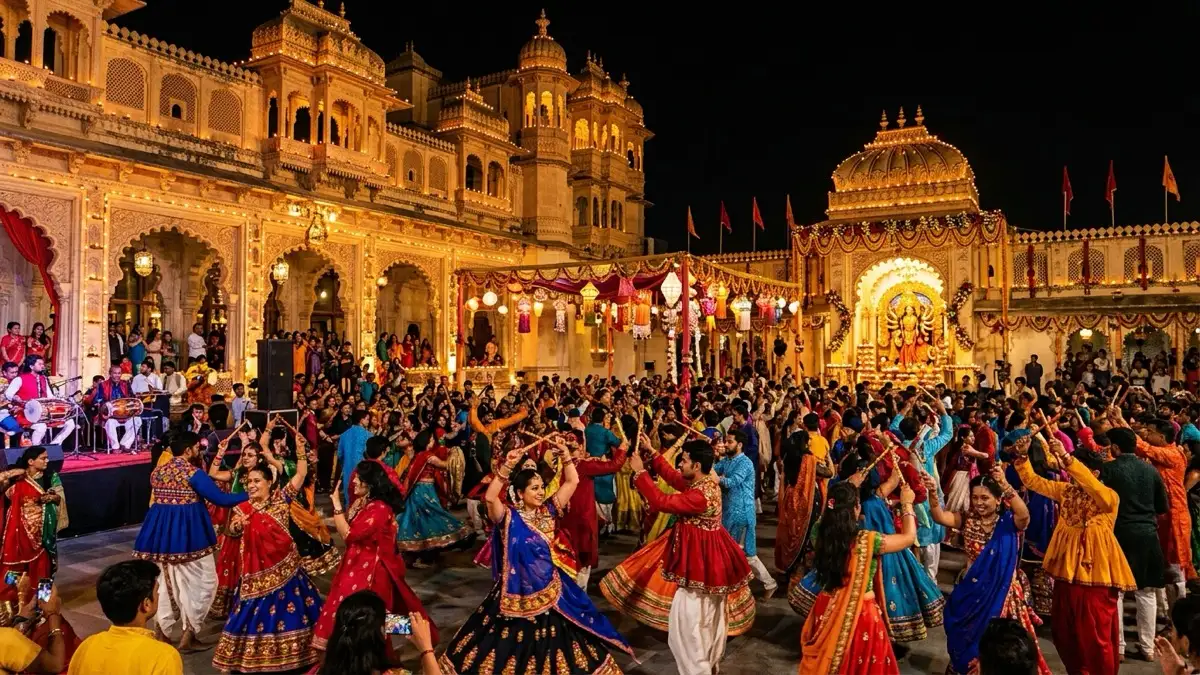
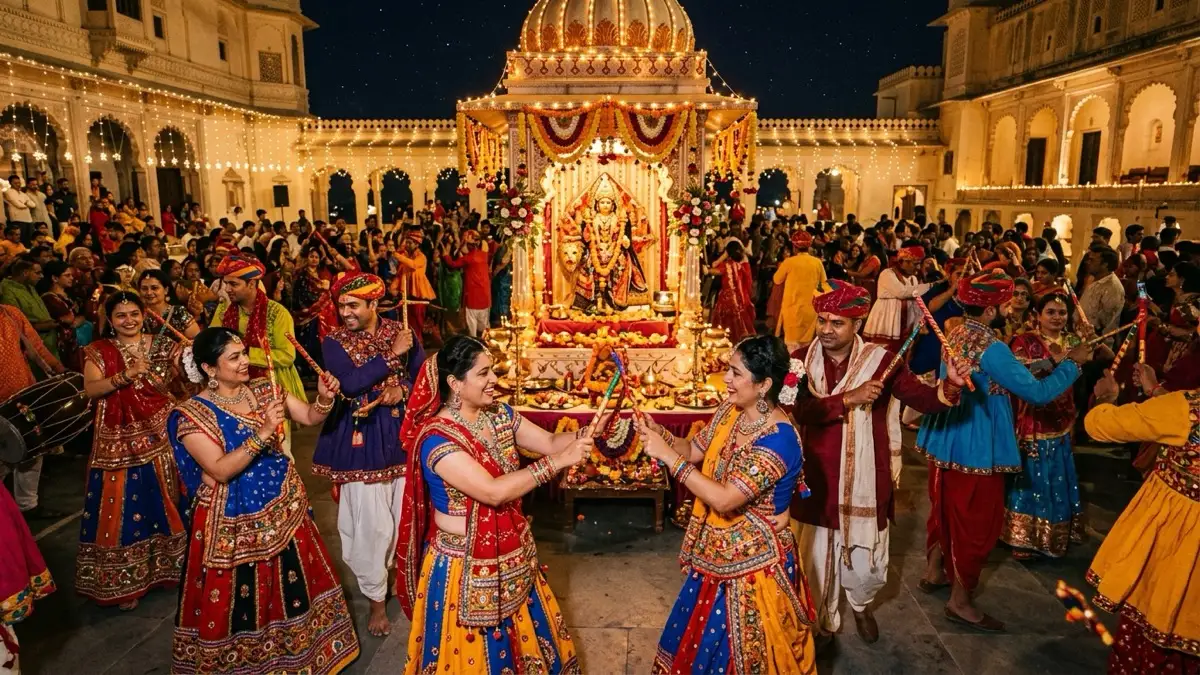
UDAIPUR: As the divine spirit of Sanatan devotion envelops the Lake City, the nine-day Hindu festival of Shardiya Navratri 2026 begins on October 11, 2026, culminating with Vijayadashami (Dussehra) on October 20, 2026. Revered as one of the most auspicious periods in the Hindu calendar, Navratri celebrates the victory of Goddess Durga over negative forces through nine distinct manifestations of the Divine Mother (Navdurga). Across Udaipur—from the majestic courtyards of the City Palace and ancient lakeside shrines to bustling open-air community clubs and scenic hilltop venues like Tiger Hill—the city is gearing up for sacred Vedic pujas, fasting rituals, and vibrant, rhythmic Dandiya Raas and Garba festivities.
Whether you are observing the sacred nine-day fast, seeking auspicious daily ritual timings, or planning your evening outings to play Dandiya with friends and family, this comprehensive guide covers the complete 9 Days Navratri Plan, the spiritual significance of each Goddess avatar, the auspicious 9 daily dress colors, and the premier Dandiya and Garba venues across Udaipur.
Each day of Navratri is consecrated to a unique manifestation of Goddess Durga, carrying distinct philosophical virtues, specific floral offerings, and divine blessings for spiritual seekers:
Daughter of the King of Mountains (Himalaya), Maa Shailputri rides a bull (Nandi) holding a trident and a lotus. She embodies absolute purity, patience, and awakening of spiritual consciousness. The festival initiates with Kalash Sthapana and sowing of sacred barley seeds (Jowar).
Auspicious Color: Royal Blue (signifying vastness, inner peace, and divine devotion).
Walking barefoot in white garments with a rosary (Japamala) and water pot (Kamandalu), Maa Brahmacharini personifies austerity, sacred knowledge, and unwavering determination. Devotees worship her for intellectual clarity, mental fortitude, and self-discipline.
Auspicious Color: Yellow (signifying warmth, brightness, and optimism).
Adorned with a bell-shaped crescent moon on her forehead, Maa Chandraghanta rides a tigress, brandishing ten weapons. Her divine bell radiates sound that destroys malevolent energy while bestowing fearless courage upon devotees.
Auspicious Color: Green (symbolizing fertility, growth, tranquility, and nature).
Residing within the radiant core of the Sun, Maa Kushmanda is celebrated as the creator of the cosmic universe through her gentle smile (Ashta-bhuja). She dispels darkness and bestows health, prosperity, and longevity.
Auspicious Color: Grey (signifying balance, grounded strength, and spiritual contemplation).
Depicted seated on a lotus holding infant Lord Kartikeya (Skanda) in her lap, Maa Skandamata represents the supreme power of maternal love, protection, and unconditional forgiveness. Worshipping her grants blessings for progeny, domestic peace, and spiritual illumination.
Auspicious Color: Orange (symbolizing vibrant energy, divine warmth, and spiritual awakening).
Manifested from the combined energies of the holy Trinity to eliminate the demon Mahishasura, Maa Katyayani is the fierce warrior deity worshipped for overcoming life obstacles and finding righteous marital harmony.
Auspicious Color: White (representing absolute purity, truth, and cosmic peace).
With a midnight-dark complexion, disheveled hair, and three glowing eyes, Maa Kalaratri is the fiercest avatar who vanquishes fear, demons, and evil spirits. Despite her formidable appearance, she is known as Shubhankari (bestower of auspicious boons).
Auspicious Color: Red (symbolizing primal vigor, passion, protective fire, and courage).
Radiating pure white brilliance like conch shells and moonbeams, Maa Mahagauri represents purification, absolution of sins, and deep spiritual redemption. Families across Udaipur perform Kanya Pujan (Kanjak) on this day, honoring young girls as living embodiments of the Goddess with Halwa, Puri, and gifts.
Auspicious Color: Royal Blue / Sky Blue (signifying infinite divine blessings and celestial calm).
Seated on a celestial lotus holding a mace, chakra, conch, and lotus, Maa Siddhidatri is the master of all eighteen supernatural perfections (Siddhis). Her worship concludes the nine-day ritual with sacred Havan, Purnahuti, and community feasts.
Auspicious Color: Pink / Peacock Green (representing grace, compassion, and divine fulfillment).
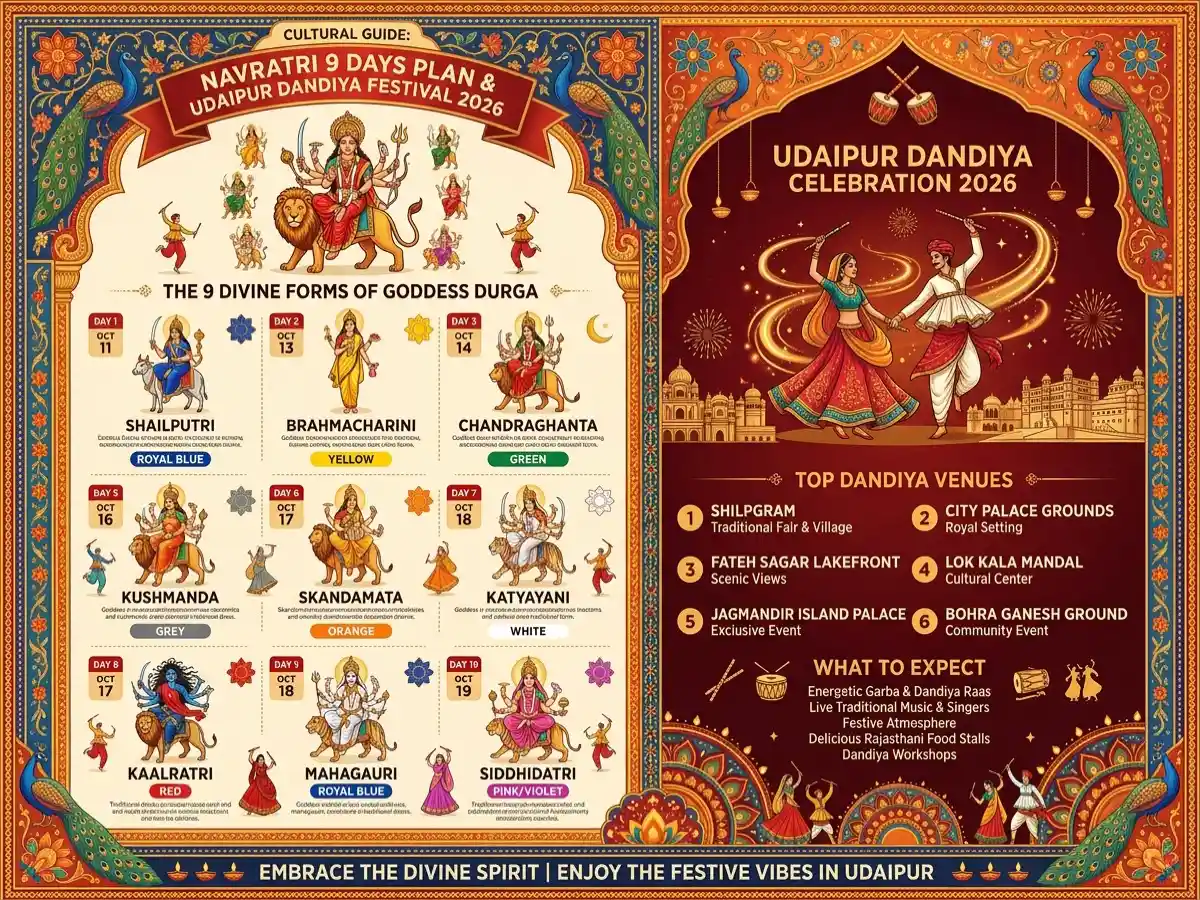
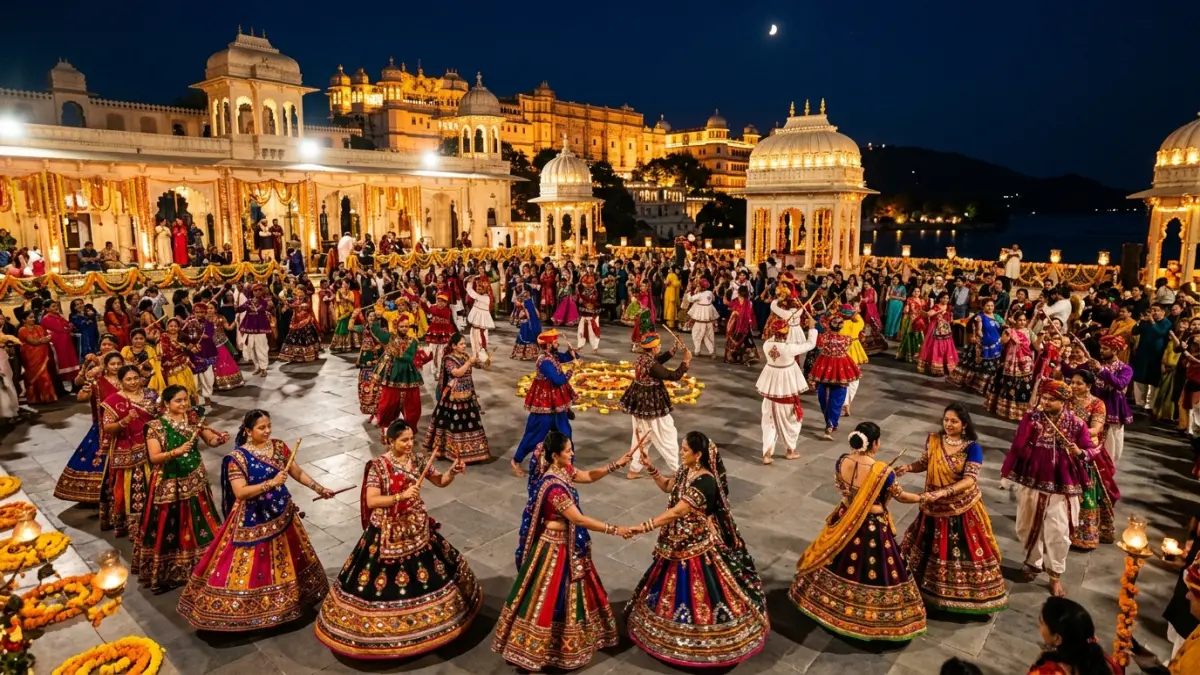
In Udaipur, Navratri nights transform the heritage city into an acoustic symphony of wooden dandiya clatter, twirling traditional skirts, and folk rhythms. Here are the top hotspots hosting curated Garba and Dandiya celebrations:
For purists seeking an authentic spiritual experience, Sanskar Bhawan atop Tiger Hill is hosting a 9-day celebration emphasizing devotional integrity. Organizers have placed a total ban on commercial Bollywood or pop tracks, dedicating the evenings exclusively to traditional Gujarati and Rajasthani Garba stutis, accompanied by mandatory Mewari ethnic attire. Read our full feature on the Shrimali Samaj Navratri Dandiya Mahotsav at Tiger Hill.
One of Udaipur’s oldest and most prestigious lifestyle institutions, the Field Club hosts an elite family Dandiya festival featuring live folk fusion orchestras, food courts, and daily attire prizes for Best Chaniya Choli, Best Dandiya Couple, and Best Traditional Mewari Turban.
Renowned for patronizing Rajasthani folk heritage, the Lok Kala Mandal and Municipal Town Hall courtyards organize public cultural Dandiya circles welcoming folk musicians, local artists, and large family crowds under decorative illuminations.
Set against the backdrop of rustic rural huts and stone pavilions, the West Zone Cultural Centre’s Shilpgram hosts traditional open-air Garba nights with folk percussionists playing Nagada, Dholak, and Manjira in a timeless village setting.
Students and youth from nearby colleges gather in festive clusters around Bohra Ganesh and university circles for high-energy rhythmic Garba steps (Do Taali, Teen Taali, and Heench).
| Day & Date | Tithi | Goddess Manifestation | Day’s Color | Key Ritual / Offering |
|---|---|---|---|---|
| Day 1: Oct 11, 2026 | Pratipada | Maa Shailputri | Royal Blue | Ghatasthapana, Akhand Jyoti, Desi Ghee Bhog |
| Day 2: Oct 12, 2026 | Dwitiya | Maa Brahmacharini | Yellow | Tapasya meditation, Sugar & Panchamrit offering |
| Day 3: Oct 13, 2026 | Tritiya | Maa Chandraghanta | Green | Courage prayers, Milk-based sweets (Kheer) |
| Day 4: Oct 14, 2026 | Chaturthi | Maa Kushmanda | Grey | Srishti worship, Malpua & Fruit offerings |
| Day 5: Oct 15, 2026 | Panchami | Maa Skandamata | Orange | Maternal blessings, Banana & Fresh Fruit Bhog |
| Day 6: Oct 16, 2026 | Shashthi | Maa Katyayani | White | Obstacle removal, Honey & Pomegranate offering |
| Day 7: Oct 17, 2026 | Saptami | Maa Kalaratri | Red | Nisha Puja, Jaggery (Gur) and Herbal Prasad |
| Day 8: Oct 18, 2026 | Ashtami | Maa Mahagauri | Royal Blue | Maha Ashtami Sandhi Puja, Kanya Pujan (Halwa-Chana) |
| Day 9: Oct 19, 2026 | Navami | Maa Siddhidatri | Peacock Green | Maha Navami Havan, Purnahuti, Sesame seed Bhog |
To enjoy a hassle-free and festive Navratri experience across the city, keep these practical tips in mind:
Shardiya Navratri 2026 begins on Sunday, October 11, 2026, with Ghatasthapana (Pratipada) and concludes on Monday, October 19, 2026, with Maha Navami. Vijayadashami (Dussehra) falls on Tuesday, October 20, 2026.
On October 11, 2026, the morning Ghatasthapana muhurat runs from 06:21 AM to 10:14 AM. The auspicious Abhijit Muhurat is between 11:45 AM and 12:32 PM.
The nine colors for Navratri 2026 are: Day 1: Royal Blue, Day 2: Yellow, Day 3: Green, Day 4: Grey, Day 5: Orange, Day 6: White, Day 7: Red, Day 8: Sky Blue/Royal Blue, and Day 9: Peacock Green/Pink.
The top Dandiya celebration venues in Udaipur include Sanskar Bhawan (Tiger Hill), Field Club (Saheli Marg), Shilpgram Cultural Complex, Lok Kala Mandal Grounds, and Bohra Ganesh Ground.
Yes, the majority of community and cultural venues in Udaipur mandate traditional Indian attire, including Chaniya Cholis and lehengas for women, and ethnic kurtas, dhotis, and Mewari turbans (Paga) for men.
Add Udaipur Mirror as a preferred source on Google to see more of our travel guides in your AI overviews.



[…] your spiritual journey through each of the nine sacred nights, check our companion feature on the Navratri 2026: Complete 9 Days Schedule, Goddess Avatars & Daily Colors Guide, detailing the astrological significance, daily attire colors, and ceremonial […]