Office Address
14, Residency Road, Udaipur, Rajasthan 313001
Office Address
14, Residency Road, Udaipur, Rajasthan 313001

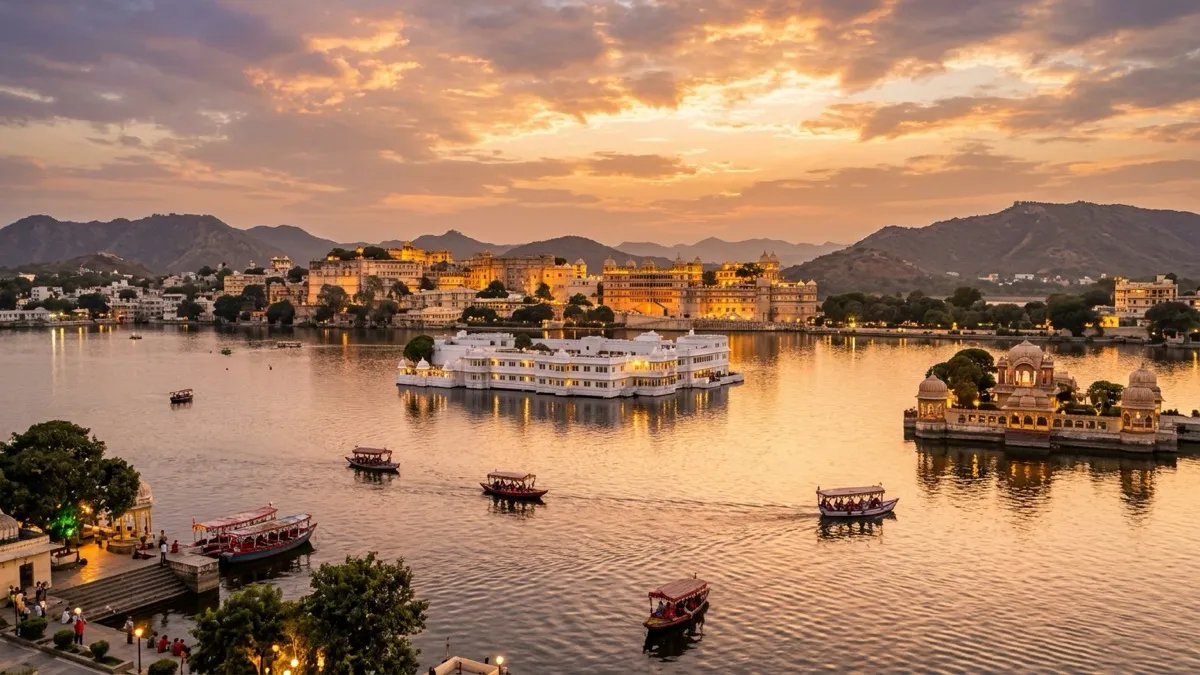
Udaipur, situated in the heart of southern Rajasthan, is globally celebrated as the “City of Lakes” (झीलों की नगरी) and the “Venice of the East” because it is cradled by a magnificent network of five major interconnected artificial freshwater lakes: Lake Pichola, Fateh Sagar Lake, Badi Lake (Jayan Sagar), Udaisagar Lake, and Jaisamand Lake, complemented by supporting reservoirs including Doodh Talai and Swaroop Sagar. Engineered by visionary Mewar rulers over six centuries starting in 1362 AD, these lakes form a cascading hydraulic river-basin system that manages monsoon floodwaters, sustains drinking water across the arid Aravalli landscape, and provides the shimmering backdrop for world-famous island palaces like the Taj Lake Palace and Jag Mandir.
Key Travel Essentials: Best visiting season is October to March. Boating fares range from ₹100 to ₹400 for regular boats and ₹500 to ₹1,000+ for sunset heritage motor cruises. Top sunset points include Ambrai Ghat, Bahubali Hills, and the newly launched Neemach Mata Ropeway on Fateh Sagar Lake.
Nestled amid the dramatic ridges of the ancient Aravalli Range, Udaipur possesses an ethereal, dreamlike aura that sets it completely apart from the desert sands typically associated with Rajasthan. Founded in 1559 AD by Maharana Udai Singh II as the historic capital of the Mewar Kingdom, the city’s identity, urban geography, and global romance are inextricably bound to its shimmering azure waters.
From the romantic marble palaces floating weightlessly on Lake Pichola to the scenic tree-lined boulevards of Fateh Sagar and the untamed wilderness of Badi and Jaisamand, Udaipur’s lakes are not merely ornamental tourist destinations—they represent one of medieval India’s most sophisticated hydrological engineering triumphs. In this definitive guide, we explore the history, hidden stories, boating details, ecological genius, and top sunset viewpoints across every major lake in Udaipur.
Dating back to 1362 AD, Lake Pichola is Udaipur’s oldest and most renowned lake. Legend holds that it was constructed during the reign of Maharana Lakha by a Banjara grain merchant named Pichhu Banjara, who built a stone dam across the Kotra stream to allow his pack bullocks to cross safely. Recognizing its immense military and strategic defense value, Maharana Udai Singh II substantially expanded and fortified the lake in the 16th century when establishing his new capital.
Top Ghats & Viewpoints: For travelers and photographers, Ambrai Ghat (Manjhi Ghat) on the western shore offers the most spectacular panoramic view of the City Palace lit in golden amber lights after dark. Gangaur Ghat and Lal Ghat host sacred daily rituals, evening folk music, and vibrant cultural ceremonies along the water’s edge.
Located just north of Lake Pichola, Fateh Sagar Lake is the city’s favorite social, cultural, and recreational hub. Originally constructed by Maharana Jai Singh in 1687, the reservoir was devastated by catastrophic monsoon floods until Maharana Fateh Singh completely reconstructed and reinforced the masonry embankment in 1889. To commemorate the royal visit of the Duke of Connaught (Queen Victoria’s son), the eastern stone dam was named the Connaught Dam.
Fateh Sagar features three unique island parks accessible via high-speed motorboats and solar-powered passenger ferries:
Along the western and northern embankment lies the beloved Fateh Sagar Paal (Promenade) and the bustling Mumbai Market, famous for steaming kulhad coffee, spicy Rajasthani chaat, and tranquil lakeside evening strolls. On the northern bank at Dewali, visitors can now experience the Neemach Mata Ropeway, which whisks passengers 430 meters up to a 500-foot summit offering unmatched 360-degree aerial views over both Fateh Sagar and Pichola.
Situated approximately 12 kilometers west of Udaipur, Badi Lake—historically named Jayan Sagar—was created between 1652 and 1680 by Maharana Raj Singh I. Built to provide famine relief during a devastating drought, the lake encompasses an expansive water catchment of over 155 square kilometers.
Unlike the bustling urban shores of Pichola and Fateh Sagar, Badi Lake remains blissfully pristine and free from motorized watercraft. Fringed by dense Aravalli scrub forests and stone chhatris (pavilions) along its embankment, Badi Lake has exploded in popularity thanks to the Bahubali Hills. A brisk 15-minute uphill hike leads adventurers to a jagged rocky outcropping resembling a miniature canyon, delivering breathtaking bird’s-eye vistas of the emerald lake reflecting morning mist and dramatic sunsets.
Located 48 kilometers southeast of Udaipur, Jaisamand Lake (historically known as Dhebar Lake) is a staggering testament to royal engineering. Commissioned by Maharana Jai Singh between 1685 and 1691, it was created by building a massive marble dam across the Gomti River. Stretching over 87 square kilometers with a circumference of nearly 48 kilometers, Jaisamand ranks as the second-largest artificial freshwater lake in Asia.
The colossal marble dam measures over 300 meters long and nearly 40 meters high. Embellishing its summit are six intricately carved marble chhatris (cenotaphs) and an imposing central temple dedicated to Lord Shiva. Seven inhabited islands dot the lake’s expanse, home to indigenous Bhil Mina tribes—the largest island is named Baba Ka Magra and the smallest is known as Piari. The adjacent Jaisamand Wildlife Sanctuary shelters panthers, leopards, wild boars, and dozens of migratory waterfowl species.
Completed in 1565 AD by Maharana Udai Singh II, Udaisagar Lake lies roughly 13 kilometers east of the modern city center. Created by damming the Berach River, the reservoir was designed to ensure a permanent water reservoir for Udaipur while creating an impassable water barrier against invading armies approaching through the eastern mountain passes.
Udaisagar holds immense historical gravity: it served as the venue for fateful diplomatic meetings between Kunwar Man Singh of Amber and Maharana Pratap prior to the epic Battle of Haldighati in 1576, as well as multiple armed skirmishes between Mewar warriors and Mughal imperial forces. Today, its rugged, quiet banks provide an idyllic getaway for offbeat travelers seeking peace away from tourist crowds.
While smaller in surface area, these two water bodies are indispensable to Udaipur’s urban fabric and hydraulic equilibrium:
The true genius of Udaipur’s royal planners lies not in individual lakes, but in their holistic, cascading hydrological network. Medieval Mewar engineers harnessed the natural slope of the Ahar river basin to design an integrated gravity-fed canal system that prevents catastrophic city flooding while storing every drop of precious monsoon runoff:
Monsoon Runoff from Aravalli Catchment
⬇
Bada Madar & Chhota Madar Dams
⬇ (Via Madar Feeder Canal)
Fateh Sagar Lake ⬌ Swaroop Sagar Link Canal ⬌ Lake Pichola
⬇ (Overflow cascades via Ahar River)
Udaisagar Lake
⬇
Berach River ➔ Banas River ➔ Chambal ➔ Yamuna
When heavy downpours fill Lake Pichola, the excess water overflows through Swaroop Sagar into Fateh Sagar Lake. If Fateh Sagar reaches its full reservoir capacity, surplus water discharges into the Ahar River channel, which drains eastward into Udaisagar Lake. This closed-loop engineering marvel has sustained drinking water, agriculture, and urban biodiversity for over 450 years without a single electrical pump.
To assist travelers in planning their itinerary, the table below summarizes the key attributes, visitor hours, and boating charges across Udaipur’s top lakes:
| Lake Name | Built Year | Key Attraction | Boating Available | Approx. Ticket Price | Best Time to Visit |
|---|---|---|---|---|---|
| Lake Pichola | 1362 AD | Lake Palace, Jag Mandir, City Palace Ghats | Yes | ₹400 – ₹1,000 (Day/Sunset) | 4:30 PM – 7:00 PM (Sunset) |
| Fateh Sagar Lake | 1687 / 1889 | Nehru Park, Solar Observatory, Mumbai Market | Yes | ₹100 – ₹450 (Speed/Pedal/Cruise) | 5:00 PM – 9:00 PM (Evening) |
| Badi Lake | 1684 AD | Bahubali Hills Trek, Serene Nature, Chhatris | No | Free Entry (₹10 parking) | 6:00 AM – 9:00 AM (Sunrise) |
| Jaisamand Lake | 1691 AD | Marble Dam, Shiva Temple, Wildlife Sanctuary | Yes | ₹150 – ₹300 (Ferry/Boat) | 10:00 AM – 4:00 PM (Day Trip) |
| Udaisagar Lake | 1565 AD | Historical Dam, Rugged Landscape, Birdwatching | Rare | Free Access | Morning / Sunset |
| Doodh Talai | Pre-16th C. | Musical Garden, Karni Mata Ropeway Base | Yes | ₹50 – ₹100 (Pedal Boat) | 4:00 PM – 7:30 PM |
To experience Udaipur’s world-renowned golden hour reflections, bookmark these top-rated vantage points:
As Udaipur cements its reputation as a global luxury wedding destination and premier cultural hub—bolstered by the state’s ambitious Rajasthan Tourism Vision 2047 initiative—preserving the fragile ecosystem of the lakes has become a top priority. Local administrative bodies, including the Jheel Sanrakshan Samiti (Lake Conservation Society) and civic authorities, have implemented several modern conservation measures:
For visitors exploring the wider cultural heritage of the region, we also recommend discovering the ancient 10th-century marvels at the Saas Bahu Temples in Nagda and reviewing the spiritual guide to Rishabhdeo Kesariyaji Tirth.
Udaipur is called the ‘City of Lakes’ because it is surrounded by a historic, interconnected network of artificial freshwater lakes—including Lake Pichola, Fateh Sagar, Badi Lake, Udaisagar, and Jaisamand—engineered over six centuries by Mewar rulers for water security, defense, and aesthetic grandeur.
Lake Pichola is the oldest lake in Udaipur, constructed in 1362 AD by a Banjara tribesman named Pichhu Banjara during the reign of Maharana Lakha, and later expanded by Maharana Udai Singh II in the 16th century.
On Lake Pichola, regular daytime boat cruises cost approximately ₹400 per adult, while sunset cruises cost ₹700 to ₹1,000 (including a stopover at Jag Mandir). On Fateh Sagar Lake, pedal boats and motorboats start around ₹100 to ₹250, while high-speed motorboats cost ₹400 to ₹500.
The lakes operate on a cascading overflow system. Feeder channels bring rainwater from the Madar catchments into Pichola and Fateh Sagar. When Pichola reaches full capacity, surplus water discharges through the Swaroop Sagar link into Fateh Sagar; excess from Fateh Sagar then drains through the Ahar River channel into Udaisagar Lake, preventing city flooding.
Bahubali Hills is situated along the pristine shores of Badi Lake (Jayan Sagar), located about 12 kilometers west of Udaipur. A short 15-minute hike leads to panoramic rocky cliffs overlooking the emerald lake and Aravalli ranges.
The ideal time to visit is from October to March (winter season), when pleasant daytime temperatures (15°C to 28°C) and clear sunny skies create ideal conditions for boat cruises, rooftop dining, and lakefront exploration. The monsoon season (July to September) is also breathtaking as reservoirs fill to their brim.
Add Udaipur Mirror as a preferred source on Google to see more of our travel guides in your AI overviews.