Office Address
14, Residency Road, Udaipur, Rajasthan 313001
Office Address
14, Residency Road, Udaipur, Rajasthan 313001

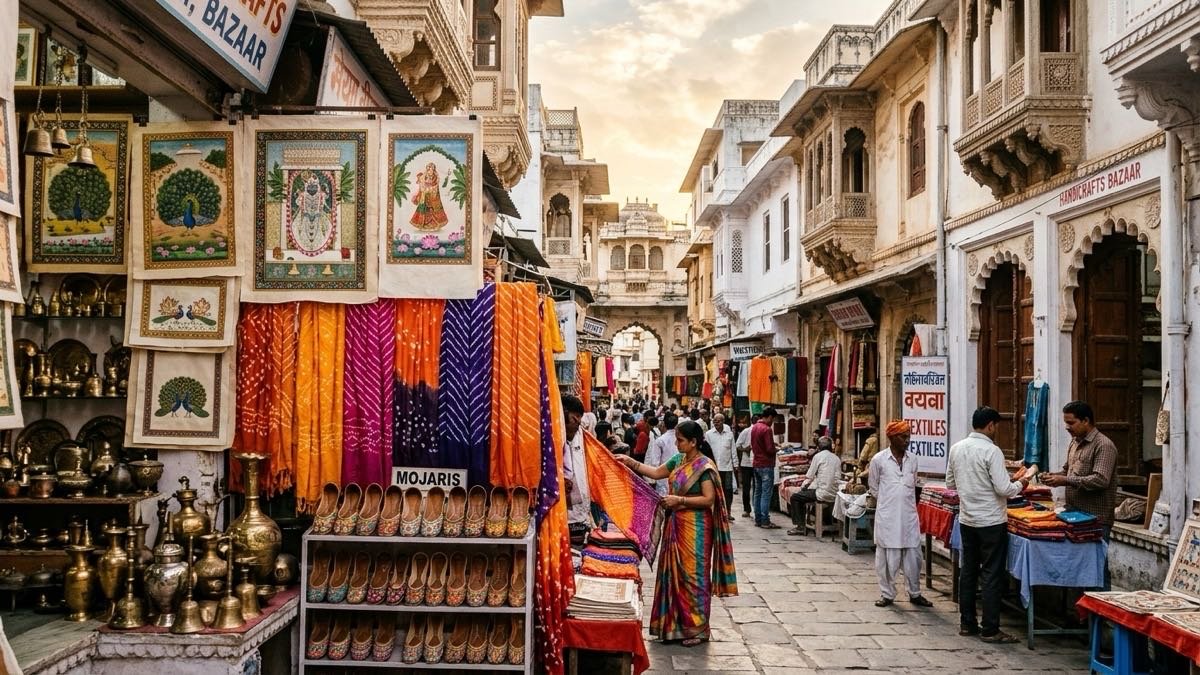
Udaipur is renowned not only for its tranquil lakes and marble palaces, but also as one of western India’s most vibrant living centers of heritage craftsmanship. From sacred centuries-old Pichwai paintings and intricately tied Bandhani silks to handmade camel-leather Mojaris and oxidized silver jewelry, the historic bazaars of Mewar offer treasures that machine production simply cannot duplicate.
However, navigating the labyrinth of old walled city markets can be intimidating for travelers. High commissions paid to auto-rickshaw drivers, factory-made digital prints disguised as hand-painted miniatures, and tourist-targeted markups often leave visitors unsure of what is genuinely authentic. This comprehensive 2026 editorial guide breaks down the 7 best heritage shopping places in Udaipur, along with an insider buyer’s manual on how to spot real craftsmanship, verify materials, and shop commission-free.
Located just north of the City Palace complex near the historic Elephant Gate (Hathi Pol), this bustling market is universally regarded as the premier destination for connoisseurs of traditional Rajasthani fine art. Hathi Pol is not merely a retail market—it is an active artisan quarter where generations of Chitrakars (traditional court painters) continue royal Mewari artistic traditions.
Here you will encounter two primary artistic styles: Pichwai (intricate cloth hangings depicting Lord Shreenathji, sacred cows, lotus ponds, and Pushtimarg devotional themes) and Mewar Miniature Paintings (delicately rendered on handmade wasli paper, old court stamp papers, or silk canvas using brushes crafted from squirrel hair). Beyond fine art, Hathi Pol features shops filled with hand-carved wooden jharokhas, brass figurines, and camel-bone/resin decor.
Insider Tip: Do not buy the first framed canvas you see displayed on the street front. Walk into the smaller alleys branching off the main road and ask for the artist’s personal atelier (karkhana). Reputable master painters will happily show you their raw natural stone pigments—lapis lazuli for royal blues, malachite for emerald greens, and real 24k gold foil leaf (varak).
Bada Bazaar is the historic commercial spine of Udaipur’s old city. Originating near Delhi Gate and extending toward the central Clock Tower (Ghanta Ghar), this lively bazaar is where Udaipur’s royal families historically purchased wedding trousseaus and ceremonial silks.
The primary attraction here is authentic Mewari tie-dye textiles. Look for Bandhani (minute dot resist-dyeing), Leheriya (diagonal ripple wave patterns symbolizing the arrival of monsoon rains), and Mothra (criss-cross checkered tie-dye). Bada Bazaar also houses the city’s venerable silver bullion merchants. If you are searching for antique Mewari silver anklets (kadis), intricately worked hasli necklaces, or silver pooja utensils, the century-old family jewelers near Ghanta Ghar offer authenticated hallmarked pieces sold transparently by metal weight.
Branching immediately off Bada Bazaar lies Mochiwada, the historic cobblers’ lane of Udaipur. The moment you step into this narrow lane, the unmistakable scent of vegetable-tanned leather and dyed threads fills the air.
Mochiwada is renowned throughout Rajasthan for Mojaris and Juttis handcrafted from treated camel, buffalo, and goat leather. You will find footwear ranging from daily-wear rustic camel-leather slippers to magnificent wedding juttis embroidered with colorful resham silk threads, brass zardozi cords, and mirror accents. The signature curled-toe Mojari is both an iconic Rajasthani silhouette and an exceptionally durable walking shoe once properly broken in.
Fitting Advice: Traditional Mojaris do not feature designated left and right shapes initially; they conform organically to the contours of your feet as you wear them. Apply a drop of pure mustard oil to the inner leather rim before your first long walk to soften the collar and prevent chafing.
For travelers who prefer an unhurried, transparent shopping experience without the exhausting ritual of haggling, the Rajasthali Government Handicrafts Emporium at Chetak Circle is an essential stop. Operated directly by the Rajasthan Small Industries Corporation (RAJSICO), Rajasthali serves as the state’s official custodian of authentic indigenous handicrafts.
Every item displayed here carries a fixed, government-regulated price tag and a guarantee of provenance. Highlights include Jaipur Blue Pottery ceramics, certified sandalwood and teak carvings, bronze Dhokra castings, authentic Barmer block-printed bedspreads, and handcrafted puppets (Kathputlis). Even if you plan to do your primary shopping in the street bazaars, visiting Rajasthali first establishes an invaluable quality and price baseline for your entire trip.
Beginning at the ornate marble staircase of the 17th-century Jagdish Temple and winding downhill toward Lal Ghat on the shores of Lake Pichola, this bohemian heritage lane is a favorite among cultural travelers. After taking in the temple’s intricate stone friezes or embarking on a Lake Pichola boating tour, you can leisurely explore dozens of independent curio shops.
This stretch is the best place in Udaipur to procure hand-bound leather travel journals filled with tree-free recycled cotton rag parchment (Khaddi paper), brass hanging lamps, hand-carved soapstone elephants, and vibrant Mewari cloth puppets. The area also hosts specialized Mewar miniature painting schools where local masters offer short demonstrations of single-hair brushwork.
Situated along the main thoroughfare between Delhi Gate and Surajpole, Bapu Bazaar is the bustling lifestyle marketplace where Udaipur residents conduct their daily shopping. Unlike the tourist-oriented lanes around the palace, Bapu Bazaar offers everyday local pricing.
It is the top marketplace for buying authentic Rajasthani cotton apparel, breathable Kota Doria sarees, Jaipuri quilts (razais) stuffed with carded organic cotton, and hand-spun Khadi shirts. Furthermore, Bapu Bazaar is the culinary gateway to authentic Mewari pantry staples. Specialty grocery merchants here stock pure Khamnore Rose Water (Desi Gulab Ark distilled in the Haldi Ghati valley), sun-dried Mathania whole red chilies, pungent roasted Hing (asafoetida), and homemade Mewari pickles (Ker Sangri and mango achar).
Perched against the picturesque backdrop of the Aravali foothills 3 kilometers west of Fateh Sagar Lake, Shilpgram is a sprawling 70-acre rural arts and crafts complex established under the West Zone Cultural Centre. Designed as a living ethnographic museum, Shilpgram features authentic mud-and-thatch huts representing the tribal communities of Rajasthan, Gujarat, and Maharashtra.
Unlike commercial bazaars where you buy through middlemen, Shilpgram brings indigenous rural artisans directly to the capital. You can watch potter families sculpt Molela terracotta plaques, observe weavers working on traditional pit looms creating woolen dhurries, and buy directly from the creators at non-inflated prices. If your travel dates coincide with late December, the annual 10-day Shilpgram Utsav is one of India’s premier folk art festivals.
To avoid paying premium prices for mass-produced industrial replicas, use the following product-specific verification criteria when shopping across Udaipur’s heritage markets:
| Heritage Bazaar | Key Specialties | Best Visiting Hours | Price Range | Bargaining Scope |
|---|---|---|---|---|
| Hathi Pol | Pichwai, Miniatures, Woodcraft | 11:00 AM – 7:30 PM | ₹500 to ₹1,50,000+ | Moderate (15–25%) |
| Bada Bazaar | Bandhani, Leheriya, Pure Silver | 11:00 AM – 8:00 PM | ₹300 to ₹40,000 | High in textiles; Silver fixed |
| Mochiwada | Camel-Leather Mojaris, Juttis | 11:30 AM – 8:30 PM | ₹350 to ₹3,500 | High (25–35%) |
| Rajasthali Emporium | Government Certified Brass, Pottery | 10:30 AM – 7:00 PM | ₹200 to ₹75,000 | Zero (Fixed Govt Pricing) |
| Jagdish Temple St | Leather Journals, Soapstone, Curios | 10:00 AM – 9:00 PM | ₹150 to ₹12,000 | Very High (30–45%) |
| Bapu Bazaar | Khadi Cotton, Rose Water, Spices | 11:00 AM – 8:30 PM | ₹100 to ₹5,000 | Low to Fair Local Rates |
| Shilpgram | Direct Rural Terracotta, Dhurries | 11:00 AM – 6:30 PM | ₹200 to ₹15,000 | Direct Fair Price (Modest) |
One of the most persistent traps in Udaipur involves auto-rickshaw drivers or unauthorized guides attempting to redirect tourists away from street bazaars toward private, air-conditioned “art emporiums” or “government cooperative warehouses” along Sukhadia Circle or National Highway 8. These showrooms often pay drivers hefty commissions—sometimes ranging from 30% to 50% of your total purchase—which is directly loaded onto the retail price you pay.
When booking city transit, clearly state your exact destination (such as Hathi Pol or Delhi Gate). If an auto driver claims that the old city bazaars are closed for holidays or inaccessible, decline politely and book private, commission-free transport via a verified Udaipur taxi service or walk the scenic pedestrian routes connecting Jagdish Chowk and Lal Ghat.
Because Udaipur’s historic bazaars flank key royal landmarks, shopping is best planned alongside monument tours rather than as an isolated outing. You can explore the City Palace and Jagdish Temple during morning hours, browse Hathi Pol and Bada Bazaar during late afternoon, and finish with a sunset stroll by the lake. For a complete time-budgeted schedule, review our comprehensive Udaipur sightseeing itineraries and lake guides.
After a full day on your feet navigating bustling cobblestone alleys and negotiating vibrant street stalls, retreat to comfortable lakeside accommodation. Travelers seeking serene comfort away from old-city congestion can check our curated selection of the best private villas in Udaipur with pool for couples.
Add Udaipur Mirror as a preferred source on Google to see more of our travel guides in your AI overviews.