Office Address
14, Residency Road, Udaipur, Rajasthan 313001
Office Address
14, Residency Road, Udaipur, Rajasthan 313001

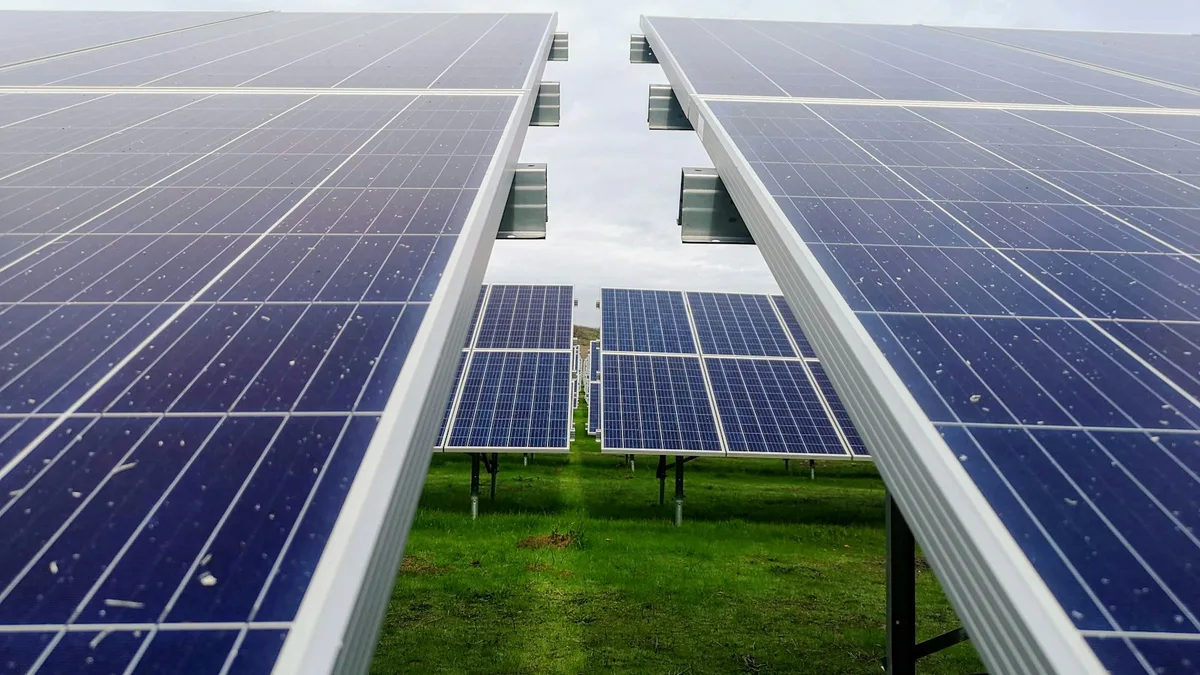
UDAIPUR: UDAIPUR — Property owners and electricity consumers across Rajasthan can significantly slash their monthly utility bills by adopting clean energy through the pm surya ghar yojana subsidy initiative. With electricity tariffs witnessing upward revisions, the central government’s flagship rooftop solar program offers financial assistance of up to ₹78,000 for residential households. As DISCOMs streamline net metering approvals, citizens looking to harness solar power must understand the precise online registration workflow, technical capacity prerequisites, and banking integration mandates to successfully claim their direct benefit transfers.
⚡ Quick Highlights: PM Surya Ghar Yojana 2026: Get ₹78,000 Subsidy & Online Apply
The PM Surya Ghar Muft Bijli Yojana has transformed the renewable energy landscape across northern and western India. By offering substantial capital subsidies, the central government encourages domestic consumers to switch from fossil-fuel-generated grid power to self-sustained solar energy. As citizens explore ways to lower mounting utility overheads, this scheme ensures that families can generate up to 300 units of free electricity every single month once their rooftop plants are fully operational.
Beyond immediate monetary savings, the installation of rooftop solar panels adds tangible asset value to residential properties. While evaluating urban infrastructure and tourist hubs in the region, visitors often admire how heritage preservation blends with modern green initiatives, much like the sustainable planning seen around historical landmarks detailed in our Sajjangarh Monsoon Palace & Biological Park Guide 2026. Homeowners must verify that their rooftop area is structurally sound, shadow-free, and legally owned to qualify for the scheme.
“Adopting rooftop solar through the PM Surya Ghar initiative is not just about cutting monthly electricity bills; it is a permanent investment in energy security and environmental sustainability for future generations.” — Rajasthan Renewable Energy Corporation Official
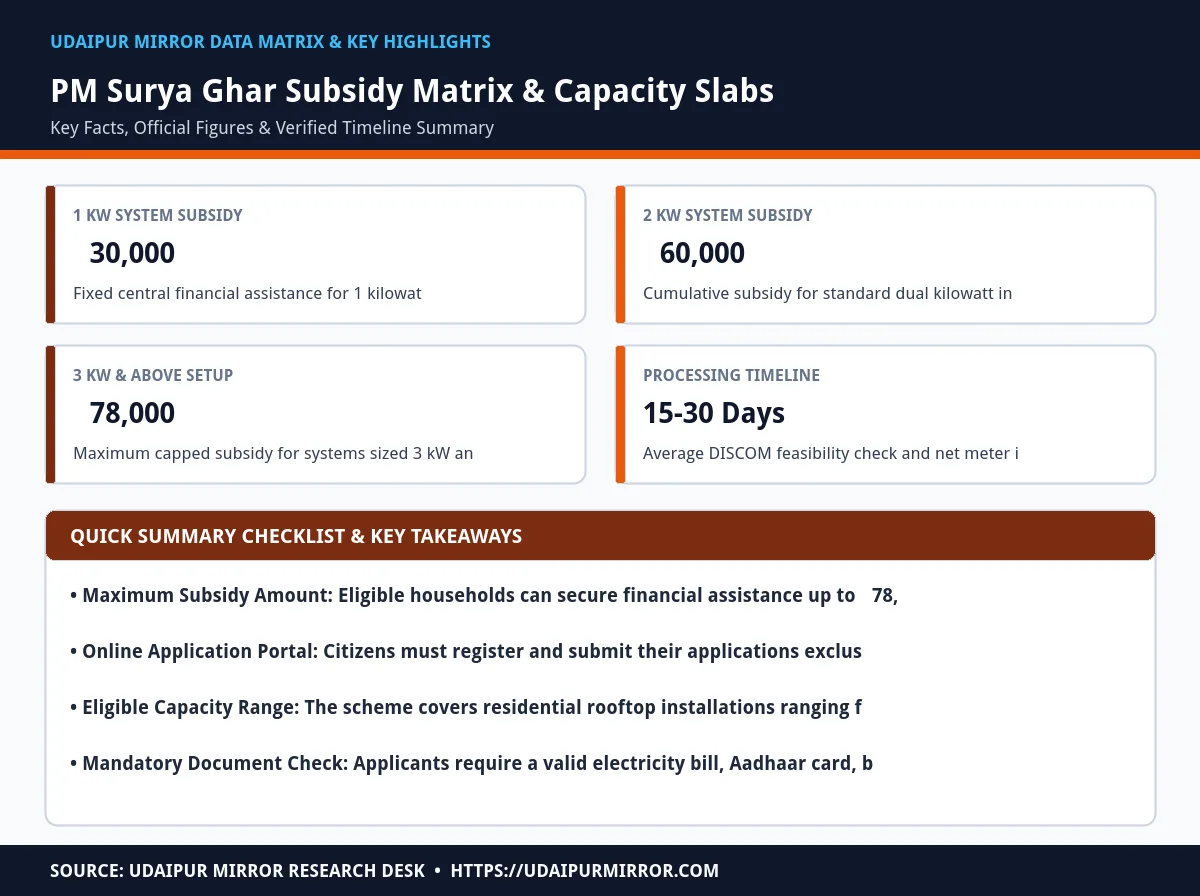
Understanding the exact subsidy breakdown according to system capacity helps homeowners plan their capital investment before engaging empanelled vendors. Below is the detailed structure for residential rooftop solar plants under the scheme.
| System Capacity | Subsidy Amount (INR) | Estimated Daily Generation | Typical Roof Space Needed | Target Household Type |
|---|---|---|---|---|
| 1 kW | ₹30,000 | 4 to 5 Units | 10 Sq. Meters | Small Families (1-3 members) |
| 2 kW | ₹60,000 | 8 to 10 Units | 20 Sq. Meters | Medium Families (4-5 members) |
| 3 kW to 10 kW | ₹78,000 (Max Cap) | 12 to 15+ Units | 30+ Sq. Meters | Large Families & Joint Households |
Navigating the digital portal for the subsidy is straightforward if applicants follow the correct sequence. The entire process, from initial registration to final inspection, is conducted online to ensure transparency and eliminate intermediaries. Consumers must keep their electricity consumer number, mobile number linked with Aadhaar, and bank account details ready before initiating the workflow on the official portal.
Academic and administrative awareness regarding government initiatives is also growing across various sectors, echoing the rigorous research standards seen in local academic achievements such as the findings highlighted in the report on Udaipur Sukhadia University Researcher Sangeeta Suwalka Awarded PhD. By following standard operational guidelines, citizens can avoid common application rejections and secure their subsidy disbursement swiftly.
“Digital governance portals have streamlined subsidy disbursals, ensuring that financial aid reaches the consumer's bank account within weeks of plant commissioning.” — DISCOM Technical Cell Lead
Once technical feasibility is granted by the local electricity board, consumers must select an empanelled vendor registered under the national portal to execute the physical installation. It is critical to choose certified vendors who use Bureau of Indian Standards (BIS) approved solar panels and inverters. This ensures maximum energy conversion efficiency and compliance with safety regulations mandated by the Ministry of New and Renewable Energy (MNRE).
The installation process typically takes one to three days depending on the system capacity. The vendor will mount the PV modules on galvanized iron structures, secure proper earthing and lightning arresters, and wire the solar inverter to the main distribution board. Post-installation, the consumer submits the completion report and plant photograph through the portal to trigger the final inspection. (Also read: Udaipur Sukhadia University Researcher Sangeeta Suwalka Awarded PhD for Groundbreaking Study on RTE Act Implementation | संगीता सुवालका को पीएचडी).
“Insist on certified BIS-compliant components and empanelled installers to guarantee long-term system durability and hassle-free warranty claims.” — Solar Energy Consultant
The final phase of the solar adoption journey involves net meter installation and subsidy crediting. After the empanelled vendor submits the installation completion certificate, a DISCOM inspector visits the site to verify technical parameters and test safety switches. Once approved, the existing bi-directional net meter is installed, replacing the conventional electricity meter to record exported and imported power accurately.
Following successful net metering commissioning, the vendor submits the commissioning report and joint inspection report online. The central government subsidy amount—ranging up to ₹78,000—is then directly credited via Direct Benefit Transfer (DBT) into the verified bank account of the consumer within 30 days, completing a seamless green transition.
“Net metering acts as the financial bridge between solar generators and the grid, allowing households to earn credits for every extra unit of electricity they produce.” — Electrical Inspectorate Division
The maximum subsidy is ₹30,000 for a 1 kW system, ₹60,000 for a 2 kW system, and capped at ₹78,000 for systems of 3 kW capacity and above for residential households.
Any Indian citizen residing in Rajasthan with a valid residential electricity connection in their name and a suitable, unshaded rooftop area is eligible to apply.
Once the solar plant is installed, inspected, and the net meter is commissioned by the local DISCOM, the subsidy is credited via DBT within 15 to 30 days.
No, to claim the central government subsidy, you must select an installer from the list of MNRE-empanelled vendors available on the official national rooftop solar portal.
Add Udaipur Mirror as a preferred source on Google to see more of our travel guides in your AI overviews.






[…] Best Investment Options in India: Top Choices for Wealth Creation in 2026 2 seconds ago ⚡ Articles PM Surya Ghar Yojana: How to Get Up to ₹78,000 Subsidy and Apply Online in Rajasthan 1 h… Articles Sajjangarh Monsoon Palace & Biological Park Guide 2026: Entry Fees, Safari Timings […]
[…] Best Investment Options in India: Top Choices for Wealth Creation in 2026 48 minutes ago ⚡ Articles PM Surya Ghar Yojana: How to Get Up to ₹78,000 Subsidy and Apply Online in Rajasthan 2 h… Articles Sajjangarh Monsoon Palace & Biological Park Guide 2026: Entry Fees, Safari Timings […]