Office Address
14, Residency Road, Udaipur, Rajasthan 313001
Office Address
14, Residency Road, Udaipur, Rajasthan 313001

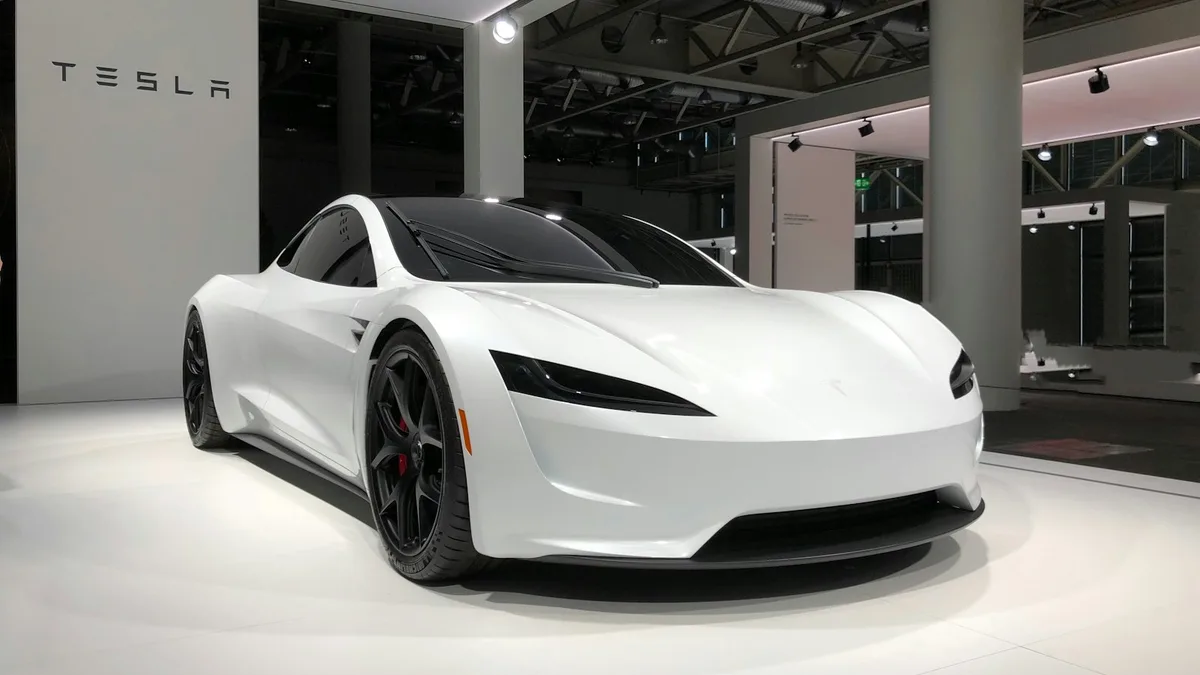
NEW DELHI: NEW DELHI — In a decisive push toward digital efficiency and green public mobility, the central government has officially announced a sweeping overhaul of administrative expenditure guidelines. Under the updated framework, the centre revises spending rules to permit the procurement of premium high-performance laptops costing up to Rs 1.8 lakh, alongside significantly raising the price ceiling for electric staff vehicles to Rs 20 lakh to align with modern corporate and bureaucratic demands.
⚡ Quick Highlights: Centre Revises Spending Rules: Rs 20L EVs & Laptops Allowed
The decision by the central administration to restructure financial caps marks a critical turning point in how public resources are allocated toward technology and mobility. For years, bureaucratic procurement rules remained anchored to outdated price structures that failed to account for modern hardware specifications and inflationary pressures. By lifting the spending ceilings, the government has acknowledged that efficient governance requires robust digital tools and sustainable transport solutions.
Under the fresh guidelines, ministries are no longer constrained by obsolete budget limits that restricted them to entry-level hardware. Officials requiring intensive data analytics, secure communications, and heavy document processing can now procure state-of-the-art machines. Furthermore, transitioning administrative vehicle fleets to battery-powered alternatives aligns with broader national decarbonization goals. Navigating city traffic during official inspections will also become more seamless, echoing trends seen in urban mobility solutions like those discussed in 8 Best Cars in India for Narrow Lanes And Tight Apartment Parking Lots in 2026.
The broader implications of this policy extend beyond mere administrative convenience. As public sector fleets shift en masse toward electric cars, local manufacturers receive a reliable demand anchor that stimulates production scale. This development complements ongoing industry dialogues regarding localized manufacturing, similar to recent policy discussions highlighted in Goyal, Skoda Auto Discuss EV Manufacturing & Localisation in India.
“Modernizing public administration requires equipping our workforce with future-ready tools while steadfastly championing sustainable mobility across all official fleets.” — Senior Ministry Spokesperson
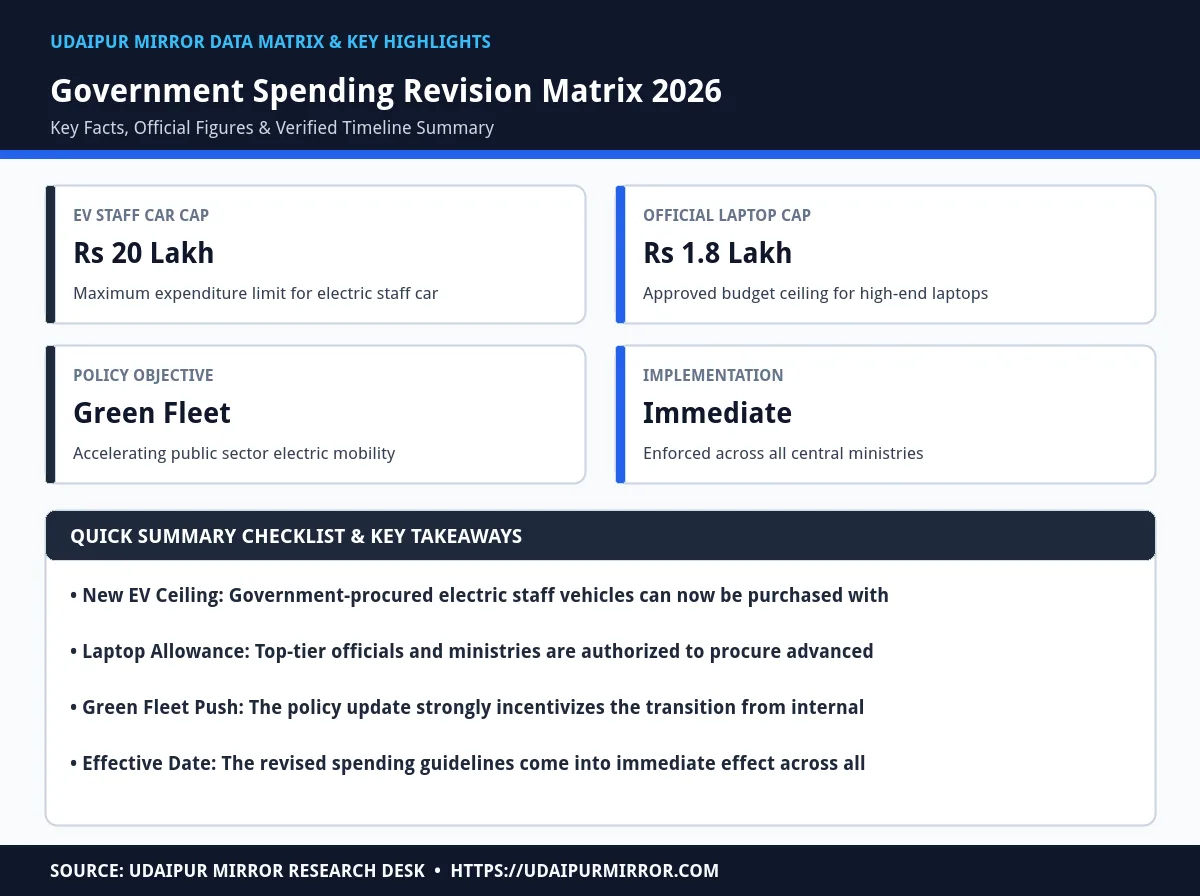
The table below provides a detailed structural comparison between legacy administrative spending limits and the newly updated fiscal thresholds enacted by the central government.
| Category | Previous Expenditure Limit | Revised Expenditure Limit | Primary Objective |
|---|---|---|---|
| Official Laptops | Rs 80,000 – Rs 1,00,000 | Up to Rs 1,80,000 | Empowering officials with advanced high-performance computing |
| Staff Cars (Electric) | Restricted / Lower Slabs | Up to Rs 20,00,000 | Accelerating adoption of zero-emission government fleets |
| Staff Cars (ICE) | Capped under legacy rules | Strictly phased out for new purchases | Reducing carbon footprint in official transport |
| Digital Infrastructure | Basic hardware norms | Enterprise-grade standards | Enhancing cybersecurity and administrative workflow |
The inclusion of a Rs 20 lakh ceiling specifically designated for electric vehicles represents a major boon for the domestic electric car market. Previously, government car procurement policies favored traditional internal combustion engine sedans within rigid price brackets, inadvertently shutting out modern long-range electric SUVs and premium EVs.
With the new threshold, departments can choose from a wide array of domestically manufactured electric vehicles that offer superior battery ranges, advanced safety features, and lower per-kilometer running costs. This financial parameter effectively opens doors for mid-to-high segment electric vehicles currently dominating the Indian passenger vehicle market.
“Setting the EV ceiling at Rs 20 lakh ensures that government agencies can procure reliable, safe, and technologically advanced electric cars without fiscal penalties.” — Automotive Industry Analyst
In tandem with vehicle policy updates, the revision permits ministries to procure laptops valued up to Rs 1.8 lakh. As government departments increasingly digitize records, integrate artificial intelligence frameworks, and manage complex national databases, the demand for high-end computational hardware has surged.
Older guidelines often forced departments to settle for basic laptops that struggled with heavy enterprise software, multitasking, and secure encryption protocols. The new pricing structure ensures that key decision-makers possess reliable, high-speed tools necessary for efficient day-to-day administration. (Also read: EVWorld.com Platform Expansion Targets Global Electric Mobility Shifts in Late 2026).
“Efficient digital governance starts with uncompromised hardware performance, ensuring secure data processing and seamless inter-ministerial coordination.” — IT Infrastructure Director
Experts note that these revised spending rules will act as a significant catalyst for both the consumer electronics and automotive sectors. By setting a progressive precedent in public procurement, the central government is signaling to private corporate entities that premium green technology and robust digital infrastructure are essential pillars of modern operations.
As implementation rolls out across states and union territories, domestic automakers and tech vendors are expected to tailor specific fleet packages to meet these exact financial specifications, ensuring seamless compliance and maximum value for public funds.
“Public sector procurement guidelines often set the benchmark for institutional buying across the country. This policy shift will accelerate national EV adoption.” — Mobility Policy Researcher
The central government has raised the ceiling for electric staff cars to Rs 20 lakh, enabling departments to procure modern, long-range EVs.
Under the revised spending rules, officials and ministries can procure high-performance laptops priced up to Rs 1.8 lakh.
The rules were updated to reflect contemporary market costs, enhance digital governance capabilities, and accelerate the adoption of green public mobility.
The revised financial guidelines come into immediate effect across all central government departments and ministries.
Add Udaipur Mirror as a preferred source on Google to see more of our travel guides in your AI overviews.