Office Address
14, Residency Road, Udaipur, Rajasthan 313001
Office Address
14, Residency Road, Udaipur, Rajasthan 313001

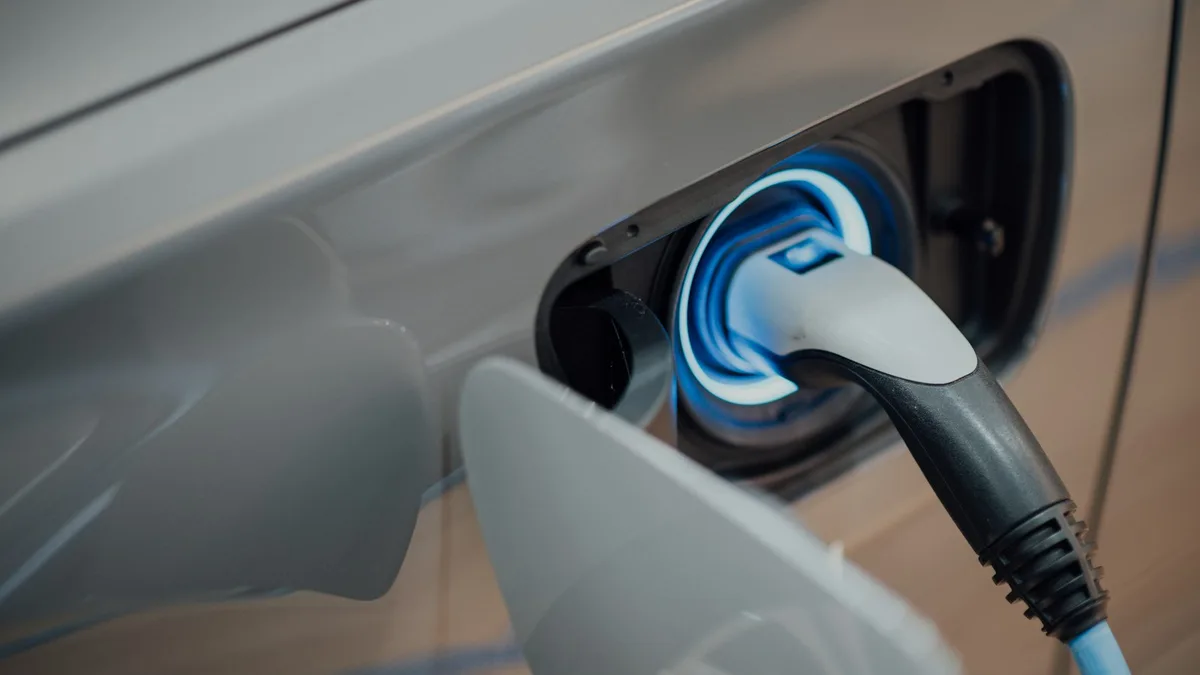
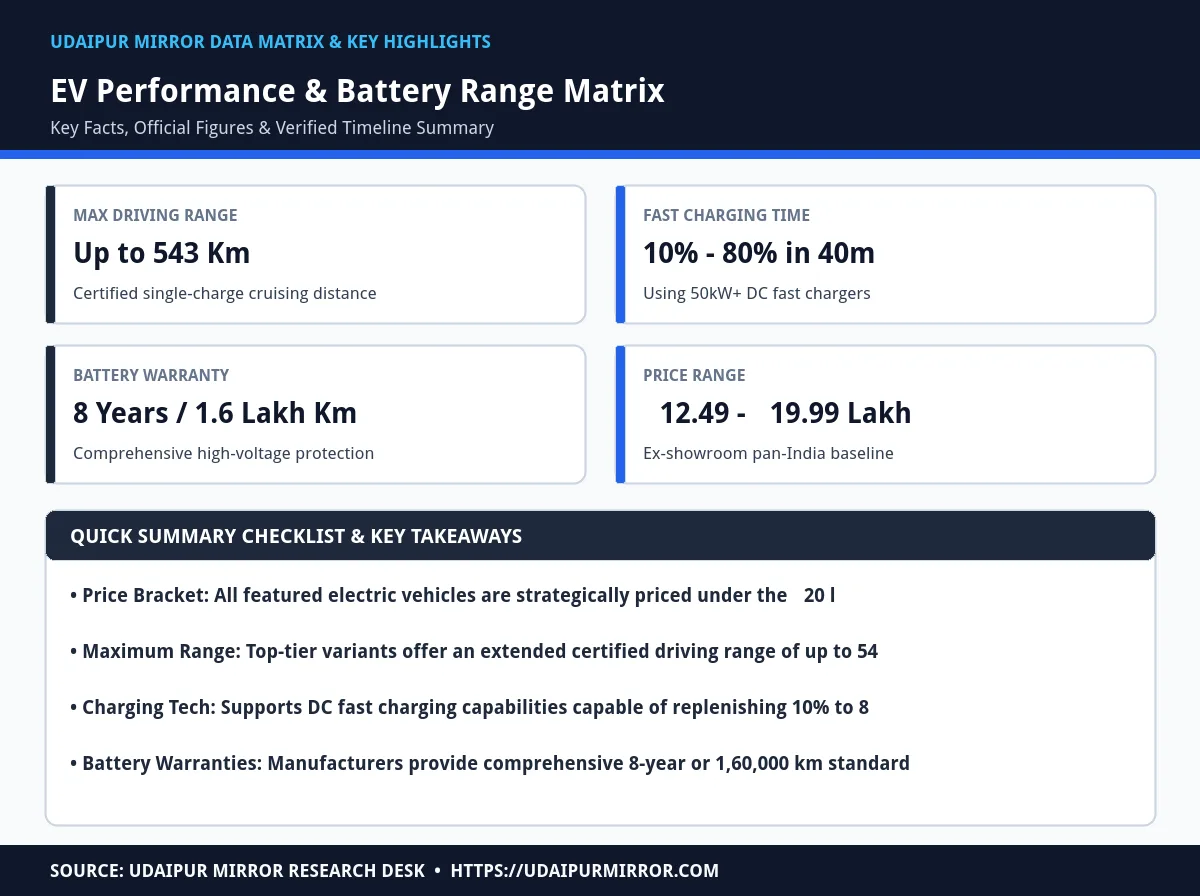
UDAIPUR: UDAIPUR — The Indian passenger vehicle market has witnessed a monumental shift toward sustainable mobility, making top electric cars under 20 lakh increasingly accessible for urban commuters and long-distance travelers alike. With battery technology advancing rapidly and charging infrastructure expanding across Rajasthan and nationwide corridors, buyers no longer need to compromise on driving distance or modern tech features. Contemporary battery electric vehicles (BEVs) priced below the sub-twenty lakh bracket now offer certified driving ranges scaling up to an impressive 543 kilometers on a single charge, effectively eliminating range anxiety for daily city driving and weekend getaways.
⚡ Quick Highlights: Top Electric Cars Under 20 Lakh in India: Range & Prices
The sub-20 lakh electric vehicle segment in India has matured significantly over the past two4 months, transitioning from basic city commuters to feature-packed SUVs equipped with advanced driver assistance systems, connected car technology, and liquid-cooled battery packs. As automakers optimize component localization, consumers can now experience refined electric powertrains without stretching their budgets. For instance, automotive giants are continuously scaling up production, as highlighted in recent market insights including Tata Motors Set to Launch Five New Electric SUVs: What Buyers Need to Know, which underscores how rapid portfolio expansion is reshaping consumer choices.
Furthermore, city-specific EV adoption has surged due to lower running costs per kilometer and minimal maintenance requirements. Industry experts note that modern urban drivers typically travel between 30 to 50 kilometers daily, meaning even entry-level battery configurations easily clear weekly commutes on a single weekend top-up at home using a standard 15A wall socket. (Also read: Tata Motors Set to Launch Five New Electric SUVs: What Buyers Need to Know).
“Electric vehicles under twenty lakh rupees are no longer secondary city runabouts; they serve as primary family cars capable of long-distance interstate touring with robust fast-charging networks.” — Automotive Sector Analyst, New Delhi
Review our structured technical matrix comparing popular electric vehicles priced under twenty lakh rupees, detailing their battery pack configurations, claimed driving ranges, and estimated Rajasthan ex-showroom pricing.
| EV Model & Variant | Battery Capacity | Claimed Range | Ex-Showroom Price |
|---|---|---|---|
| Tata Nexon.ev LR Empowered | 40.5 kWh | 465 Km | ₹16.99 Lakh |
| Mahonda XUV400 EL Pro | 39.4 kWh | 456 Km | ₹17.49 Lakh |
| MG ZS EV Excite (Entry) | 50.3 kWh | 461 Km | ₹18.98 Lakh |
| Tata Curvv.ev Creative | 45.0 kWh | 502 Km | ₹17.49 Lakh |
| Citroen eC3 Max Dual Tone | 29.2 kWh | 320 Km | ₹13.50 Lakh |
When evaluating the top electric cars under 20 lakh, buyers must analyze both MIDC/ARAI certified ratings and real-world efficiency. While manufacturers quote figures reaching up to 543 km under ideal laboratory conditions, actual highway speeds, climate control usage, and traffic congestion typically result in a practical cruising range of 350 to 440 kilometers. This is more than sufficient for everyday commuting and routine highway road trips.
Thermal management systems play a vital role in preserving battery health under extreme Indian weather conditions, particularly during scorching summer months in Rajasthan where ambient temperatures soar past 45°C. Liquid-cooled battery packs prevent thermal degradation, ensuring consistent power output and longevity over years of rigorous daily usage.
“Battery thermal management is the single most critical engineering requirement for electric cars operating in high-temperature regions like western India.” — EV Powertrain Engineer
Transitioning to an electric vehicle requires understanding charging ecosystems, ranging from overnight home AC chargers to ultra-fast highway DC charging hubs. Most buyers install a 7.2 kW AC wall box charger at their residential parking space, which replenishes an empty 40 kWh battery pack from 0% to 100% in roughly 6 to 7 hours—effectively allowing owners to wake up to a fully charged car every morning.
Public charging networks along major national highways and state corridors have expanded exponentially, supported by innovative energy solutions such as BYD New EV Charging Station Combines Solar Panels, Batteries & Robotic Arms, which highlight the future direction of automated, green energy refueling stations across the country.
“Home charging remains the cornerstone of convenient EV ownership, accounting for over 85% of everyday charging requirements for urban households.” — Clean Energy Infrastructure Director
Purchasing an electric vehicle in Rajasthan offers significant financial advantages over traditional internal combustion engine (ICE) vehicles. Under state EV policy frameworks, battery electric vehicles are exempted from motor vehicle road taxes and registration fees, translating to immediate upfront savings ranging from ₹1.5 lakh to over ₹2.5 lakh depending on the vehicle variant.
Additionally, nationalized and private banks offer specialized green car loans with discounted interest rates and extended tenure options. Buyers can also leverage corporate depreciation benefits if registering vehicles under commercial or business entities, lowering the total cost of ownership over a 5-year holding period.
“State-level tax waivers on electric vehicles are vital catalysts that bridge the initial purchase price gap between ICE cars and zero-emission alternatives.” — Automotive Tax Consultant
Electric cars priced under ₹20 lakh in India offer certified driving ranges ranging from 320 km up to 543 km on a single charge, depending on battery capacity and vehicle aerodynamics.
Yes, EVs feature fewer moving parts, eliminating engine oil changes, spark plug replacements, and clutch repairs, which reduces annual maintenance costs by more than 50%.
Using a standard 7.2 kW AC wall box charger, most electric cars with 40 kWh battery packs take approximately 6 to 7 hours to charge completely from 0% to 100%.
Yes, Rajasthan provides complete exemption from motor vehicle road tax and registration fees for battery electric vehicles, significantly lowering on-road purchase costs.
Add Udaipur Mirror as a preferred source on Google to see more of our travel guides in your AI overviews.