Office Address
14, Residency Road, Udaipur, Rajasthan 313001
Office Address
14, Residency Road, Udaipur, Rajasthan 313001

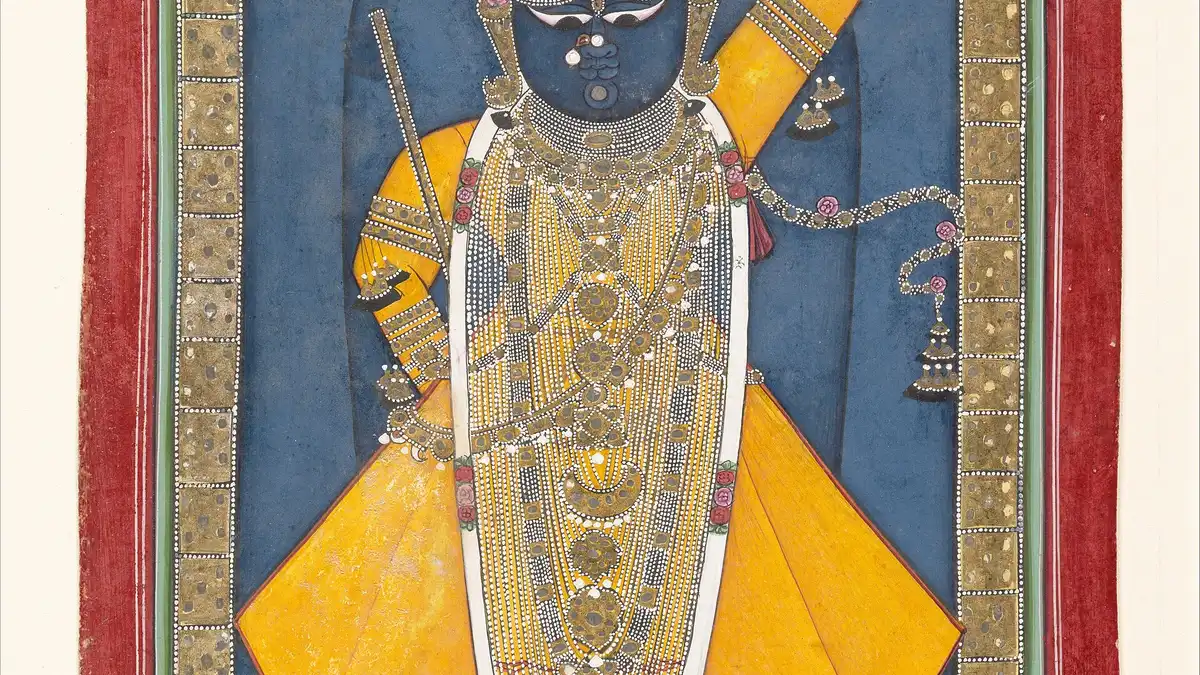
NATHDWARA / UDAIPUR: Located approximately 75 kilometers from Udaipur in the Rashmi tehsil of Rajasthan, matrikundiya tirth guide 2026 brings to light one of Mewar’s most revered spiritual and historical riverbank destinations. Often celebrated as the ‘Haridwar of Mewar’, this sacred confluence on the Banas River holds immense significance for Hindu pilgrims who gather here to wash away sins, perform ancestral rites, and immerse themselves in ancient mythological lore that traces back to Sage Parashuram.
⚡ Quick Highlights: Matrikundiya Tirth Guide 2026: Haridwar of Mewar & History
The sanctity of Matrikundiya is deeply entwined with Hindu epics, most notably the legend of Sage Parashuram, the sixth avatar of Lord Vishnu. According to sacred scriptures, Parashuram carried out the command of his father Jamadagni to behead his mother Renuka. Though resurrected later, the terrible sin of matricide clung to his axe and his hands. Seeking absolute purification, Parashuram wandered across the Indian subcontinent until he arrived at the mineral-rich waters of the Banas River in Mewar. Upon bathing in the holy kund and washing his blood-stained axe, the weapon miraculously detached from his hand and the heavy karmic burden dissolved.
This profound cleansing bestowed upon the site the title of ‘Haridwar of Mewar’. Devotees from across Rajasthan and neighboring states believe that a ritual dip in these sanctified waters purifies the soul in the exact manner as dipping in the holy Ganges. For travelers exploring the wider spiritual circuit of Southern Rajasthan, this site offers a contemplative contrast to architectural marvels like the Ambika Mata Temple Jagat, merging pristine natural water bodies with profound ancient mythology.
“The waters of the Banas at Matrikundiya possess the divine power to wash away not just physical fatigue, but lifetimes of accumulated spiritual guilt.” — Mewar Temple Purohit Tradition
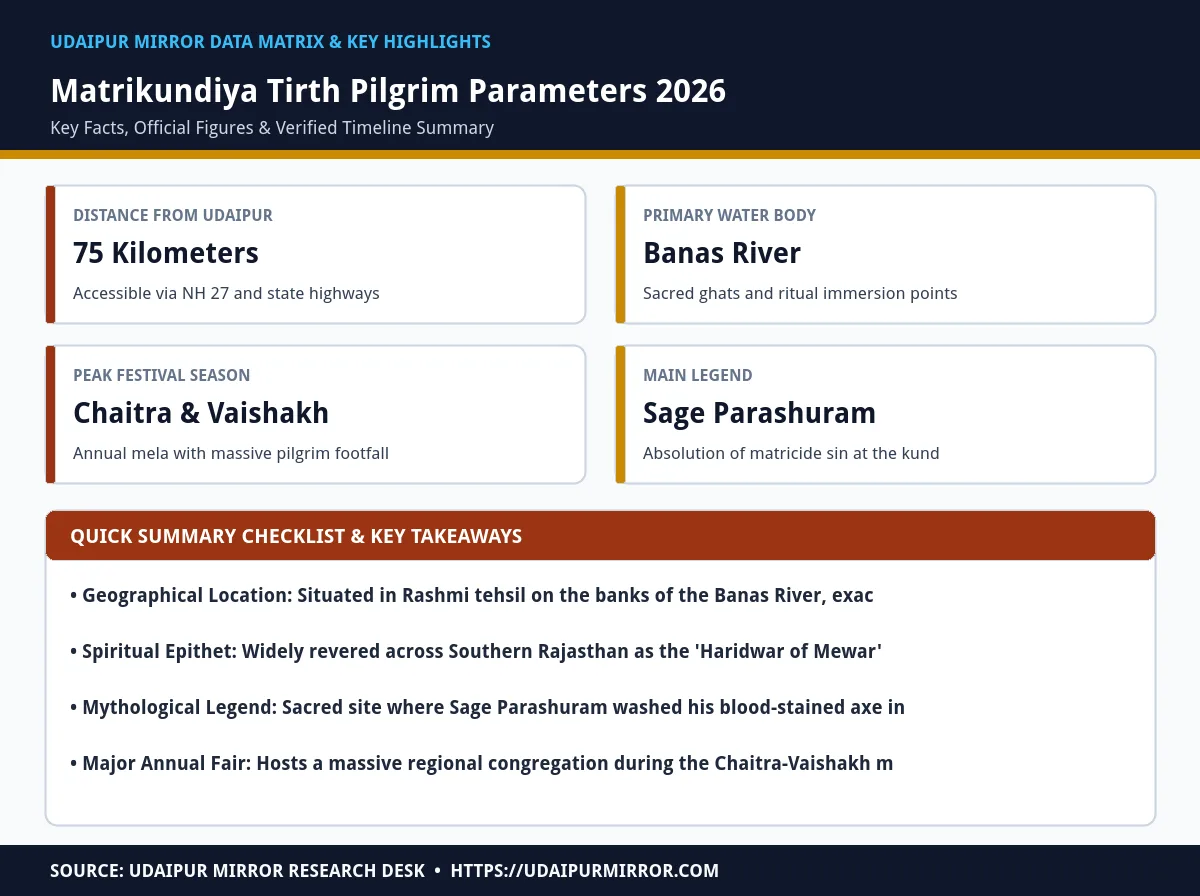
Plan your spiritual journey to this ancient Mewar sanctuary by reviewing the operational timings for temple darshan, holy river baths, ancestral rituals, and seasonal celebrations for the year 2026.
| Ritual / Activity | Timing Window | Significance / Details | Best Days to Visit |
|---|---|---|---|
| Temple Darshan | 05:30 AM – 08:00 PM | Daily prayers and worship of presiding deities. | All Days |
| Banas River Ghat Snan | Sunrise – Sunset | Holy dip to cleanse spiritual impurities. | Daily & Amavasya |
| Pind Daan / Ancestral Rites | 06:00 AM – 02:00 PM | Dedicated ritual platform for departed souls. | Somvati Amavasya |
| Chaitra-Vaishakh Mela | Full Day during Fair | Annual grand congregation and festive bazaar. | Selected Spring Dates |
| Evening Aarti | 07:00 PM – 07:30 PM | Lamp lighting ceremony along the river ghats. | Daily |
Matrikundiya is not merely a single shrine but an expansive sacred complex adorned with traditional Rajasthani stone architecture. The temple structures feature intricate carvings, pillared mandapas, and sanctums dedicated to various deities associated with purification and divine grace. The continuous flow of the Banas River adds a tranquil backdrop, flanked by extensive stone ghats constructed over centuries by regional rulers and philanthropists to accommodate massive pilgrim influxes.
Walking along the Banas ghats during early morning hours reveals an atmospheric tableau of priests chanting mantras, devotees offering morning prayers, and ritual lamps being lit against the rising sun. Pilgrims looking to balance their spiritual itinerary can also explore urban heritage sites such as the Bohra Ganesh Temple Udaipur, which provides a complementary spiritual experience within a short driving radius.
“The stone ghats of Matrikundiya echo with centuries of hymns, silent prayers, and the steady, uninterrupted flow of the Banas River.” — Senior Temple Trustee, Rashmi
The spiritual energy of Matrikundiya reaches its absolute zenith during the spring months of Chaitra and Vaishakh, when the grand annual Mela takes place. Drawing upwards of tens of thousands of pilgrims, villagers, and sadhus, this fair transforms the serene riverbanks into a vibrant cultural hub. Temporary stalls spring up offering traditional Rajasthani sweets, religious literature, brass ritual items, and local handicrafts.
During this festival window, special community prayers, collective river baths, and classical Bhajan sandhyas are organized. It serves as a vital cultural touchstone for rural communities across Mewar, reinforcing familial bonds, spiritual heritage, and generational continuity. Visitors are advised to plan their transport in advance during these peak festival weeks due to heavy regional traffic. (Also read: Bohra Ganesh Temple Udaipur Guide 2026: 350-Year Heritage, Wednesday Aarti & Laddoo Prasad).
“The annual fair at Matrikundiya is a living museum of Mewar's folk traditions, where faith and festivity merge seamlessly.” — Local Cultural Historian
To ensure a respectful and spiritually fulfilling pilgrimage to Matrikundiya Tirth in 2026, visitors should keep several practical protocols in mind. Dress modestly in traditional attire, as the site functions as an active, highly orthodox worship zone. Maintain absolute cleanliness around the Banas River ghats, avoiding the disposal of plastic or non-biodegradable waste into or near the holy waters.
Photography of ongoing rituals and meditating sadhus should be avoided unless explicit permission is granted. Ample parking spaces are available near the main temple approach roads, and local refreshment stalls offer hygienic vegetarian food. Hiring a local guide near the entrance can help visitors uncover lesser-known shrines and historical plaques scattered across the river valley.
“Preserving the sanctity of Matrikundiya is a collective responsibility shared by every pilgrim who steps onto its sacred soil.” — Tehsil Administration Guidelines
Matrikundiya Tirth is located in Rashmi tehsil on the banks of the Banas River, approximately 75 kilometers north of Udaipur city in Rajasthan.
It is revered as the Haridwar of Mewar because of its sacred river kund and ghats on the Banas River, where ritual baths and ancestral rites grant spiritual purification akin to the holy Ganges.
According to Hindu lore, Sage Parashuram washed his axe in the holy kund here to absolve himself of the sin of matricide, successfully freeing his weapon and soul from karmic burden.
While accessible year-round, the best time to visit is during the cooler winter months or during the grand Chaitra-Vaishakh Mela held in spring.
Add Udaipur Mirror as a preferred source on Google to see more of our travel guides in your AI overviews.