Office Address
14, Residency Road, Udaipur, Rajasthan 313001
Office Address
14, Residency Road, Udaipur, Rajasthan 313001

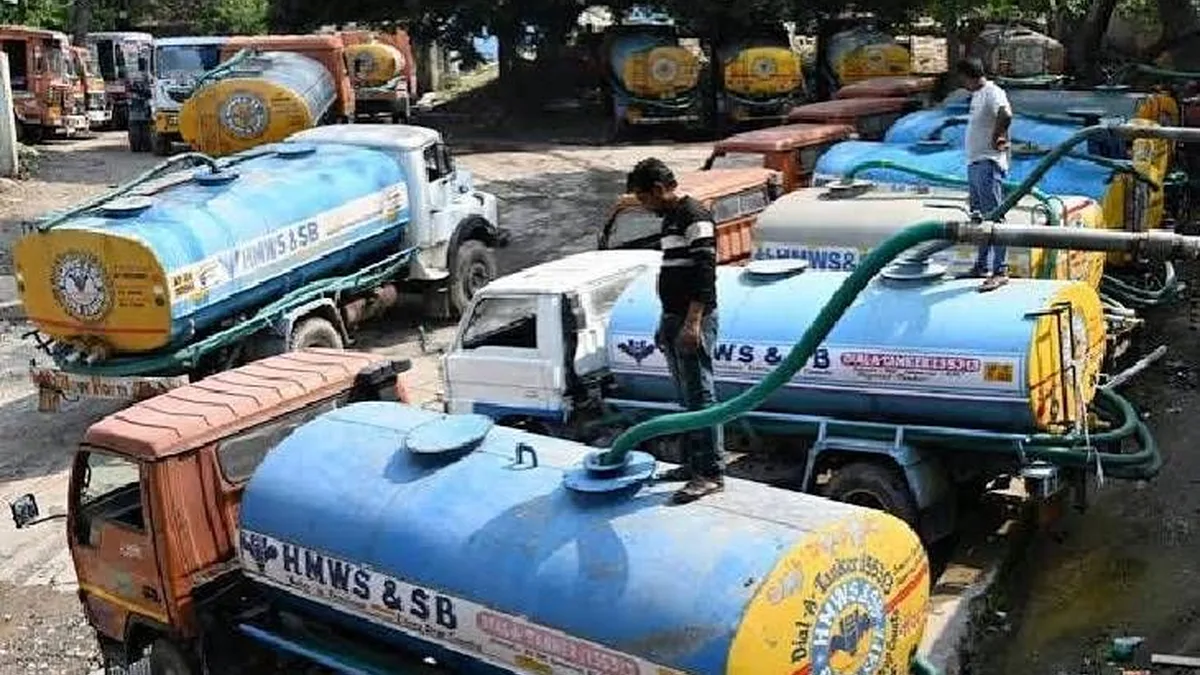
UDAIPUR: UDAIPUR — The municipal and district administration is facing an escalating civic emergency as a comprehensive post-monsoon survey highlights a severe udaipur groundwater crisis affecting multiple urban and peripheral sectors. Triggered by a staggering 37.8 percent seasonal rainfall deficit, the city’s traditional natural recharge systems—anchored by the vital Pichola and Fateh Sagar lakes—have failed to attain adequate water levels, leaving residential localities grappling with dwindling supplies.
⚡ Quick Highlights: Udaipur Groundwater Crisis: Post-Monsoon Survey Shows Dry Borewells
The hydrological equilibrium of Udaipur district has been severely compromised following an exceptionally weak monsoon season that concluded on September 30. According to official figures released by the Water Resources Department, the district recorded a mere 398.06 millimeters of rainfall against the established seasonal average of 640.04 millimeters. This translates to a direct deficit of 37.81 percent, contrasting sharply with the robust 884.18 millimeters of precipitation recorded during the corresponding period in the previous year.
Because the city’s topography and urban ecosystem rely fundamentally on surface water bodies like Pichola and Fateh Sagar for natural percolation and aquifer recharge, the depressed water levels in these reservoirs have triggered a chain reaction. With minimal surface runoff entering the lake beds, subterranean water tables have failed to receive their customary post-monsoon replenishment, setting off alarm bells among municipal planners and environmental analysts alike. Similar governance concerns regarding administrative transparency and accountability have been discussed by policy experts, reflecting broader systemic challenges (read our special commentary on accountability frameworks).
Furthermore, experts note that while natural replenishment has dwindled, extraction rates have surged exponentially. Residential layouts that previously enjoyed stable water tables throughout the winter months are now experiencing premature stress, signaling an impending water crisis as temperatures across Mewar gradually transition toward the harsher summer months. (Also read: Shashi Tharoor: ECI’s Closed-Door Reversals Cannot Substitute For Accountability).
“The shortfall in seasonal rainfall has severely limited the natural recharge capacity of our primary lake systems, directly translating to a noticeable dip in regional groundwater tables across urban fringes.” — Senior Hydrological Analyst, Water Resources Department Udaipur
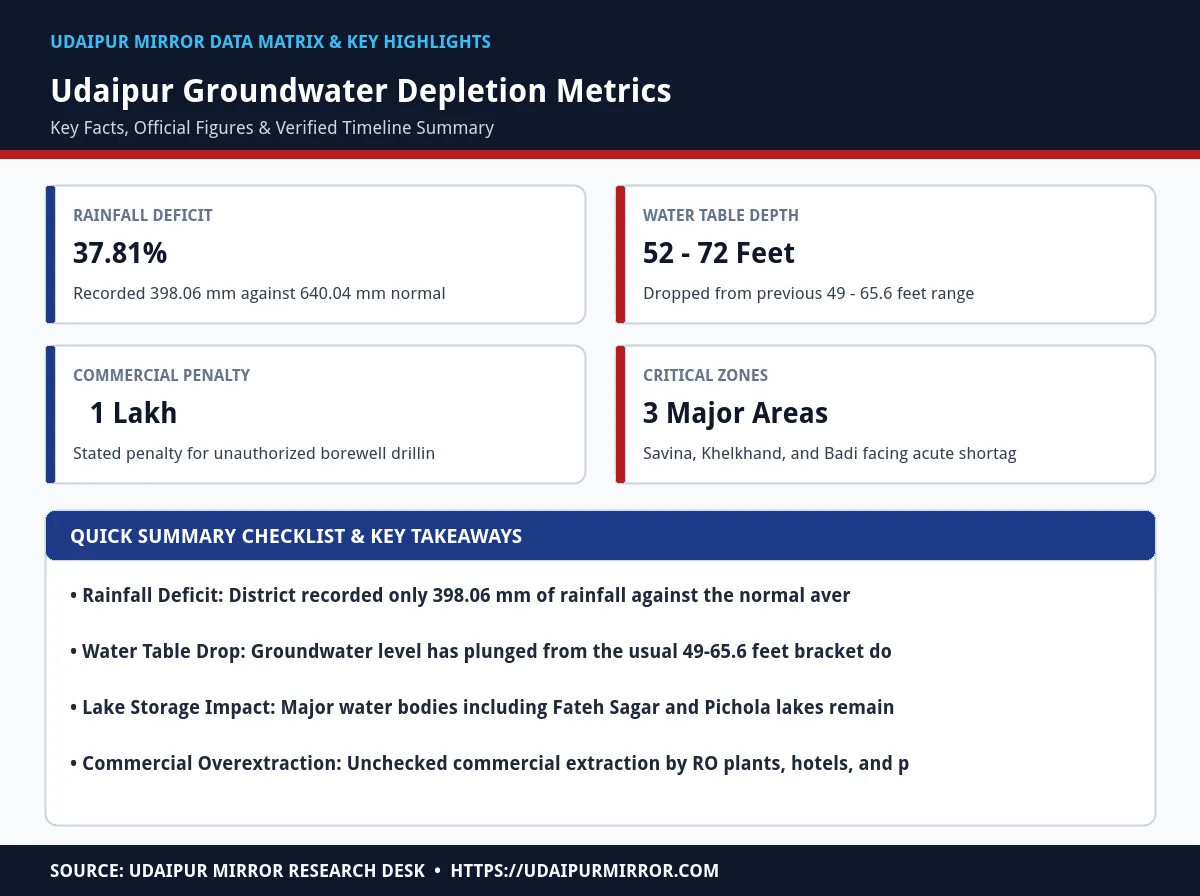
A detailed tabular breakdown of seasonal rainfall comparisons, aquifer depth fluctuations, and municipal vulnerability parameters across Udaipur district compiled from Water Resources Department inputs.
| Parameter / Metric | Previous Year (2025) | Current Season (2026) | Percentage Change / Impact |
|---|---|---|---|
| Average Seasonal Rainfall | 884.18 mm | 398.06 mm | -55.0% compared to last year |
| Normal Benchmark Rainfall | 640.04 mm | 640.04 mm | -37.81% deficit against normal |
| Standard Groundwater Level | 49.0 – 65.6 Feet | 52.0 – 72.0 Feet | Significant downward shift |
| Commercial Extraction Rate | High (Unmonitored) | Critical (Millions of liters) | Unchecked daily depletion |
| Vulnerable Urban Pockets | Isolated Reports | Savina, Khelkhand, Badi | Immediate tanker dependency |
While natural meteorological factors form the primary catalyst behind the declining water tables, unmonitored commercial extraction continues to place an unsustainable burden on Udaipur’s subterranean reserves. Commercial entities, including commercial bottling plants, hospitality ventures, construction sites, and private water tanker fleets, draw millions of liters daily from deep aquifers without stringent regulatory oversight.
Under existing administrative guidelines, unauthorized commercial borewell drilling carries a statutory penalty of up to ₹1 lakh. However, due to administrative bandwidth constraints and lax field monitoring, illegal extractions continue unabated in the city’s outskirts. Civic groups have repeatedly emphasized the necessity for the Udaipur Municipal Corporation and the Urban Improvement Trust (UIT) to conduct a comprehensive audit of all commercial borewells, mapping their extraction volumes and validating their operational permits.
For sports enthusiasts tracking regional developments, seasonal sporting calendars continue alongside civic updates, mirroring how various sectors manage infrastructural demands (explore regional travel and infrastructure guides).
“Unchecked commercial boring by commercial establishments and tanker syndicates is bleeding our aquifers dry. Immediate district-wide surveys and strict enforcement of penalties are imperative.” — Civic Infrastructure Expert, Udaipur
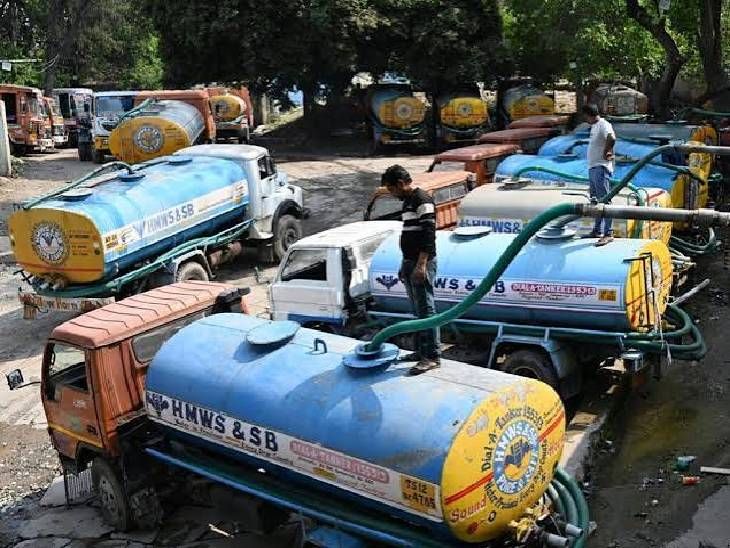
The immediate human cost of this hydrological deficit is most acutely felt in suburban and rapidly expanding residential colonies. Areas such as Savina, Khelkhand, and Badi have reported that domestic borewells have begun to dry up months ahead of the peak summer season. Residents in these neighborhoods are already being forced to procure private water tankers at steep personal costs to meet their daily domestic requirements.
Municipal authorities have acknowledged the rising grievance tallies from these affected zones. Without immediate intervention, municipal water distribution networks will face immense pressure as feeder tubewells experience lowered discharge rates. Local residents’ associations have submitted memorandum requests to the district collectorate, demanding emergency tanker deployment and strict rationing guidelines for commercial users until the next monsoon cycle. (Also read: IPL Teams and Players List: All 10 Franchises Full Squads, Captains & Complete Roster | आईपीएल टीमें और खिलाड़ी सूची).
“Our domestic borewells have completely dried up by November itself. We are already forced to spend heavily on private water tankers just to secure basic drinking water.” — Resident Representative, Savina Residential Area
उदयपुर जिले में इस वर्ष मानसून सीजन के दौरान औसत से काफी कम बारिश होने के कारण भूजल स्तर में भारी गिरावट दर्ज की गई है। जल संसाधन विभाग के आधिकारिक आंकड़ों के अनुसार, 30 सितंबर तक समाप्त हुए मानसून सत्र में जिले में मात्र 398.06 मिलीमीटर बारिश दर्ज की गई, जबकि यहाँ की सामान्य औसत बारिश 640.04 मिलीमीटर है। यह कुल औसत से लगभग 37.81 प्रतिशत कम है। पिछले वर्ष इसी अवधि के दौरान जिले में 884.18 मिलीमीटर वर्षा हुई थी, जिससे भूजल स्तर संतुलित बना रहा था।
उदयपुर की प्रसिद्ध झीलें—फतहसागर और पिछोला—शहर के भूजल को प्राकृतिक रूप से रीचार्ज करने का मुख्य स्रोत हैं। इस बार बारिश की भारी कमी के कारण झीलों का जलस्तर काफी नीचे चला गया है, जिसका सीधा असर प्राकृतिक जल पुनर्भरण (नेचुरल रिचार्ज) पर पड़ा है। इसके विपरीत, एक तरफ जहां भूजल घट रहा है, वहीं दूसरी तरफ व्यावसायिक बोरवेलों का अनियंत्रित दोहन धड़ल्ले से जारी है। आरओ प्लांट, होटल, उद्योग, निजी टैंकर संचालक और निर्माण कार्यों में रोजाना लाखों लीटर पानी निकाला जा रहा है।
नियमों के मुताबिक बिना अनुमति के व्यावसायिक बोरवेल लगाने पर 1 लाख रुपए तक का जुर्माना लगाने का प्रावधान है, लेकिन मैदानी स्तर पर निगरानी के अभाव में अवैध दोहन रुकने का नाम नहीं ले रहा है। सवीना, खेलगांव और बड़ी जैसे कई प्रमुख रिहायशी तथा बाहरी इलाकों में घरेलू बोरवेल अभी से सूखने लगे हैं, जिसके कारण स्थानीय नागरिकों को मजबूरी में महंगे निजी टैंकर मंगवाने पड़ रहे हैं।
“बारिश की भारी कमी के कारण झीलों का जल स्तर गिर चुका है, जिससे भूजल रीचार्ज नहीं हो पा रहा है। अवैध व्यावसायिक बोरवेलों पर सख्त कार्रवाई के लिए प्रशासन द्वारा विशेष सर्वे कराया जाना अत्यंत आवश्यक है।” — जल संसाधन विभाग, उदयपुर
The primary cause is a severe 37.81% seasonal rainfall deficit, where Udaipur recorded only 398.06 mm of rainfall against the normal average of 640.04 mm, combined with unmonitored commercial water extraction.
Post-monsoon survey data indicates that the water table, which traditionally stands at 49 to 65.6 feet, has dropped significantly to depths ranging between 52 and 72 feet.
इस वर्ष सामान्य से 37.81% कम बारिश (398.06 मिमी) होना और फतहसागर व पिछोला झीलों का जलस्तर घटने से प्राकृतिक रीचार्ज का बाधित होना मुख्य कारण है।
बिना अनुमति के व्यावसायिक बोरवेल लगाने पर 1 लाख रुपए तक का जुर्माना लगाने का नियम है, और प्रशासन इसके अवैध दोहन को रोकने के लिए सर्वे की तैयारी कर रहा है।
Add Udaipur Mirror as a preferred source on Google to see more of our travel guides in your AI overviews.





[…] Selection Without Interviews | विद्या संबल योजना 4 seconds ago ⚡ News Udaipur Groundwater Crisis Deepens: Post-Monsoon Survey Reveals Severe Depletion as Borewells … Apps Amid AI Industry Chaos, Microsoft and OpenAI Drop New Models for Coding and Work 7 hours ago […]