Office Address
14, Residency Road, Udaipur, Rajasthan 313001
Office Address
14, Residency Road, Udaipur, Rajasthan 313001

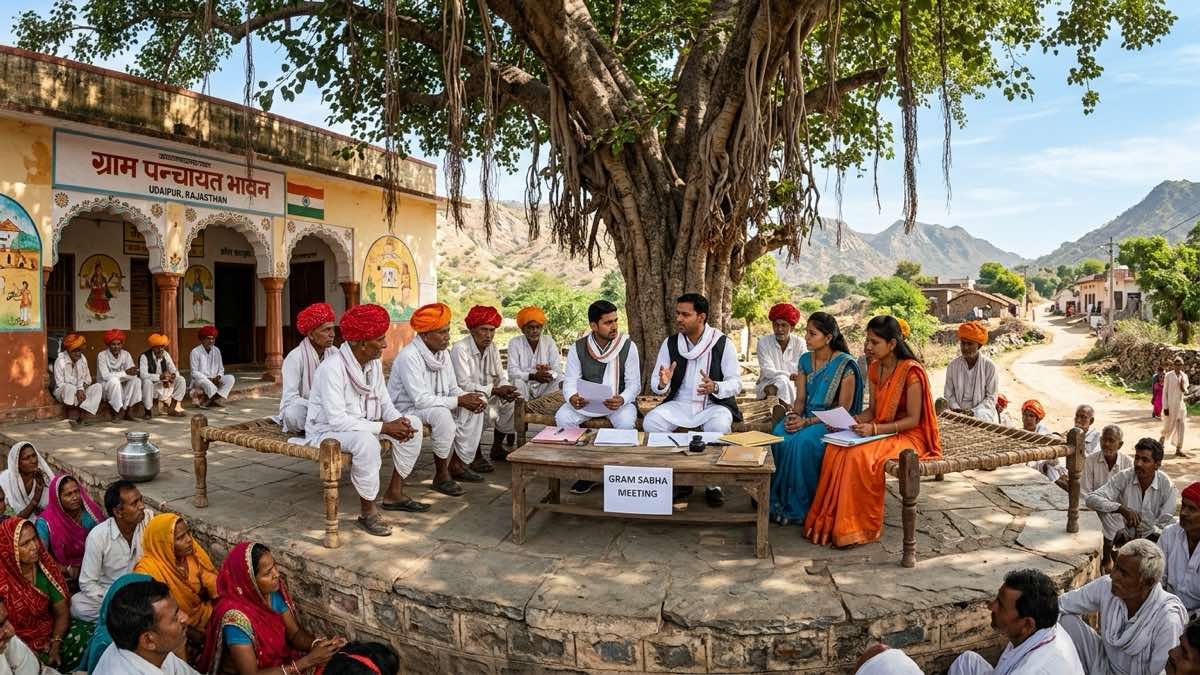
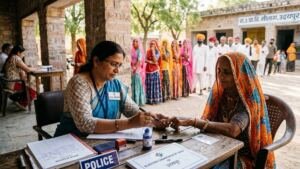
As Phase 1 polling gets underway across rural Mewar, political fervor has surged dramatically for the second phase of the Udaipur Panchayat Election. Across 189 Gram Panchayats spanning six pivotal Panchayat Samiti blocks—Sayra, Gogunda, Kotra, Badgaon, Kherwara, and Devla (Jhadol South)—hundreds of aspiring rural leaders, community elders, and educated youth contenders have stepped forward to stake claim to the prestigious post of Sarpanch.
Ground reporting teams deployed across Udaipur’s rugged Aravali hills, agrarian plains, and tribal outposts reveal a complex grassroots dynamic. While community-led consensus meetings beneath village banyan trees (Chaupals) have successfully yielded single uncontested contenders in select hamlets, fierce multi-cornered contests dominate the vast majority of village councils. Crucially, in Sayra Panchayat Samiti (4 Gram Panchayats) and Gogunda Panchayat Samiti (14 Gram Panchayats), consensus has proven elusive, setting up high-stakes multi-candidate showdowns on polling day.
The second phase covers a highly diverse geographical and demographic cross-section of Udaipur district, ranging from the peri-urban residential belts adjoining Udaipur city to remote forested hamlets along the Rajasthan–Gujarat interstate border. Each Panchayat Samiti block presents distinct administrative priorities and political battles:
| Panchayat Samiti Block | Geographic Profile | Electoral Landscape & Candidate Dynamics | Consensus Status |
|---|---|---|---|
| Sayra (सायरा) | Hilly Aravali foothills & agrarian hamlets | Keen contests between youth farmer leaders and veteran council members over irrigation and road links. | 4 Gram Panchayats still deadlocked; consensus pending. |
| Gogunda (गोगुंदा) | Historic Mewar gateway & rugged forest terrain | High-octane battles between traditional community panels and newly mobilized youth alliances. | 14 Gram Panchayats have no consensus; multi-cornered race confirmed. |
| Badgaon (बड़गांव) | Peri-urban expansion corridor bordering Udaipur City | Highest nomination volume and spending; intense focus on civic drainage, road widening, and land records. | Fiercely contested across all major gram panchayats. |
| Kotra (कोटड़ा) | Southern tribal hill corridor & forest belt | Traditional Gameti/Patel councils mobilizing around Jal-Jungle-Zameen, primary healthcare, and PESA rights. | Select hamlets finalizing consensus; key seats face 4-way fights. |
| Kherwara (खैरवाड़ा) | National Highway 48 tribal transport corridor | Educated tribal youth, social activists, and seasoned ex-Sarpanches vying for development mandates. | Active community negotiations; heavy voter mobilization. |
| Devla / Jhadol South (देवला) | Dense forest terrain & tribal settlement tracts | Elders pushing for social unity; youth pushing for digital service centers and all-weather road connectivity. | Consensus achieved in scattered wards; Sarpanch seats contested. |
In rural Rajasthan, the election of an uncontested Sarpanch—locally termed Nirvirodh or Ek-Raye—holds significant cultural and financial appeal. The state government traditionally offers special development grants to Gram Panchayats that achieve complete unanimity, avoiding the social polarization and expenditure of a bruising polling contest.
However, field reports from the Phase 2 blocks indicate that achieving consensus has proven far more challenging in 2026 than in previous electoral cycles. With increasing educational attainment, widespread smartphone penetration, and higher political awareness among rural youth, multiple ambitious aspirants are unwilling to withdraw their candidacies.
In Gogunda, where 14 Gram Panchayats remain without consensus, community Chaupals witnessed marathon nocturnal discussions between rival family heads and ward leaders. Similarly, in Sayra, four Gram Panchayats have witnessed intense deadlock as different sub-castes and agricultural groups insist on their turn to head the local council. The final picture of uncontested victories will only be certified when the withdrawal deadline expires.
Unlike assembly or parliamentary elections dominated by macro-political narratives, Sarpanch elections in Udaipur district hinge strictly on hyper-local public service delivery. Across the 189 Gram Panchayats going to polls, the electorate is evaluating candidates based on five core issues:
To ensure free, fair, and incident-free polling across the six Panchayat Samitis, the Udaipur District Collector (District Election Officer) and Superintendent of Police have mobilized a massive administrative apparatus. Special security measures have been instituted for sensitive and hypersensitive polling booths:
Static armed pickets, flying surveillance squads, and round-the-clock video webcasting will cover vulnerable booths in the hilly forest belts of Kotra and Devla. Mobile patrolling units will maintain strict vigil along interstate forest tracks connecting Rajasthan and Gujarat to prevent any distribution of illicit liquor, cash, or unlawful inducements.
District authorities have reiterated that any violation of the Model Code of Conduct (MCC), including unauthorized loudspeakers, late-night campaign gatherings without permission, or voter intimidation, will attract immediate registration of FIRs and disqualification proceedings.
Stay informed with Udaipur Mirror’s detailed ground coverage and analytical guides on the ongoing rural local body elections:
A total of 189 Gram Panchayats across 6 Panchayat Samiti blocks are participating in the second phase of the Udaipur Panchayat Elections 2026.
The six Panchayat Samiti blocks voting in Phase 2 are Sayra, Gogunda, Kotra, Badgaon, Kherwara, and Devla (Jhadol South).
In 4 Gram Panchayats of Sayra and 14 Gram Panchayats of Gogunda, intense community consensus talks (Ek-Raye) were underway with multiple competing factions. Final official candidate lists will emerge following statutory nomination scrutiny and withdrawals.
An uncontested or Nirvirodh election occurs when village elders and voters unanimously select a single candidate, leading all other aspirants to withdraw. Such Panchayats often receive special development incentives from the state government for upholding rural harmony.
Official lists of validly nominated candidates and their allotted election symbols are published on the notice boards of the respective Block Returning Officer (RO) offices, Panchayat Samiti headquarters, and online at the official portal of the Rajasthan State Election Commission (sec.rajasthan.gov.in).
Add Udaipur Mirror as a preferred source on Google to see more of our travel guides in your AI overviews.


[…] Sarpanch Arrested Within 15 Minutes Over Panchayat Election Ticket Dispute 5 seconds ago ⚡ Elections Udaipur Panchayat Election 2026: Phase 2 Sarpanch Contenders Emerge Across 189 Gram Panch… Elections Udaipur Panchayat Election 2026: Phase 1 Voting for Zila Parishad and 10 Panchayat […]
[…] Sarpanch Arrested Within 15 Minutes Over Panchayat Election Ticket Dispute 6 minutes ago ⚡ Elections Udaipur Panchayat Election 2026: Phase 2 Sarpanch Contenders Emerge Across 189 Gram Panch… Elections Udaipur Panchayat Election 2026: Phase 1 Voting for Zila Parishad and 10 Panchayat […]