Office Address
14, Residency Road, Udaipur, Rajasthan 313001
Office Address
14, Residency Road, Udaipur, Rajasthan 313001


UDAIPUR: Nestled 65 kilometers south of Udaipur along the bustling National Highway 48, the ancient town of Dhulev houses one of Mewar’s most revered spiritual landmarks. For centuries, pilgrims, historians, and tribal devotees have journeyed to this sacred site to experience the divine presence at rishabhdeo kesariyaji tirth 2026. Blending rich Jain heritage with profound indigenous tribal traditions, this magnificent temple stands as a testament to centuries of syncretic harmony in southern Rajasthan.
⚡ Quick Highlights: Rishabhdeo Kesariyaji Tirth 2026: Timings, History & Saffron Puja
The historical legacy of Rishabhdeo Kesariyaji Tirth stretches back over eleven centuries, making it one of the most significant pilgrimage centers in the Mewar region. Archaeological findings and ancient inscriptions suggest that the core sanctum and the original structure were established during the early medieval period, receiving patronage from successive Rajput rulers and merchant guilds. The central shrine houses a magnificent, serene murti carved from deep black marble, depicting Lord Rishabhdev (Adinath), the first Tirthankara of Jainism.
Over the centuries, the temple has undergone numerous restorations, yet it has retained its architectural grandeur featuring intricate pillars, dome carvings, and classic Mewari stonework. As you explore the sacred precinct, you can also reflect on regional spiritual heritage by examining other prominent regional shrines, much like understanding the architectural marvels detailed in our Kankroli Dwarkadhish Mandir Guide 2026, which shares a parallel devotion deeply embedded in the lakes and towns of southern Rajasthan.
“The black marble idol of Lord Rishabhdev radiates an aura of timeless peace that bridges ancient Jain traditions with the vibrant cultural fabric of Mewar.” — Mewar Heritage & Temple Trust Scholar
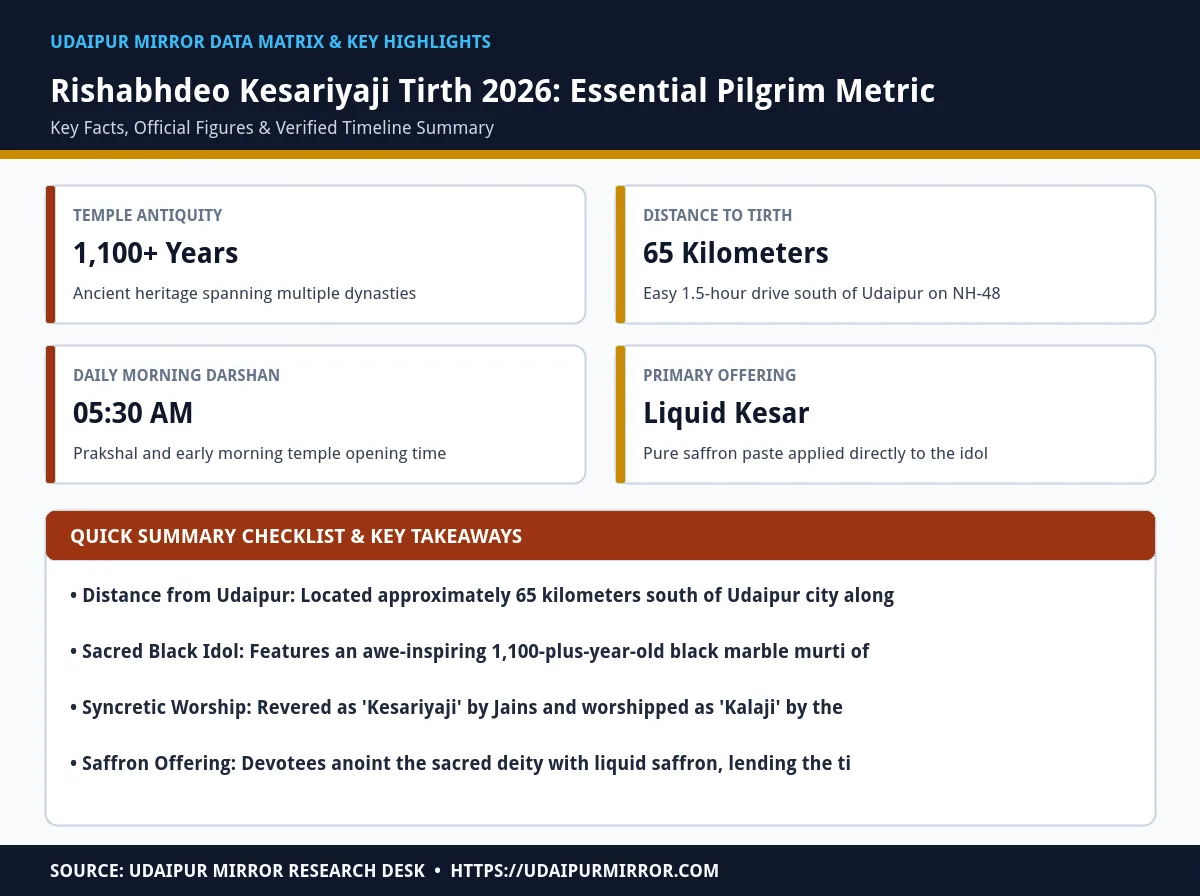
Planning a seamless pilgrimage requires a clear understanding of the daily ritual schedule at the temple. Below is the official timetable outlining Prakshal, darshan windows, aarti slots, and evening closing timings for devotees visiting the shrine.
| Ritual / Event | Morning Schedule | Evening Schedule | Special Guidelines |
|---|---|---|---|
| Temple Opening & Prakshal | 05:30 AM – 07:00 AM | N/A | Early morning ritual purification of the idol. |
| General Darshan Window | 07:00 AM – 12:30 PM | 03:30 PM – 08:30 PM | Temple remains closed in afternoon hours. |
| Mangala / Morning Aarti | 06:15 AM | N/A | First congregational aarti of the day. |
| Sandhya / Evening Aarti | N/A | 07:00 PM | Devotees gather in large numbers for evening hymns. |
| Temple Closing Time | N/A | 08:30 PM | All inner sanctum entries close for the night. |
What sets Rishabhdeo apart from standard monastic pilgrimage centers is its unique, deeply moving syncretic worship culture. While Jains worship the presiding deity as Lord Rishabhdev, the indigenous Bhil tribes of southern Rajasthan and northern Gujarat revere the exact same black marble idol as ‘Kesariyaji’ or ‘Kalaji’. This harmonious dual identity has endured for generations without discord.
Local tribal communities hold immense faith in the deity, frequently undertaking barefoot pilgrimages to seek protection and prosperity. During major festivals and harvesting seasons, thousands of Bhil devotees arrive playing traditional instruments, singing devotional folk songs, and offering their prayers with unmatched fervor, exemplifying India’s rich tradition of pluralistic faith.
“Faith knows no rigid boundaries here; Jains find spiritual liberation, while local Bhils find their protector and guardian in the divine form of Kalaji.” — Senior Temple Administrator, Dhulev
The most distinctive ritual associated with this tirth is the offering of liquid saffron, known locally as ‘kesar’. Because the deity is lovingly called Kesariyaji, devotees dissolve pure saffron strands in holy water and gently anoint the black marble idol. This gives the sacred image a distinct fragrance and golden-orange hue during specific ritual windows.
However, performing the Kesar Puja requires adherence to strict temple rules and purification protocols. Visitors must follow traditional attire codes—typically clean, unstitched garments for those entering the inner sanctum—and purchase certified pure saffron from authorized temple counters to protect the delicate antique marble surface from chemical impurities. (Also read: Central Railway to Run 36 Special Trains for Kartiki Ekadashi Rush in 2026).
“Anointing the dark marble with pure saffron is an act of supreme surrender and devotion, transforming the visual and aromatic experience of the shrine.” — Chief Priest, Kesariyaji Temple
To accommodate the steady influx of travelers and pilgrims arriving throughout the year, the temple trust manages extensive infrastructure within the tirth complex. The on-site dharamsala offers well-maintained rooms, dormitories, and modern amenities designed to provide a comfortable stay for families and large pilgrim groups traveling along the highway.
Additionally, a clean, spacious bhojanshala operates daily, serving traditional vegetarian meals prepared under strict hygienic standards at nominal subsidized rates. For travelers coordinating large group yatras or seeking spiritual gatherings similar to special festive assemblies referenced during events like the Guru Nanak Jayanti in Udaipur Guide, the community kitchens at Kesariyaji ensure seamless hospitality.
“The temple trust ensures that every visitor is provided with comfortable lodging and wholesome, pure meals regardless of their background.” — Trust Accommodation In-Charge
Reaching Rishabhdeo Kesariyaji Tirth from Udaipur is exceptionally convenient due to its prime location on National Highway 48 (the main Udaipur-Ahmedabad highway). The 65-kilometer journey takes roughly 1.5 hours by car, taxi, or state-run transport buses, making it an ideal half-day or day trip for spiritual tourists.
Frequent buses operate from Udaipur’s main transport hubs toward Rishabhdeo and neighboring Dungarpur. For self-driving tourists, the smooth four-lane highway ensures a comfortable drive past scenic Aravalli hills and rural Mewari countryside before reaching the well-signposted turnoff for Dhulev.
“The excellent condition of NH-48 makes a pilgrimage to Kesariyaji smooth and accessible for elderly travelers and family road trips alike.” — Rajasthan Tourism Transport Expert
Rishabhdeo Kesariyaji Tirth is located approximately 65 kilometers south of Udaipur city. It takes about 1.5 hours to reach via a smooth drive down National Highway 48.
The deity is called Kesariyaji because devotees traditionally anoint the sacred black marble idol with liquid saffron (kesar) as an act of supreme devotion.
The temple opens early for Prakshal at 05:30 AM. General darshan is available from 07:00 AM to 12:30 PM and again from 03:30 PM to 08:30 PM daily.
Yes, the temple trust operates well-maintained dharamsala rooms for overnight stays and a clean bhojanshala serving affordable, pure vegetarian meals daily.
Add Udaipur Mirror as a preferred source on Google to see more of our travel guides in your AI overviews.