Office Address
14, Residency Road, Udaipur, Rajasthan 313001
Office Address
14, Residency Road, Udaipur, Rajasthan 313001

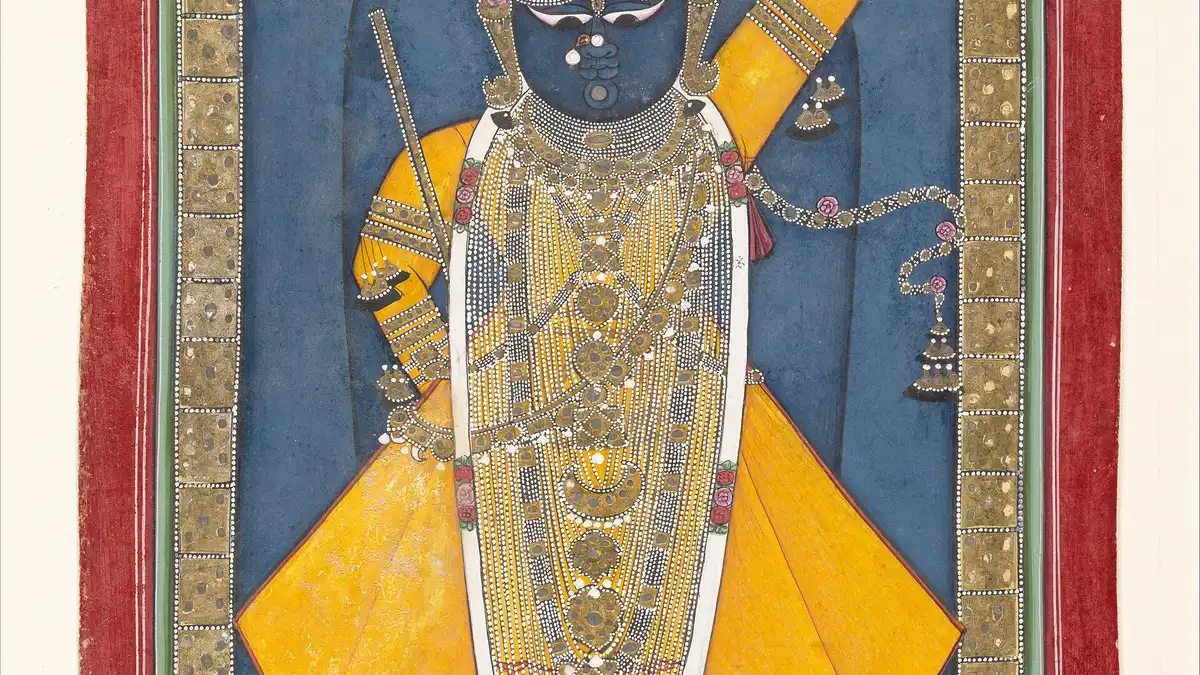
RAJSAMAND: Nestled on the serene, stone-carved embankment of the magnificent Rajsamand Lake, the holy shrine of Dwarkadhish stands as a beacon of timeless devotion. For pilgrims and seekers looking for a comprehensive kankroli dwarkadhish mandir guide 2026 offers profound spiritual insights into one of the most revered sanctuaries of the Vallabh Sampradaya. Situated roughly 65 kilometers north of Udaipur in the historic Rajsamand district of Mewar, this temple represents a living heritage of Pushtimarg, drawing thousands of devotees daily who wish to catch a glimpse of the divine swaroop of Lord Krishna.
⚡ Quick Highlights: Kankroli Dwarkadhish Mandir Guide 2026: Timings & History
The Kankroli Dwarkadhish Mandir holds an exalted position in Hindu history as the third sacred seat (Tritiya Peeth) of the Pushtimarg Vallabh Sampradaya. The holy swaroop (divine manifestation) of Lord Dwarkadhish originally resided in Gokul near Mathura. However, during the reign of Mughal Emperor Aurangzeb in the late 17th century, the sacred idol was moved to ensure its safety from destruction. In 1671 AD, under the heroic patronage and protection of Maharana Raj Singh of Mewar, the idol safely arrived in Mewar territory.
Maharana Raj Singh allocated land on the banks of the newly constructed Rajsamand Lake, where a magnificent temple was erected to house the deity. For centuries, this seat has been administered by the direct descendants of Vallabhacharya, preserving ancient Vedic rituals, classical Dhrupad music, and exquisite miniature art traditions. As you explore the temple corridors, students preparing for exams or academics can also review updates such as the TGTET Syllabus 2027, keeping track of educational milestones while planning immersive cultural itineraries.
“The alliance between Mewar's royal house and Pushtimarg acharyas created a permanent spiritual sanctuary where art, devotion, and lake architecture merge seamlessly.” — Mewar Heritage Scholar
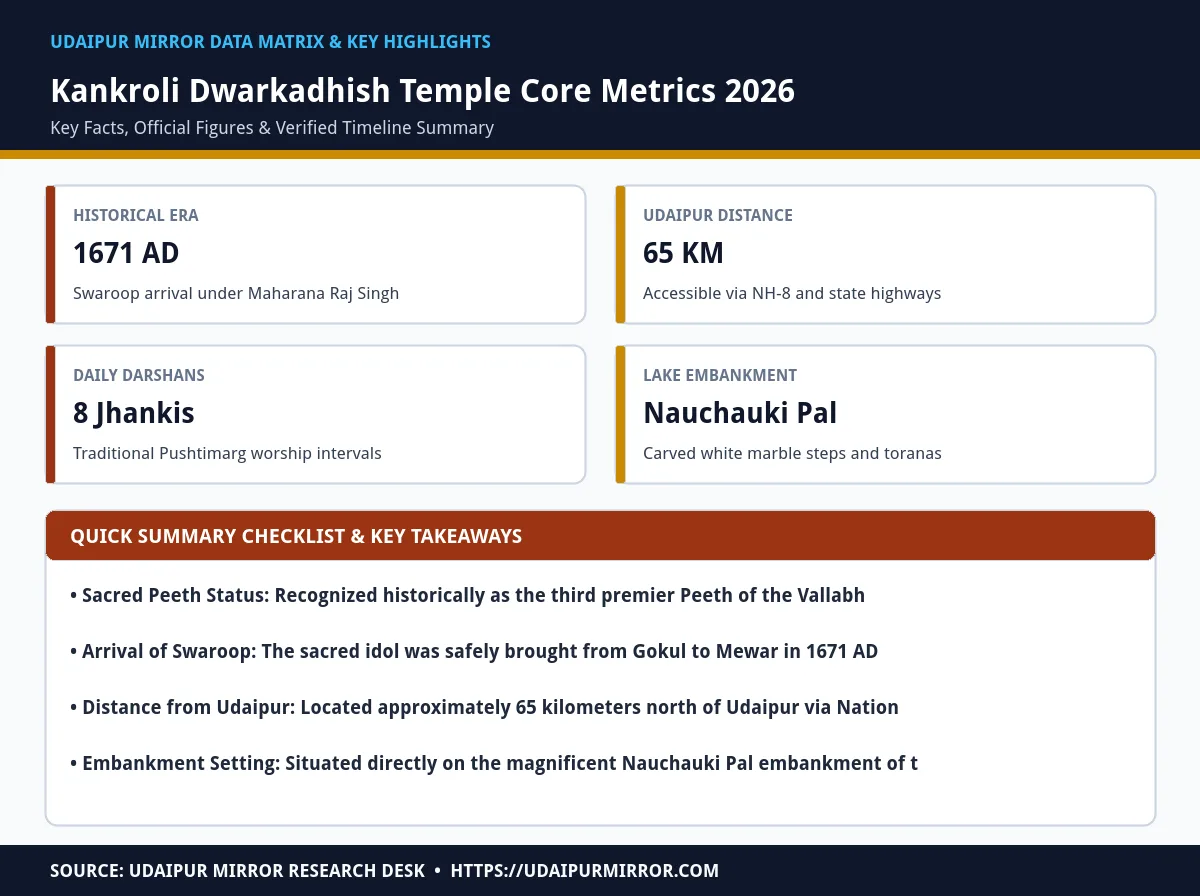
The daily schedule of the Dwarkadhish temple follows strict Pushtimarg traditions, divided into eight distinct segments known as Jhankis. Visitors must note that timings can shift slightly during winter and summer seasons or special festive occasions.
| Jhanki Name | Morning Timings | Evening Timings | Significance & Ritual |
|---|---|---|---|
| Mangala Darshan | 06:30 AM – 07:00 AM | – | First awakening darshan of the Lord with gentle morning hymns. |
| Shringar Darshan | 07:30 AM – 08:15 AM | – | The deity is adorned with fresh flower garlands and exquisite attire. |
| Gwal Darshan | 09:15 AM – 09:30 AM | – | Short darshan before Lord Krishna takes cows for grazing. |
| Rajbhog Darshan | 10:45 AM – 11:30 AM | – | The grand midday offering of royal bhog and extensive Aarti. |
| Uthapan Darshan | – | 04:00 PM – 04:30 PM | The deity wakes up from afternoon slumber. |
| Bhog Darshan | – | 05:15 PM – 05:45 PM | Afternoon snack and sweet offering. |
| Sandhya Aarti | – | 06:30 PM – 07:15 PM (Varies) | Evening twilight prayer with lamps and devotional singing. |
| Shayan Darshan | – | 08:15 PM – 08:30 PM | Final night resting darshan before temple closes. |
Architecturally, the Kankroli Dwarkadhish temple is a masterpiece of Mewari stone craftsmanship. Built primarily from local grey and pink sandstone with intricate marble inlay work, the temple complex features sprawling courtyards, traditional jharokhas, and sanctums adorned with exquisite wall paintings. The temple seamlessly opens onto the Nauchauki Pal, a magnificent 9-chhatri stone embankment built along the edge of the sprawling Rajsamand Lake.
The Nauchauki Pal is celebrated for its elaborately carved marble staircases, toranas, and historical stone tablets inscribed with the Raj Prashasti—the longest stone inscription in the world detailing Mewar’s history in Sanskrit. Visitors spending hours by the waterfront often witness stunning sunsets reflecting off the rippling blue waters of the lake. For citizens managing household finances or exploring healthcare benefits while traveling across Rajasthan, checking schemes like Mukhyamantri Ayushman Arogya Yojana (MAAY) 2026 ensures complete medical security during long pilgrimages.
“Standing on the Nauchauki Pal at sunset, with temple bells echoing across the waters of Rajsamand Lake, offers an unmatched meditative experience.” — Pilgrim Diary 2026
Kankroli is located approximately 65 kilometers north of Udaipur and serves as a major urban hub within the Rajsamand district. Travelers can easily commute between Udaipur and Kankroli via multiple transit options tailored to various budgets.
Road connectivity via National Highway 8 (NH-27 / NH-58 corridor) is exceptionally smooth, ensuring a comfortable 1.5-hour drive. Pre-paid taxi services and app-based cabs from Udaipur charge between ₹1,500 to ₹2,500 for a round trip depending on the vehicle type. Alternatively, regular state transport RSRTC buses and private deluxe buses operate every 30 minutes from Udaipur’s Udiapole Bus Stand to Kankroli Bus Stand, with ticket prices ranging from ₹100 to ₹250 per passenger. Rail travelers can also check regional train connectivity, keeping in mind broader infrastructure updates such as Railways Plans MEMU Trains from Lucknow to Ayodhya, Barabanki and Kanpur Services for interstate travel trends.
“The short 65 km drive from Udaipur through the Aravalli hills makes Kankroli an ideal spiritual day trip or weekend getaway.” — Udaipur Travel Desk
To ensure a spiritually uplifting visit, pilgrims are advised to adhere to traditional temple etiquette. Modest ethnic attire (dhoti-kurta or traditional kurtas for men, and sarees or salwar suits for women) is strongly encouraged. Photography inside the main sanctum during darshan hours is strictly prohibited to maintain sanctity.
The temple trust operates several well-maintained dharamsalas and guest houses nearby, offering clean rooms and basic amenities at very affordable rates for pilgrims staying overnight. Major festivals such as Janmashtami, Annakut (Goverdhan Puja), and Radhashtami witness massive celebratory gatherings where millions of sweet delicacies are offered to Lord Dwarkadhish and distributed as Prasad.
“Observing Annakut celebrations at Kankroli with thousands of devoted pilgrims is an unforgettable visual and spiritual spectacle.” — Pushtimarg Seva Samiti
Kankroli Dwarkadhish Mandir is the third sacred Peeth (Tritiya Peeth) of the Pushtimarg Vallabh Sampradaya. The sacred swaroop of Lord Krishna was brought from Gokul in 1671 AD under the protection of Maharana Raj Singh of Mewar and enshrined on the banks of Rajsamand Lake.
There are 8 daily Jhankis performed according to Pushtimarg traditions, starting with Mangala Darshan at 06:30 AM and concluding with Shayan Darshan at 08:15 PM.
Kankroli is located 65 km from Udaipur. You can reach it in 1.5 hours by hiring a private cab (₹1,500–₹2,500), boarding a frequent RSRTC bus from Udiapole Bus Stand, or traveling by regional train.
Yes, the temple trust manages several clean dharamsalas and guest houses near Nauchauki Pal, offering budget-friendly accommodation for pilgrims visiting Rajsamand.
Add Udaipur Mirror as a preferred source on Google to see more of our travel guides in your AI overviews.