Office Address
14, Residency Road, Udaipur, Rajasthan 313001
Office Address
14, Residency Road, Udaipur, Rajasthan 313001

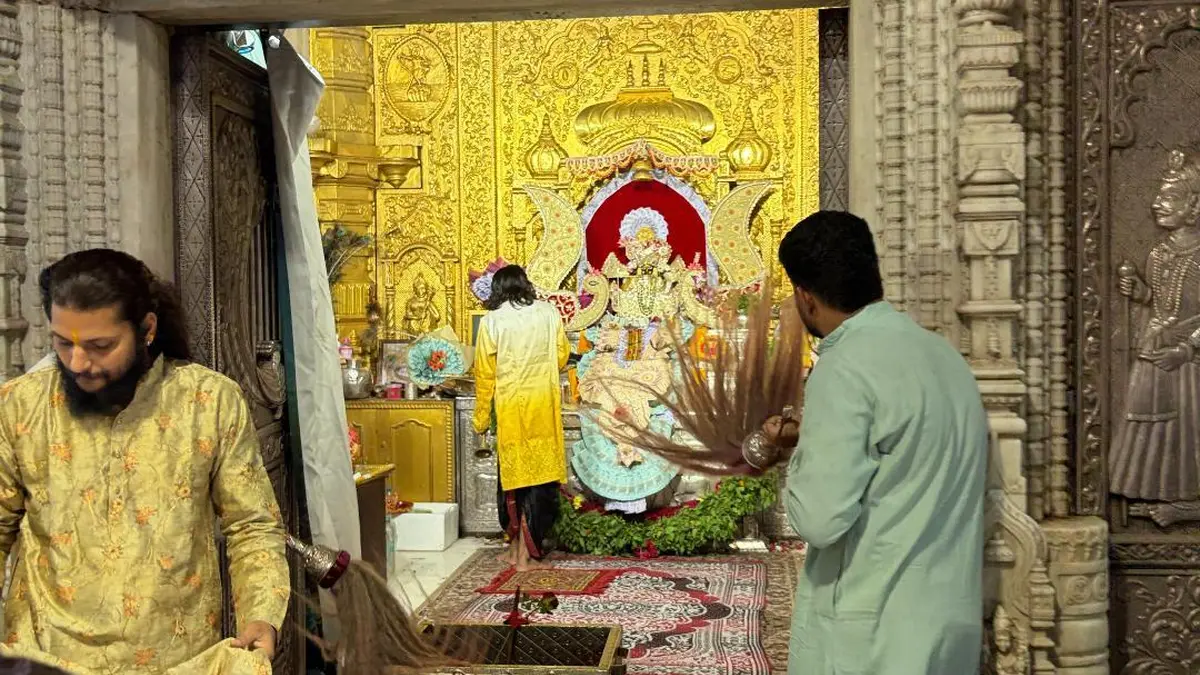
GARHBOR (Udaipur Division): Nestled in the rugged, history-drenched terrain of Kumbhalgarh tehsil in Rajsamand district, the revered shrine of charbhuja ji temple garhbor stands as a magnificent pillar of Mewar’s spiritual architecture. Established originally in 1444 AD, this sacred sanctuary commands immense religious reverence alongside iconic regional seats of faith. For centuries, pilgrims exploring the sacred geography of southern Rajasthan have tied their spiritual journeys across multiple sacred tirthas, much like travelers discovering ancient heritage sites such as the Rishabhdeo Kesariyaji Tirth 2026 journey, which highlights the deep-rooted cultural fabric of the Mewar Kingdom. Today, as devotees flock to experience divine grace, understanding its rich history, architectural layout, and logistics ensures a deeply fulfilling pilgrimage.
⚡ Quick Highlights: Charbhuja Ji Temple Garhbor 2026: Timings, History & Fair
Within the glorious historical tapestry of Mewar, spiritual devotion was never separate from statecraft and the defense of righteous governance. The rulers of Mewar considered themselves mere representatives (Diwans) of supreme deities, placing their kingdoms under divine sovereignty. Alongside Shreenathji in Nathdwara, Dwarkadhish in Kankroli, and Eklingji near Udaipur, the sacred shrine at Garhbor formed an invincible spiritual tetrarchy that fortified the morale of the state.
Families across Rajasthan often balance spiritual journeys with practical household planning, ensuring that community welfare schemes like the Rajasthan Palanhar Yojana 2026 run parallel with traditional pilgrimage duties. The sanctity of Charbhuja Ji stems from both royal patronage by the Maharanas of Mewar and the profound grassroots faith of rural pastoralists who viewed the deity as their ultimate protector against existential threats.
“The temples of Mewar are living archives of our resistance, faith, and architectural brilliance, with Garhbor standing guard over our collective soul.” — Mewar Heritage Conservation Council
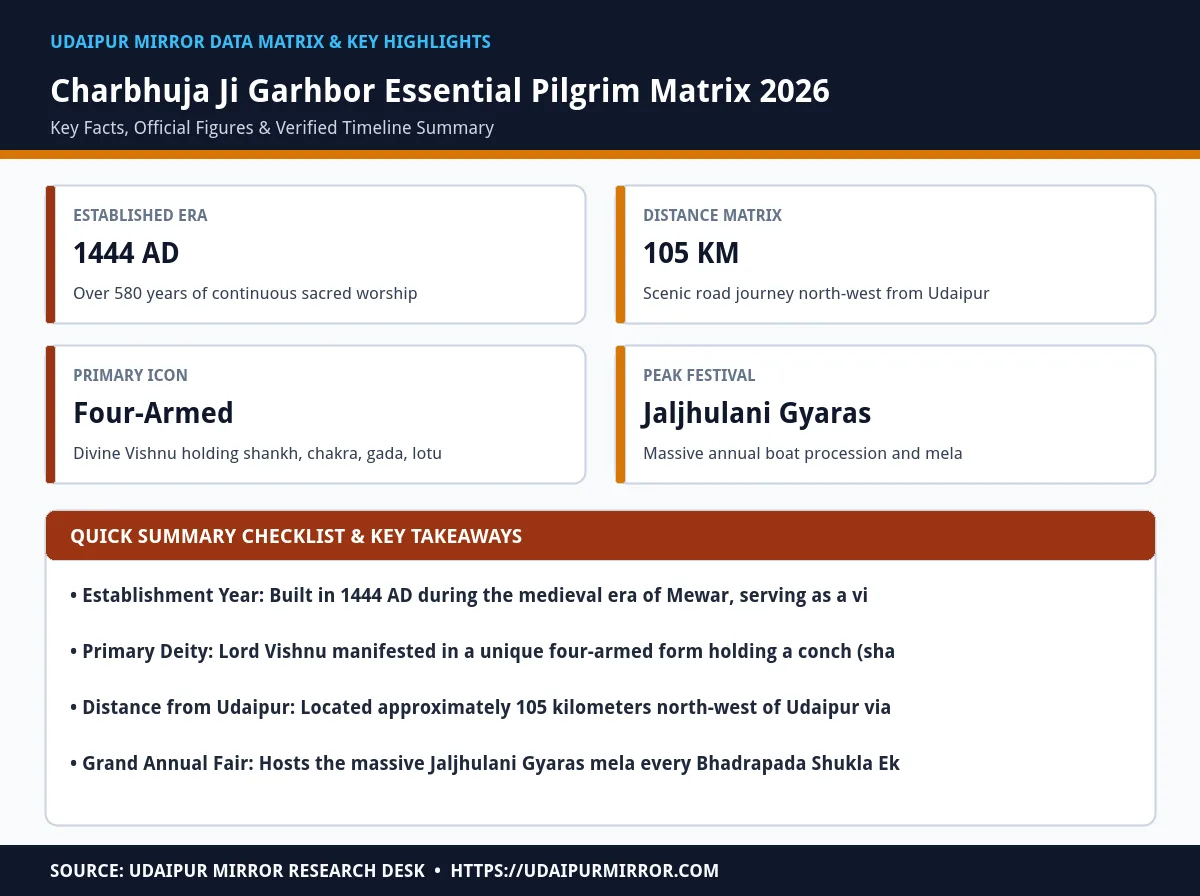
Plan your daily worship and ritual participation effectively by reviewing the official temple timetable. Seasonal adjustments may occur during major Hindu festivals like Janmashtami and Jaljhulani Gyaras.
| Seva / Ritual Name | Morning Timings | Evening Timings | Significance & Details |
|---|---|---|---|
| Mangala Darshan | 05:30 AM – 06:15 AM | Closed | First awakening darshan of Lord Vishnu with hymns. |
| Shringar & Gwal | 07:00 AM – 11:30 AM | Closed | Ornate floral decoration and morning Rajbhog prep. |
| Rajbhog Darshan | 11:45 AM – 12:15 PM | Closed | Offering of royal vegetarian feast and grand midday Aarti. |
| Utthapan Darshan | Closed | 04:00 PM – 05:30 PM | Reopening of temple gates after afternoon siesta. |
| Sandhya & Shayan | Closed | 06:30 PM – 08:30 PM | Evening lamps, twilight aarti, and retiring kirtans. |
The central sanctum sanctorum houses a breathtakingly carved black stone image of Lord Vishnu, widely venerated as Charbhuja due to His four distinct arms. Each hand holds a cosmic symbol of divine authority and cosmic balance: the conch shell (Panchajanya) representing primal sound, the discus (Sudarshana) symbolizing the wheel of time, the mace (Kaumodaki) denoting divine power, and the lotus (Padma) signifying spiritual purity.
Art historians and iconographers date the sculptural finesse of the idol to early medieval traditions, refined further during temple renovations in 1444 AD. The smooth black touchstone glistens under the soft glow of ghee lamps and silver embellishments, leaving first-time visitors spellbound by the serene yet majestic facial expression of the deity.
“In every curve of the four-armed stone lies an eternal promise of protection and grace for those who surrender in pure devotion.” — Head Pujari, Garhbor Temple
The chronicle of Charbhuja Ji Mandir is inextricably linked with tales of extraordinary bravery and existential defense. Historical records and local bardic poetry maintain that the temple survived 125 fierce battles fought by local chieftains, Rathore defenders, and Mewar armies who refused to let invading forces desecrate the sacred icon.
King Gang Dev, credited with significant early patronage and structural consolidation of the shrine, established a warrior-sadhu tradition where defense of the temple was treated as the highest form of worship. These historic struggles forged an unbreakable bond between the shrine and the surrounding Garhbor community, transforming the temple into a fortress of faith. (Also read: Nifty 50 vs Nifty Next 50 Index Funds 2026: Risk, Returns, Expense Ratio & Best SIP Allocation).
“Our ancestors shed their blood at the temple doorstep so that future generations could witness the eternal flame of Lord Vishnu.” — Garhbor Village Elders Committee
Every year on Bhadrapada Shukla Ekadashi (commonly known as Jaljhulani Gyaras), Garhbor transforms into the vibrant epicentre of Mewar’s cultural calendar. Lakhs of pilgrims arrive from across Rajasthan, Gujarat, and Madhya Pradesh to witness the grand procession where the metallic utsav idol of Lord Charbhuja is placed in a heavily ornamented silver palanquin (vimana).
Accompanied by traditional brass bands, devotional chanting, and spirited folk dancers brandishing swords and shields, the procession makes its way to the nearby sacred water body (talab) for the traditional ritual cleansing ceremony. The festivities culminate in a dazzling night-long vigil filled with bhajans and community feasts.
“Jaljhulani Gyaras at Garhbor is not merely a fair; it is a celestial celebration where earth and heaven merge in joyous devotion.” — Pilgrim Coordination Board
Traveling to Charbhuja Ji Mandir from Udaipur is a convenient and scenic 105-kilometer road journey taking approximately 2 to 2.5 hours depending on traffic. The standard route heads north from Udaipur via National Highway 58 toward Nathdwara and Kankroli, branching off through well-paved state highways leading directly into Kumbhalgarh tehsil toward Garhbor.
For pilgrims relying on public transit, frequent state roadways buses and private cabs operate daily from Udaipur’s central bus station (Udaipole) and railway station. Visitors driving their own vehicles will find ample parking facilities managed by the temple trust near the outer plaza.
“The road to Garhbor cuts through picturesque Aravalli hills, preparing the traveler's mind for the spiritual tranquility awaiting at the shrine.” — Rajasthan Tourism Travel Advisory
Established in 1444 AD, the temple is a revered Mewar shrine dedicated to Lord Vishnu. It is famous for surviving 125 historical battles fought by devoted defenders and for its deep ties to the Mewar royal family.
The temple opens daily for Mangala Darshan at 5:30 AM, followed by Shringar, Rajbhog (11:45 AM), Utthapan (4:00 PM), and evening Sandhya/Shayan darshan until 8:30 PM.
Garhbor is located 105 km north-west of Udaipur. You can easily reach via NH 58 passing through Nathdwara and Kankroli by private taxi, state bus, or self-drive car in about 2.5 hours.
The grand Jaljhulani Gyaras fair is held annually on Bhadrapada Shukla Ekadashi, featuring a magnificent silver palanquin procession to a local water body and drawing lakhs of pilgrims.
Add Udaipur Mirror as a preferred source on Google to see more of our travel guides in your AI overviews.