Office Address
14, Residency Road, Udaipur, Rajasthan 313001
Office Address
14, Residency Road, Udaipur, Rajasthan 313001

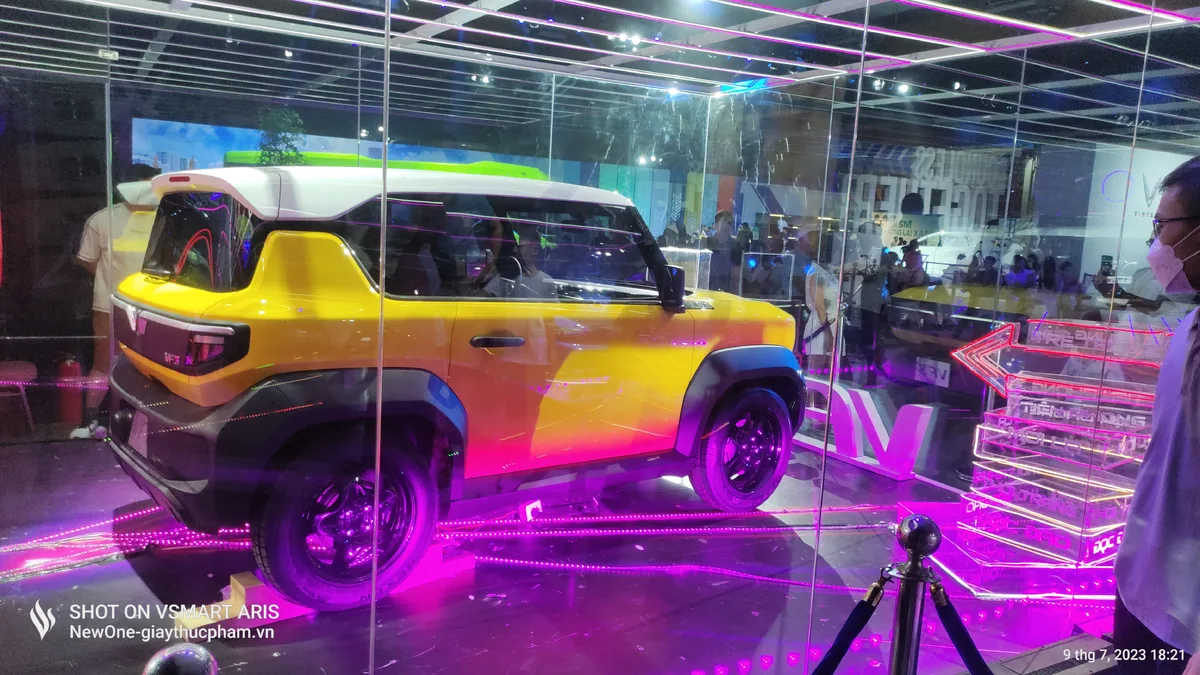
UDAIPUR: UDAIPUR — The rapidly evolving Indian electric vehicle market is witnessing aggressive pricing strategies and manufacturer-led revisions that directly reshape ownership costs. When evaluating modern battery-powered multi-purpose vehicles, buyers frequently calculate the upfront sticker cost while overlooking secondary financial implications. Understanding how ev price cuts car insurance calculations interact is essential for modern vehicle owners looking to optimise their recurring annual motor insurance outlays across Rajasthan and nationwide markets.
⚡ Quick Highlights: EV Price Cuts & Car Insurance: How Lower Pricing Affects Premiums
When automotive manufacturers announce aggressive price corrections or introductory promotional cuts on new electric models, the immediate consumer focus centers on monthly EMI savings and upfront affordability. However, the ex-showroom price serves as the foundational anchor for calculating your vehicle’s Insured Declared Value (IDV). IDV represents the maximum financial liability an insurance provider will bear in the event of total theft or constructive total loss.
As a direct consequence of a lower ex-showroom price, the calculated IDV drops proportionally during policy issuance and annual renewals. Because insurance underwriters calculate own-damage premium rates as a direct percentage of this IDV, a reduced vehicle valuation inherently translates into lower premium invoices for car owners. For those exploring diverse electric alternatives, comparing regional options is crucial; enthusiasts can also review developments like the International Auto Show to Showcase Supercars and EVs in Bengaluru to understand broader market valuation trends.
“A reduction in base ex-showroom pricing creates an immediate downward adjustment in IDV, directly shrinking the own-damage premium component of annual motor insurance policies.” — Senior Motor Insurance Actuary
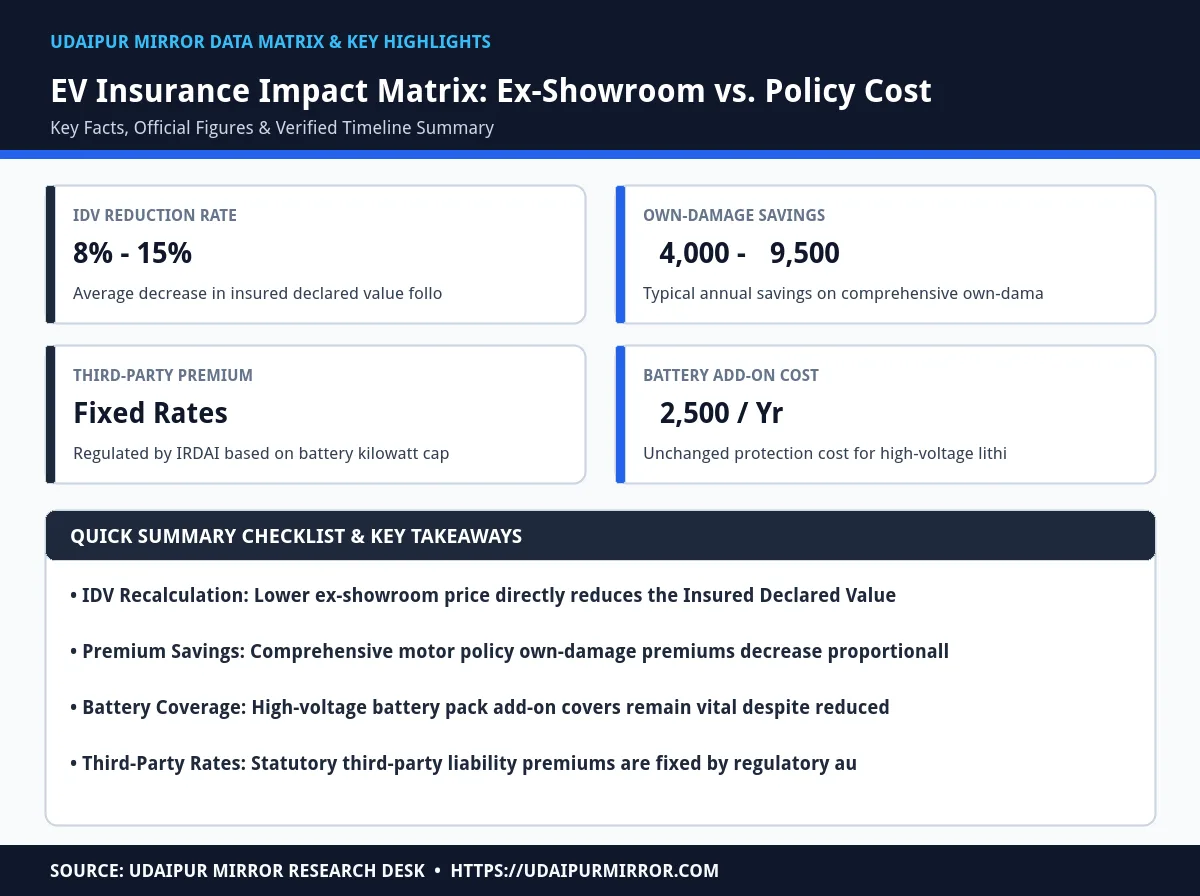
The following structured comparison illustrates how a hypothetical reduction in ex-showroom pricing for an electric multi-purpose vehicle translates into tangible adjustments across Insured Declared Value (IDV), own-damage premiums, and total yearly motor insurance outlays for Indian car owners.
| Vehicle Price Scenario | Ex-Showroom Price | Insured Declared Value (IDV) | Own-Damage Premium | Total Annual Insurance Outlay |
|---|---|---|---|---|
| Pre-Price Cut Baseline | ₹22,50,000 | ₹20,25,000 | ₹42,500 | ₹52,800 |
| Post-Price Cut (Model X) | ₹19,90,000 | ₹17,91,000 | ₹37,200 | ₹47,500 |
| Aggressive Market Cut | ₹17,50,000 | ₹15,75,000 | ₹32,400 | ₹42,700 |
| Entry Variant Revision | ₹14,99,000 | ₹13,49,000 | ₹27,800 | ₹38,100 |
Motor insurance in India comprises two primary components: third-party (TP) liability cover, which is mandated by law, and own-damage (OD) cover, which protects your own vehicle against accidents, fire, and theft. While statutory third-party rates are fixed centrally by regulatory bodies based on electric vehicle battery capacity tiers (measured in kilowatt-hours), own-damage premiums are entirely market-driven and sensitive to vehicle pricing.
When an EV undergoes a price cut, the third-party premium remains completely unaffected because it depends on the vehicle category and motor output rather than its market sticker price. Conversely, the own-damage component scales down cleanly. This dynamic offers significant relief to owners of high-end electric multi-purpose vehicles, ensuring that the total cost of ownership scales down harmoniously alongside acquisition costs. For buyers navigating tighter budgets, exploring options detailed in our guide on Top Electric Cars Under ₹20 Lakh: Comprehensive Range and Variant Guide for Indian Buyers provides additional financial clarity.
“While third-party liability costs remain locked to battery kilowatt ratings, own-damage rates respond dynamically to every single shift in vehicle showroom pricing.” — Automotive Risk Analyst
One critical consideration when insuring modern electric vehicles following price adjustments is the safeguarding of expensive high-voltage battery packs. Traditional motor policies often apply depreciation on plastic, rubber, and electronic components unless specific add-on riders are selected. Even when base car prices decrease, specialized battery protect add-ons remain essential to guard against internal short circuits, water ingress, and mechanical damage.
Insurers price these specialized add-on covers based on the vehicle segment and total battery capacity rather than fluctuating ex-showroom figures. Therefore, while your base comprehensive premium decreases due to a lower IDV, maintaining robust protection for the powertrain requires careful rider selection. Owners must evaluate whether the savings from base price cuts should be reinvested into comprehensive zero-depreciation and consumable covers to ensure complete peace of mind on Indian roadways. (Also read: Hyundai Neira Electric MPV Revealed: 7-Seater EV Details and India Launch Roadmap).
“Do not let base price reductions tempt you into dropping vital battery protect add-ons; safeguarding high-voltage components remains paramount for electric vehicle longevity.” — EV Fleet Insurance Consultant
Navigating the Indian automotive landscape in late 2026 requires a holistic view of ownership expenses, moving far beyond initial showroom sticker tags. Manufacturer price adjustments introduce a welcome ripple effect that lowers recurring annual maintenance, financing overheads, and comprehensive insurance premiums alike. By understanding how IDV adjustments directly lower own-damage outlays, buyers can negotiate better insurance packages and select optimal add-on covers.
Ultimately, aggressive pricing competition among electric vehicle manufacturers empowers consumers by lowering both capital acquisition barriers and ongoing protection costs. Prospective buyers should consult multiple insurance aggregators during vehicle delivery to capitalize on reduced IDV figures, ensuring their transition to sustainable e-mobility is both financially prudent and comprehensively secured.
“Holistic financial planning for electric vehicles ensures that upfront price adjustments translate into sustained, long-term savings across insurance and maintenance cycles.” — Automotive Industry Observer
A lower ex-showroom price reduces your vehicle’s Insured Declared Value (IDV). Since own-damage insurance premiums are calculated directly as a percentage of the IDV, a lower valuation results in reduced annual premium outlays.
No. Statutory third-party liability insurance rates are fixed by regulatory authorities (IRDAI) based on the electric vehicle’s battery kilowatt capacity slabs, remaining completely independent of manufacturer price cuts.
During policy renewal, your insurer will automatically calculate the IDV based on current market depreciation and revised manufacturer pricing. You can also request specific IDV adjustments within permissible percentage bands.
No. Specialized battery protection add-on covers are typically priced based on battery capacity and vehicle segment rather than fluctuating base ex-showroom figures, ensuring your high-voltage powertrain remains fully secured.
Add Udaipur Mirror as a preferred source on Google to see more of our travel guides in your AI overviews.