Office Address
14, Residency Road, Udaipur, Rajasthan 313001
Office Address
14, Residency Road, Udaipur, Rajasthan 313001

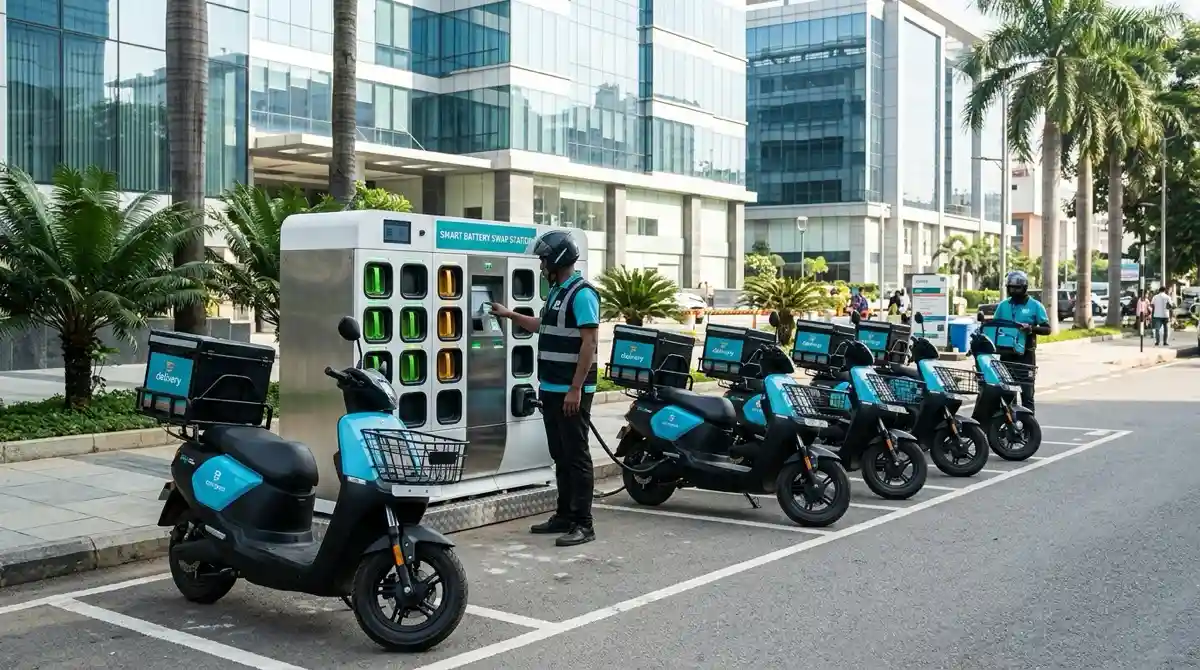
Deepinder Goyal’s recent reflection on Zomato and Blinkit employing 31 lakh delivery partners in FY26—and his hope that gig work does not remain the default future for millions—offers a fresh perspective on automation, labor economics, and economic mobility in India.
During the 2026 fiscal year, food delivery and quick-commerce giants Zomato and Blinkit recorded a staggering 31 lakh Indians earning a livelihood through their logistics networks, marking a 57% increase compared to the previous year. While this vast army of riders underpins the rapid expansion of urban conveniences—matching trends observed across the quick-commerce and retail delivery ecosystem—it also brings structural workforce questions to the forefront.
When a social media observer suggested that at this exponential growth rate, a massive fraction of India’s workforce could end up in delivery over the next 15 years, Zomato CEO Deepinder Goyal offered a candid rebuttal: he hopes not. Emphasizing that India requires higher-value employment opportunities, Goyal noted that autonomous technologies like drones could eventually step in if and when human labor shifts toward more productive careers.
Goyal’s perspective flips traditional technology discourse on its head. Usually, workplace automation is framed as a disruptive force that replaces human labor to cut corporate overhead. In Goyal’s framing, the labor crunch comes first: as national wealth increases and workers attain better education and professional skills, gig platforms will naturally face labor shortages.
While autonomous aerial logistics make for compelling long-term visions, deploying drones at scale in India presents monumental engineering and regulatory hurdles. Dense urban neighborhoods, high-rise apartment complexes, unpredictable weather patterns, strict aviation safety frameworks, and the final doorstep handoff remain formidable barriers. Although Zomato has historically experimented with drone delivery prototypes, commercial viability is still years away.
This reality makes Goyal’s broader philosophical point far more compelling than the drones themselves. Much like modern multi-restaurant ordering innovations and zero-commission disruptors entering the Delhi NCR food delivery market, platforms are perpetually forced to adapt their unit economics to changing labor realities.
Zomato and Blinkit recorded 31 lakh (3.1 million) delivery partners earning through their platforms in FY26, representing a 57% year-on-year increase.
Goyal stated he hopes delivery work does not become the default future for millions of Indians, expressing the need for better, higher-value jobs and predicting that drones could eventually handle deliveries if human labor moves on.
While Zomato has explored drone technology in the past, no commercial rollout has occurred due to regulatory, infrastructural, and dense urban navigation challenges in India.
Disclaimer: This article is for informational, business analysis, and news reporting purposes only, based on public statements and economic trends in the Indian gig economy.
Add Udaipur Mirror as a preferred source on Google to see more of our travel guides in your AI overviews.