Office Address
14, Residency Road, Udaipur, Rajasthan 313001
Office Address
14, Residency Road, Udaipur, Rajasthan 313001

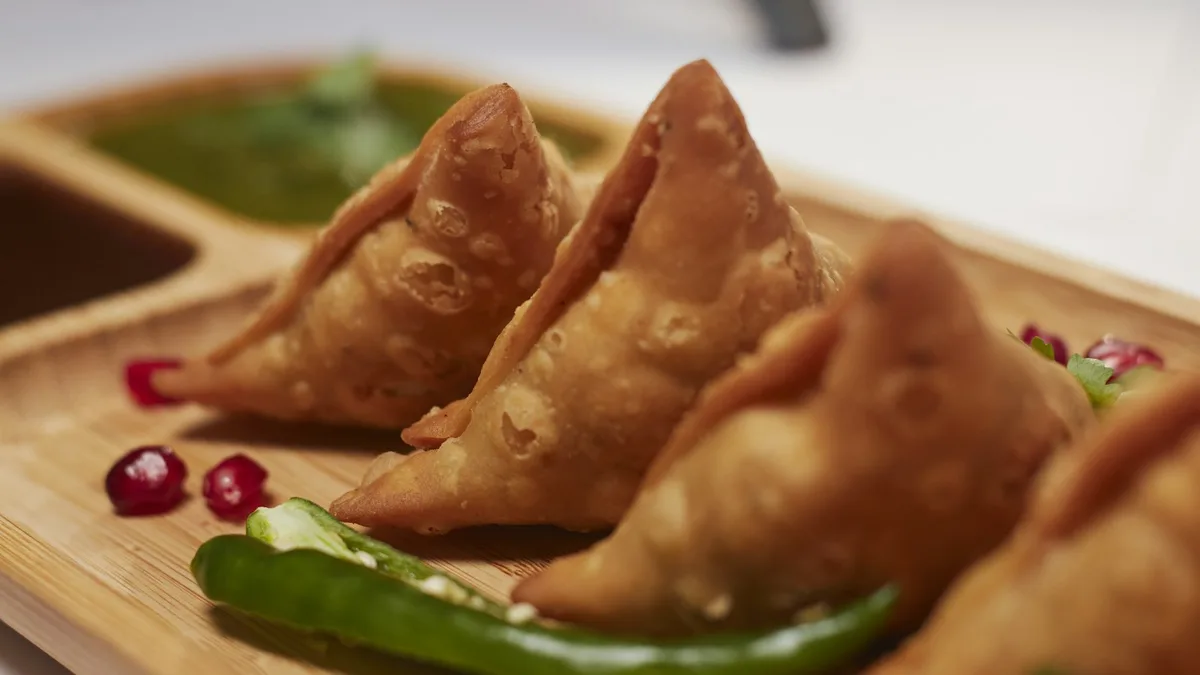
UDAIPUR: UDAIPUR — Deep within the rugged terrain of the Aravalli hills, the culinary heritage of Mewar continues to thrive through recipes that were once forged in the crucible of medieval warfare. Among these, authentic mewari dal baati churma stands as the undisputed sovereign of Rajasthani gastronomy. Evolving from a survival ration designed for warrior clans on long campaigns, this iconic dish has transformed into a symbol of royal hospitality and festive grandeur across Udaipur’s heritage dining rooms.
⚡ Quick Highlights: Authentic Mewari Dal Baati Churma 2026: Recipes & Heritage
Long before it became the crowning glory of Rajasthani culinary heritage, dal baati was engineered as a strategic survival ration for the warrior clans of Mewar. During military expeditions across the rugged Aravali ranges, soldiers under rulers like Bappa Rawal needed calorie-dense, non-perishable provisions that could withstand days of travel without refrigeration. Soldiers would bury coarse wheat dough balls in the hot sand and embers beneath their campfires before marching into battle. By evening, the embers baked the dough into durable, rock-hard baatis that stayed fresh for days.
Upon making camp, these baked rations were broken apart and immersed in whatever lentils were available locally, then enriched with generous spoonfuls of forest-gathered ghee. This ingenious field meal provided sustained energy, essential proteins, and high fat content needed to endure harsh desert campaigns. For those interested in how traditional herbs and local ingredients supported ancient stamina, health insights are explored in our report on Ancient Mewari Medicinal Herbs: Guggulu, Ashwagandha & Giloy Benefits for Immunity & Joints, highlighting the holistic wellness traditions of Mewar.
“The baati was never merely food for our ancestors; it was armor against fatigue, baked by the sun and tempered by fire.” — Maharaj Kumar Sahab, Mewar Heritage Historian
| Baati Variety | Primary Preparation Method | Texture Profile | Ghee Infusion Technique | Best Paired With |
|---|---|---|---|---|
| Traditional Roasted Baati | Direct charcoal embers and cow dung cakes | Dense, crumbly, deeply smoky crust | Drenched piping hot before serving | Panchmel Dal and Garlic Chutney |
| Bafla Baati | Boiled in salted water first, then oven-baked | Soft interior with a golden roasted outer skin | Dipped entirely in lukewarm pure desi ghee | Gatte ki Sabzi and Panchmel Dal |
| Khoba Baati | Heavy wheat dough stamped with deep thumb grips | Extra crunchy with deep pockets for ghee | Ghee poured directly into the baked indents | Spicy Besan Gatta and Lehsun Chutney |
| Mini Cocktail Baati | Miniature wheat balls baked in clay ovens | Bite-sized, uniform crunch | Tossed in melted saffron-infused ghee | Cocktail platters and royal banquets |
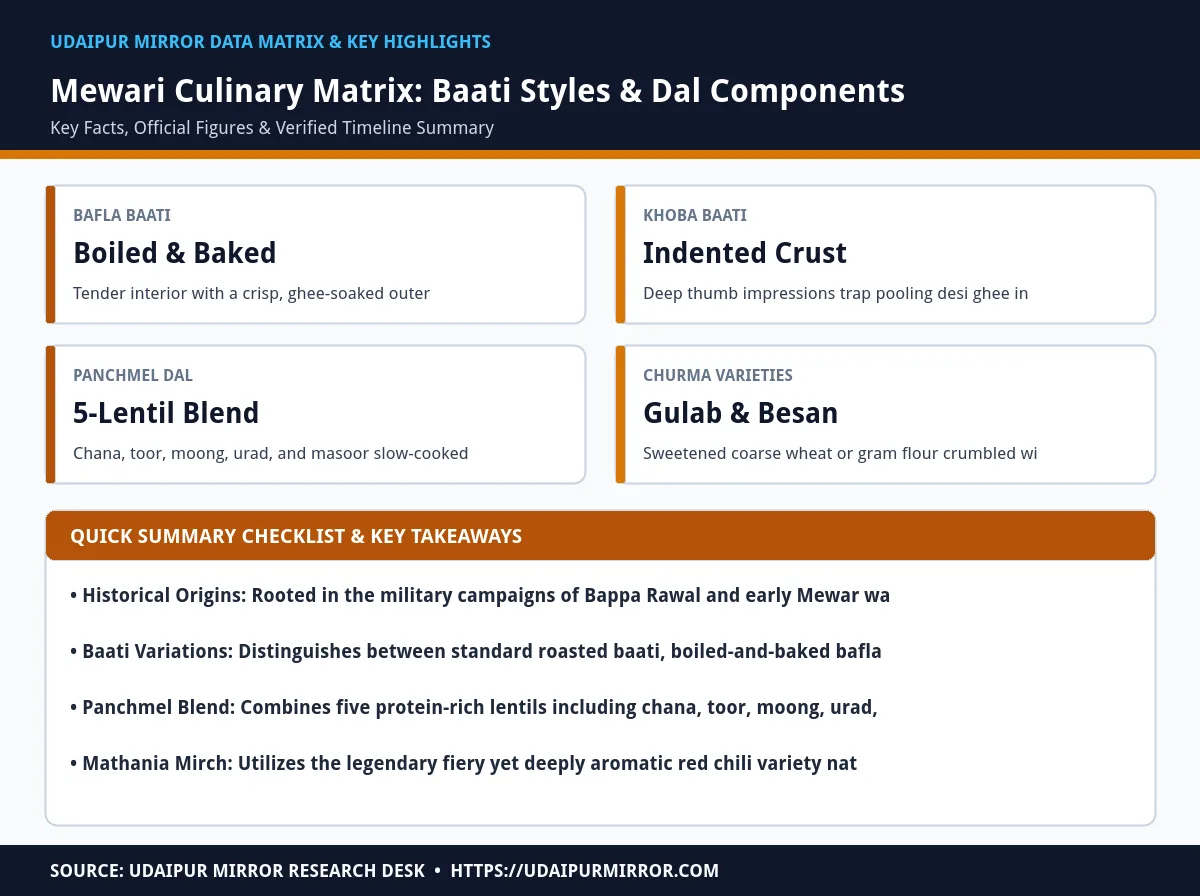
While the classic fire-roasted baati remains the bedrock of rural Mewar, royal kitchens across Udaipur evolved distinct regional variations to suit palatial preferences. The standard roasted baati is crafted from coarse whole wheat flour (banna aata) mixed with semolina, yogurt, and ajwain, then baked slowly over cow dung log fires until golden-brown spots appear on its exterior crust.
In contrast, the Bafla Baati undergoes a two-step cooking transformation. The shaped dough balls are first boiled in simmering water infused with aromatic spices and turmeric until they float, signaling internal gelatinization. Once dried, they are baked in a traditional oven or tandoor, yielding a pillowy-soft interior encased in a crisp shell. Meanwhile, the artistic Khoba Baati features pinched thumb impressions (khobs) all over its surface during kneading. These deep indentations act as natural reservoirs, capturing pools of melted ghee that seep deep into the crumbly core.
“A master chef can tell the moisture content of a dough ball just by hearing the crackle of the wood fire beneath the earthen oven.” — Udaipur Royal Kitchen Head Chef
No baati is complete without its soulmate—the legendary Panchmel Dal (also known as Dal Baati ki Dal). This harmonious concoction blends five distinct lentils in precise proportions: chana dal (split Bengal gram), toor dal (yellow pigeon peas), moong dal (yellow split gram), urad dal (black gram), and masoor dal (red lentils). Each lentil brings a unique earthy undertone, creating a complex mouthfeel that balances protein and fiber.
The magic of authentic Panchmel Dal lies in its rigorous tempering (chhonk). Boiled slowly with turmeric and salt until creamy, the dal receives a lavish double tempering of cow ghee sputtering with cumin seeds, cloves, black cardamom, cinnamon, and crushed garlic. The crowning glory is the inclusion of sun-dried Mathania mirch, which imparts a brilliant crimson hue and a smoky heat that cuts through the rich ghee. For property and land administration updates regarding traditional estates around Udaipur, property owners can consult the Rajasthan Section 90A Land Conversion Guide 2026: Process, Online Portal, Fees & Documents.
“Panchmel dal is an exercise in culinary geometry; five different lentils must merge into one seamless velvet stream.” — Traditional Mewari Culinary Master
Completing the royal triad is churma, a rich sweet crumbled confection that counterbalances the spicy heat of the dal and garlic chutney. Traditionally made by crushing leftover or freshly baked baatis into a fine consistency, the crumbs are mixed with powdered sugar or jaggery, cardamom powder, and an abundance of ghee and roasted nuts.
Mewari culinary traditions celebrate several distinct styles of churma. The classic Gulab Churma incorporates edible rose petals and rose water, offering a fragrant floral note. The Besan Churma substitutes wheat with roasted gram flour, yielding a melt-in-the-mouth texture favored during royal winter banquets. Meanwhile, dry-fruit heavy variants loaded with almonds, pistachios, and raisins serve as festive centerpieces for weddings and celebrations across Udaipur.
“Churma is the poetic conclusion of a heavy meal, binding together wheat, sugar, and ghee into golden dust.” — Udaipur Food Heritage Chronicler
For travelers and culinary enthusiasts visiting Udaipur, experiencing an authentic Mewari thali is an absolute rite of passage. Several heritage restaurants and traditional dining rooms across the city have perfected the art of serving piping-hot baatis drenched in pure ghee alongside steaming bowls of Panchmel Dal, tangy garlic chutney, gatte ki sabzi, and multiple varieties of churma.
Dining venues near the old city bazaars and lakeside heritage Havelis offer immersive thali experiences where hospitality mirrors royal protocol. Guests are traditionally greeted with rosewater sprinkles and seated on low wooden chowkis, embodying centuries of Mewari warmth. Whether dining at a restored palace or a heritage courtyard, the ritual of breaking the baati, pouring steaming ghee, and savoring the symphony of flavors remains timeless.
“In Udaipur, a thali is not merely a meal served on silver or brass; it is an invitation into our royal history.” — Heritage Tourism Director, Udaipur
Mewari Dal Baati Churma is distinguished by its use of coarse wheat flour, slow ember-roasting techniques, the mandatory inclusion of five-lentil Panchmel Dal tempered with Mathania chili, and the generous pouring of pure desi ghee over thumb-indented baatis.
Standard baati is baked directly over charcoal embers or cow dung cakes, resulting in a dense, crumbly, smoky texture. Bafla baati is first boiled in spiced water before being oven-baked, yielding a soft, pillowy interior with a golden roasted outer crust.
Authentic Panchmel Dal combines chana dal (split Bengal gram), toor dal (yellow pigeon peas), moong dal (yellow split gram), urad dal (black gram), and masoor dal (red lentils) cooked together and tempered with ghee and spices.
Traditional churma is made by crumbling freshly baked or leftover baatis into fine particles, then mixing them thoroughly with powdered sugar or jaggery, cardamom powder, pure ghee, and roasted nuts like almonds and pistachios.
Add Udaipur Mirror as a preferred source on Google to see more of our travel guides in your AI overviews.